May 13, 2026
Best Coffee Shops in Paris
La Caféothèque opened on Rue de l’Hôtel de Ville in 2005 under Gloria Montenegro Chirouze, a Guatemalan founder who arrived in Paris with a coffee program built around Latin American origins and an espresso bar that ran against everything the French café was doing at the time. Twenty years ago, ordering a flat white in Paris would get you a confused look. Asking for a pour over would get you a refusal. The Parisian café was a French institution, the coffee was an afterthought, and the specialty movement that had already taken hold in London, Berlin, and Melbourne had not crossed the Channel.
Then in 2009 Belleville Brûlerie opened a roastery in the 19th arrondissement. In 2011 Coutume opened on Rue de Babylone in the 7e. Télescope opened the same year in a tiny storefront off Avenue de l’Opéra. Café Lomi opened the 18e cafe and roastery in 2011. The Parisian specialty scene compressed five years of London development into eighteen months of openings. By 2014 there were enough rooms to map. By 2019 Paris had caught up. Today, with 12,990 mapped shops and an accelerating specialty share, Paris is one of the strongest specialty coffee cities in continental Europe.
Below are eight of the rooms that built it, by neighborhood, with the addresses and the order to make when you get there.
What makes Paris coffee different
The cafe culture is the friction. In Rome or London, the café and the specialty room can run as the same building. In Paris, the historical café (the boulevard institution with the zinc bar, the croque-monsieur menu, the espresso served in a saucer for two euros) is a different building from the specialty room. The two formats rarely overlap. A Parisian specialty cafe is almost always a separate establishment, often newer than 2010, often run by a Belgian or Australian or Spanish or Guatemalan founder rather than a French one. That separation is the through line.
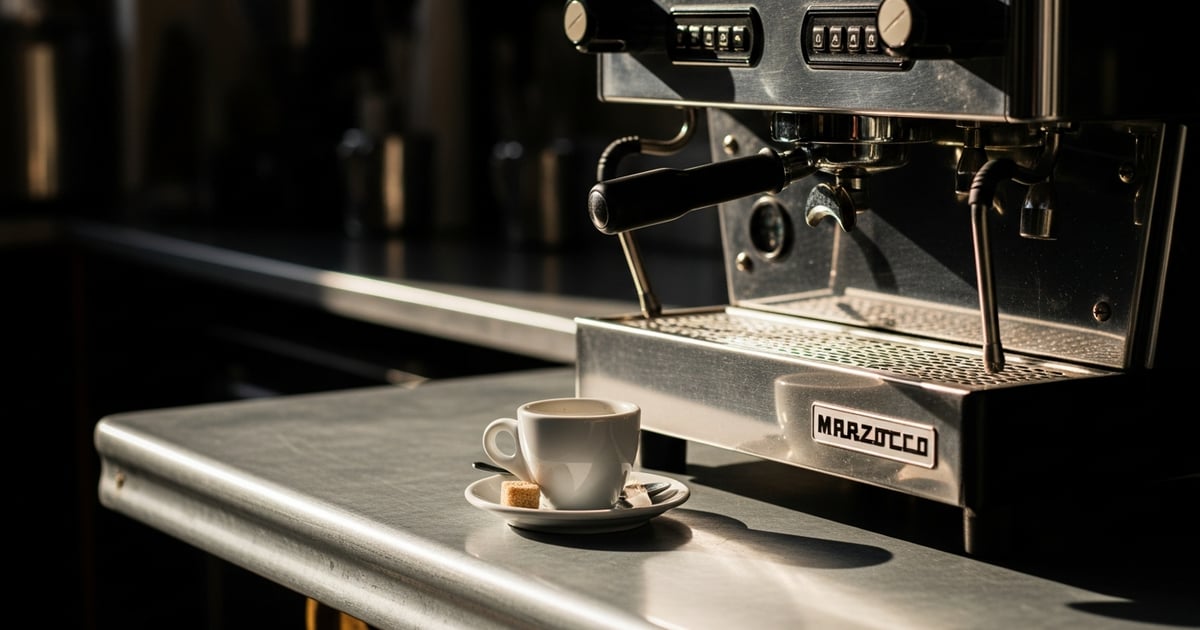
The second thing is the small format. Parisian specialty rooms are small. Télescope on Rue Villedo seats fourteen people. Coutume on Rue de Babylone seats twenty. Hello Tigre on Rue de Charonne seats twelve. The format is the opposite of the warehouse-and-roastery Anglo specialty cafe. A Parisian specialty room is a corner storefront with a counter, a Marzocco machine, six or seven tables, and a barista who will remember your order on the second visit.
The third thing is the order language. In a classic Parisian café the espresso is the default and the menu lists three coffee items: café, café crème, café allongé. In a specialty room the menu reads English: espresso, flat white, filter, pour over, cortado. A noisette is the local term for a macchiato. The two registers run in parallel. Knowing which one you walked into is the practical knowledge.
Le Marais and the 4e
The historical Jewish quarter and the surrounding streets carry the densest specialty cluster on the Right Bank. La Caféothèque on Rue de l’Hôtel de Ville is the anchor, with Loustic and a half-dozen newer rooms threaded through the small streets between Place des Vosges and Rue de Bretagne.
La Caféothèque de Paris at 52 Rue de l’Hôtel de Ville has been the Marais specialty room since 2005. The shop is also a coffee school: baristas train here, cuppings happen weekly, and the menu rotates through Latin American single origins from the founders’ sourcing relationships. The room is small, the morning is busy with neighborhood regulars, and the afternoon is quieter. Order a pour over of the rotating Guatemalan if you came for the program Gloria built the cafe around. Order a flat white if you want the Latin American single origin through milk.
Loustic on Rue Chapon 40 opened in 2013 under Channa Galhenage, a Belgian founder who built the room as a small Marais specialty cafe with a curated multi-roaster program. The cafe runs a daytime espresso and brunch program. The shop has not surfaced in the Pulled directory yet but local guides reference it as a Marais anchor.
Honor in the Cour Vendôme courtyard runs an outdoor specialty bar in the courtyard of Hôtel Costes, the original outdoor specialty pour in central Paris. The room is essentially a counter and a few tables tucked into the courtyard off Rue Saint-Honoré. The bar pulls a tight espresso program and a small filter menu. Order an espresso if you came for the courtyard format that does not exist anywhere else in Paris. Order a filter coffee on a warm afternoon if you want the slow Marais hour.
Saint-Germain and the Left Bank
The 7e and the 6e carry the most refined of the Parisian specialty rooms. Coutume on Rue de Babylone is the anchor, with smaller rooms scattered through the streets between Boulevard Saint-Germain and the Champ de Mars.
Coutume at 47 Rue de Babylone opened in 2011 under Antoine Nétien and Tom Clark and was one of the rooms that brought third wave specialty into Parisian language. The bar runs an espresso program plus filter, the roastery is in the basement, and the cafe handles both the local 7e crowd and the destination visitor flow. Coutume has additional locations across Paris but Rue de Babylone is the flagship. Order a filter coffee of the rotating Ethiopian if you came for the program. Order an espresso if you want the house dial Antoine has been tuning for fourteen years.
Belleville, Pigalle, and the 18e
North of the river and east of the Marais, the Belleville and Pigalle quarter holds the production roastery side of Paris specialty. Belleville Brûlerie roasted its first beans here in 2009. Café Lomi opened the 18e cafe and roastery in 2011. Ten Belles opened the original Belleville room in 2012. The neighborhood reads as the wholesale and production engine of the city.
Belleville Brûlerie on Rue Pradier in the 19e has been the pioneer Parisian specialty roastery since 2009. The roastery runs wholesale to most of the better Parisian specialty cafes and pours retail through the on-site bar. The cafe is small, the program is single origin focused, and the bar trains baristas for the wider Belleville roasted network. The shop has not surfaced in the Pulled directory under the exact name yet but several Belleville-branded rooms are mapped nearby.
Café Lomi at 3 ter Rue Marcadet in the 18e runs a roastery and cafe pair in a converted warehouse space. The cafe is one of the larger Parisian specialty rooms, with a sit-down menu, a full pour over bar, and the Lomi-roasted lineup available to taste. The roastery handles wholesale across the city. Order a single origin pour over of the rotating roast if you came for the room Lomi built around its own program. Order a flat white if you want the espresso side through milk.
Ten Belles sits near the Canal Saint-Martin in the 10e and runs the Belleville-roasted bar that opened in 2012. The room is small, the bar pulls Belleville Brûlerie beans, and the canal-side location handles the morning walk-up crowd. A second site, Ten Belles Rive Gauche, runs the Left Bank version of the program. Order a flat white of the Belleville Brûlerie dial if you came for the cafe that helped define the Paris specialty wave. Order a filter if you want the lighter side of the menu.
The 1er and the historic core
The 1st arrondissement, the historic center, holds one room that matters and a hundred classic cafés. The specialty register here is the exception, not the default.
Télescope at 5 Rue Villedo opened in 2011 in a fourteen-seat storefront off Avenue de l’Opéra. The cafe is genuinely small, the menu is tight, and the bar runs a clean espresso program plus a rotating filter. The location is around the corner from the Palais-Royal, which means the lunch crowd is a mix of office workers, tourists, and the occasional Parisian regular. Order an espresso and a pastry if you came for the room. Order a filter coffee if you want a longer sit at one of the fourteen seats.
A day across Paris
A Parisian coffee day that starts with a filter at La Caféothèque in the Marais, runs an espresso at Télescope off Avenue de l’Opéra at noon, and ends with a flat white at Ten Belles on the Canal Saint-Martin is one walk across three Parisian specialty registers in three different arrondissements. The city came to specialty late and caught up faster than any other European capital. The rooms above are the proof.
The Pulled directory tracks every specialty cafe across Paris with check-in radius for the iOS app. The pillar reading on espresso machines and pour over brewing covers the technical ground these rooms are built on. Pulled Coffee pays real cash via PayPal for visiting these shops. Visit /earn for the rules.
Explore coffee in In paris