May 13, 2026
Best Coffee Shops in Rome
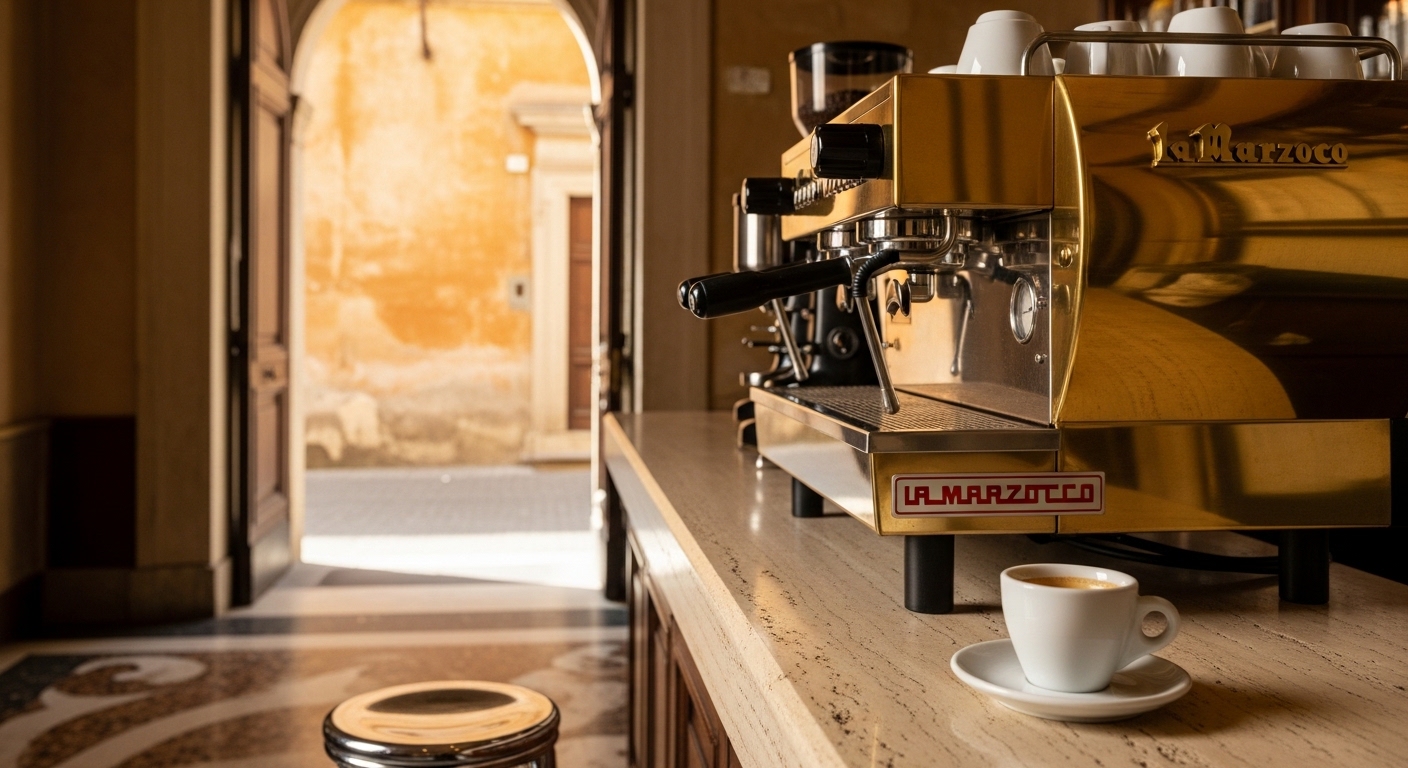
Sant’Eustachio Il Caffè has been roasting coffee over a wood fire on Piazza Sant’Eustachio since 1938. Eighty-seven years. The roasting room sits behind the bar in plain sight, the gran caffè is poured pre-sweetened by default, and the counter price is the same one Romans were paying when the espresso machine in the corner was the newest piece of technology in the room. Walk three minutes north and Tazza d’Oro has been pouring espresso on Via degli Orfani since 1946. The granita di caffè con panna here is the local order on August afternoons. These two bars, both within a hundred meters of the Pantheon, are the most famous Roman coffee rooms in the world and the foundation the rest of the city is built on.
The other Rome opened in the last fifteen years. Faro Caffè Specialty Coffee on Via Piave 55. Pergamino Caffè on Piazza del Risorgimento 7. Roscioli Caffè on Piazza Benedetto Cairoli 16. Specialty rooms with V60 pour overs, light roasted single origins, baristas who can talk through farm names and harvest months. The new wave is small and it does not pretend to replace the classic bar. The two systems run in parallel on the same map, often on the same street, and the locals move between them without ceremony.
Below are ten of those rooms, by neighborhood. The standing-at-the-counter classic Rome and the sitting-at-a-table new Rome, in roughly the order a coffee day actually unfolds.
What makes Rome coffee different
Density first. Rome has 20,858 coffee shops mapped in the Pulled dataset, more than any other city in the world, ahead of Madrid and Tokyo in absolute count. A neighborhood of ten thousand residents will carry forty bars. The Roman drinks two or three espressos a day on average. The bar is not a destination, it is a piece of infrastructure on the corner.
The recipe is the next thing. The Roman espresso pulls 1:2 in twenty-five seconds at nine bar. Seven grams of dark roasted blend into a fourteen gram shot, served in a hot cup, almost always with sugar already added or offered by default. The new wave specialty rooms have started moving to 1:2.5 in eighteen to twenty-two seconds with lighter roasts, which is closer to the third wave Anglo recipe. Both styles run on the same blocks. The drinker chooses.
The third thing is the standing rule. In a classic Roman bar, the espresso at the counter (al banco) costs eighty cents to one euro twenty. The same espresso seated (al tavolo) costs three to four euros. The price is the seat, not the coffee. Tourists who sit at the table pay double for the same one ounce of liquid. Romans almost always drink standing.
Centro Storico: the classic bars
The historical center holds the rooms that built Roman coffee. The Pantheon, Piazza Navona, Campo de’ Fiori. Four of the most famous espresso bars in Italy are inside a ten-minute walk of each other here.
Sant’Eustachio Il Caffè on Piazza Sant’Eustachio 82 has been roasting in-house since 1938 and the bar still pulls espresso the way it did then. The gran caffè comes pre-sweetened in a small ceramic cup, the crema thick on top from the house technique with the second of foamed espresso whipped in by hand. Order the gran caffè standing if you want the Rome that has not changed in three generations. Order the gran caffè senza zucchero if you want it unsweetened.
Camilloni a Sant’Eustachio at 54 Piazza di Sant’Eustachio sits on the same square as Il Caffè and runs as the everyday Roman bar for the residents who actually live in Centro Storico. Less famous, less crowded, the same neighborhood coffee culture without the line. Order an espresso al banco if you came in for the version of this corner the regulars drink.
Tazza d’Oro at Via degli Orfani 84 has been pouring espresso since 1946. The granita di caffè con panna is the summer order and the reason the place is a destination from June through September. Crushed coffee ice with sweetened cream on top, served in a tall glass at the counter, two euros for a drink that twelve dollars will not buy anywhere else in Europe. Order the granita di caffè con panna if you came in July. Order an espresso and a cornetto if you came any other month.
Emporio Sant’Eustachio at Via della Maddalena 36 is the retail arm of Il Caffè, three blocks away. Whole beans, ground coffee, espresso cups, the small ceramic spoons. The room is mostly for buying not drinking but the bar in the back will pull you a shot of the house roast in a take-away cup. Order whole beans if you came for the roast that has fed the Pantheon corner for eighty-seven years.
Roscioli Caffè Pasticceria at 16 Piazza Benedetto Cairoli is the coffee bar of the Roscioli family, who built one of the most respected delis and bakeries in Rome a few blocks north. The caffè is the breakfast room: pasticcini, maritozzi with cream, an espresso program that bridges classic Roman with new wave specialty. The bar pulls a darker house blend in the morning and a lighter rotating single origin on the second machine. Order a maritozzo and an espresso if you came for the Roscioli breakfast. Order the single origin pour over if you want to see how the new Rome dialed the same room.
Trastevere and the new wave
Across the river, Trastevere has become the unofficial home of the Roman specialty scene since around 2015. Smaller rooms, V60 drippers on the bar, baristas in their twenties and thirties who trained in London or Melbourne before moving back. The neighborhood holds two or three of the cleanest specialty programs in the city plus a long tail of small cafes still finding their footing.
Trastevere also reads as the casual neighborhood register. The vibe is slower than Centro Storico, the prices are slightly lower than the tourist zone, and the locals actually outnumber the visitors most weekday mornings. A specialty cortado at 9 AM in Trastevere is the new Roman morning the way a gran caffè at the counter is the old one.
The new wave outside Trastevere
The specialty register has spread beyond Trastevere to the residential pockets ringing the historical center. Three of the strongest new wave rooms sit in those pockets, not in the tourist core.
Faro Caffè Specialty Coffee at Via Piave 55 in the Sallustiano district holds the most rigorous specialty program in central Rome. The bar runs a rotating cast of European roasters, the espresso recipe is dialed to the new wave 1:2.5 ratio, and the pour over menu is the move. The room is small and the regulars are mostly Roman, not tourist, which is the giveaway. Order a V60 of the rotating roaster if you came to taste what the new Rome is roasting this month. Order an espresso of the house dial if you want to see how the specialty register pulls the Italian standard.
Pergamino Caffè at Piazza del Risorgimento 7 sits just outside the Vatican walls in Prati. The bar is part of a small Italian specialty chain that runs Pergamino as the Roman flagship, with a clean modern interior, a multi-roaster espresso program, and a strong pastry side. The Risorgimento location handles the Vatican spillover and the Prati morning rush. Order a flat white if you came for the new Italian specialty take. Order an espresso and a brioche if you want the breakfast format the room was built around.
Spinosi on Via dei Sabelli 113 in the San Lorenzo district sits east of Termini and runs a smaller, quieter version of the new wave register. The room is mostly students and the local San Lorenzo crowd, the menu is built around third wave espresso with light Italian sensibilities, and the bar is rarely crowded. The shop has not surfaced in the Pulled directory yet but the residents will tell you about it.
The bill at the bar
One last note before the closing. The two-price system in Rome is the most underestimated piece of practical knowledge a visitor can carry. At the counter, an espresso runs ninety cents to one euro twenty in the famous bars and seventy to ninety cents in a neighborhood bar. Seated at a table, the same espresso is three to four euros at the famous bars and two to two-fifty in the neighborhood. The price difference is the seat. The coffee is identical.
The protocol: walk in, pay at the cashier (cassa) first, hand the receipt to the barista, drink standing at the counter. If you want to sit, walk to a table, wait for service, and accept that you are paying for the chair. Both are valid choices. Romans almost always pick the counter for an espresso and the table for a long coffee with a pastry and a friend.
A day across Rome
A Roman coffee day that starts with a gran caffè at the counter at Sant’Eustachio, runs a V60 at Faro on Via Piave at noon, and ends with a granita di caffè at Tazza d’Oro before dinner is one walk across the two coffee Romes inside thirty minutes of foot. The classic bar held the corner for eighty-seven years and is not going anywhere. The new wave specialty room arrived fifteen years ago and built a parallel city on top of the same blocks. Both fit. The drinker chooses.
The Pulled directory tracks every cafe across Rome and the wider Lazio region with check-in radius for the iOS app. The pillar reading on espresso machines and coffee origins covers the technical ground these rooms are built on. Pulled Coffee pays real cash via PayPal for visiting these shops. Visit /earn for the rules.
Explore coffee in In rome