March 31, 2026
Mexico City's Best Coffee Shops, Ranked by Locals (2026)
Coffee arrived in Mexico in the late eighteenth century through Veracruz, brought from Cuba and the Caribbean as part of the broader Spanish colonial trade. The first commercial Mexican coffee plantations were established in the early nineteenth century in Veracruz state. Coffee cultivation expanded into Chiapas, Oaxaca, Puebla, and Guerrero during the nineteenth and twentieth centuries. Today Mexico produces roughly four to five million sixty-kilo bags of coffee per year, ranking among the top ten coffee producers globally and producing some of the world’s most respected washed and natural arabicas.
Mexico City sits at the center of this production economy. The proximity to Chiapas (eight to twelve hours by road), Oaxaca (six hours), and Veracruz (four hours) gives CDMX cafés access to fresh-harvest domestic specialty coffee that few other capitals can match. Café de Tacuba, opened in 1912 in the Centro Histórico, anchored the heritage CDMX café register through most of the twentieth century. Café El Popular, opened in the 1950s on Calle 5 de Mayo, remains a working twenty-four-hour café institution. Sanborns, founded in 1903, defined mid century Mexican café service through its multi-room operations across the country. The contemporary specialty wave arrived in the late 2000s and accelerated through the 2010s.
Roma Norte and Condesa
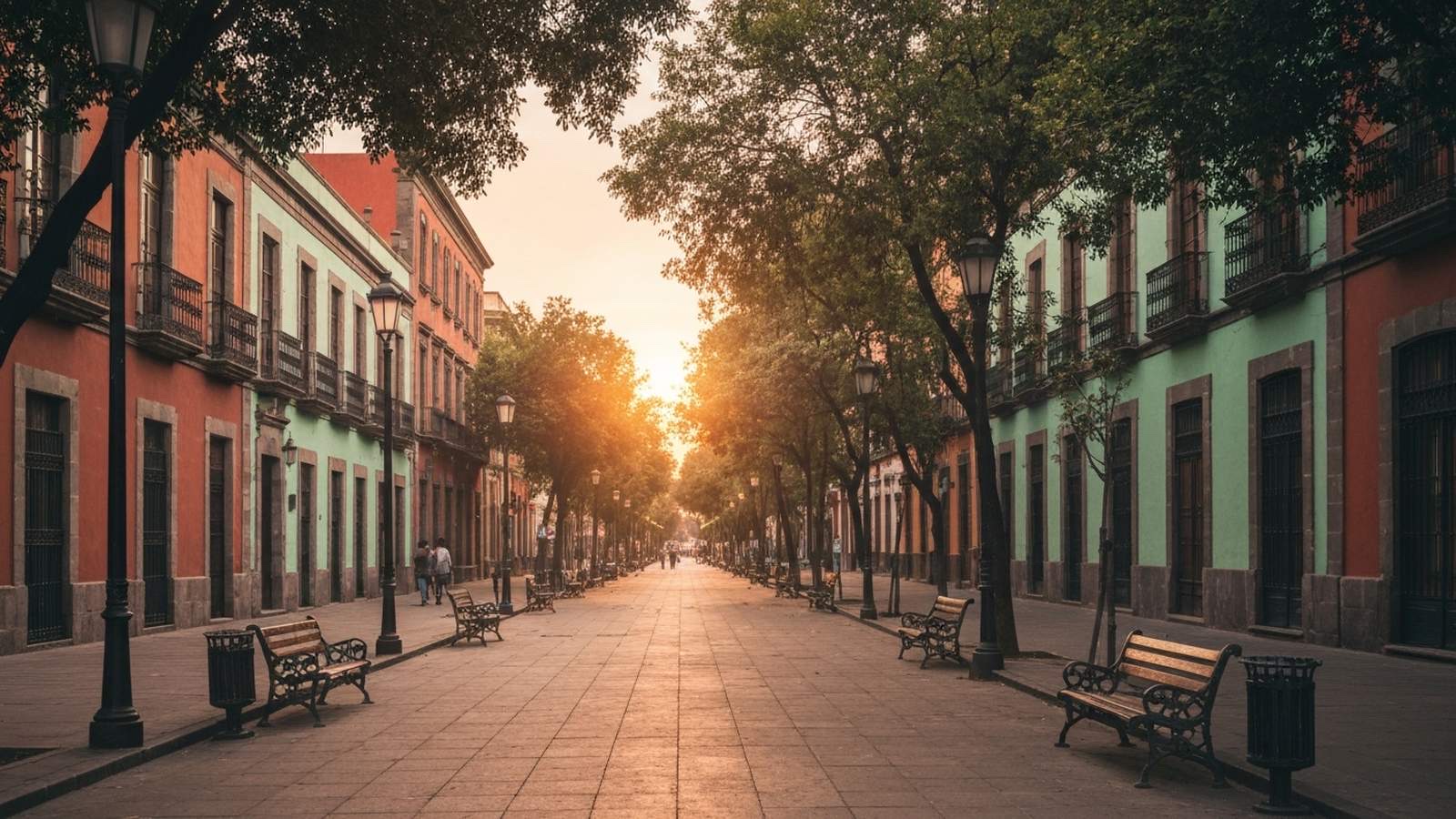
Roma Norte and the adjacent Condesa neighborhood hold the highest concentration of quality coffee in the city. Buna 42 on Calle Orizaba, opened in 2015 by Pepe Pinedo and Diego Pinilla, is one of the city’s most-cited specialty operations and runs a serious sourcing program. Cafe Nin on Avenida Álvaro Obregón pours competition-grade specialty alongside a strong food program. Blend Station operates the original Roma Norte location and has expanded to multiple CDMX neighborhoods. Cardinal, opened by Sebastián Pinilla in 2015, runs a roaster-café program with deliberate transparency on Mexican farms. Almanegra, also in Roma Norte, pours single origin pour overs in a small front room. The tree-lined streets, the early-twentieth-century art nouveau and art deco architecture, and the mix of residential and commercial create an environment where lingering over coffee feels natural. Explore all coffee shops in Mexico City.
Polanco
Polanco’s upscale character has attracted international specialty brands alongside ambitious local operations. Quentin Café on Avenida Presidente Masaryk operates with serious sourcing and design. Joselo on Newton runs a roaster-café program with multiple Polanco locations. The neighborhood’s concentration of embassies, multinational corporate offices, and luxury retail produces demand for specialty coffee that the area’s cafés now consistently meet. The price register here runs higher than the rest of CDMX, with specialty drinks often at fifty to seventy pesos versus thirty-five to fifty in Roma Norte. The neighborhood’s tree-lined Avenida Presidente Masaryk and the Bosque de Chapultepec park to the south produce a different café-going rhythm than the more bohemian central neighborhoods.
Coyoacán
Coyoacán’s preserved colonial center, its association with Frida Kahlo and Diego Rivera, and its village-within-the-city character attract a mix of tourists and residents who appreciate its slower pace. Café Avellaneda, opened in 2010 by Pepe Pinedo on Calle Higuera, is one of CDMX’s most respected specialty operations and a regular reference for both Mexican baristas and international specialty travelers. The cafés around Jardín Centenario and Plaza Hidalgo serve the broader Coyoacán visitor population. The Viveros de Coyoacán park nearby creates a morning walk that integrates well with a coffee stop. The Casa Azul (Frida Kahlo Museum) and the Casa Estudio Diego Rivera y Frida Kahlo create cultural foot traffic that the neighborhood’s cafés have learned to serve without losing the local register.
Juárez and Cuauhtémoc
Colonia Juárez’s position between the Centro Histórico and Reforma makes it one of CDMX’s most accessible neighborhoods for visitors who want to experience the city’s specialty coffee scene. Blend Station’s Juárez location and a network of strong independents have made the neighborhood a reference point. The art deco and beaux-arts buildings, the tree-lined streets, and the proximity to the Glorieta de Cibeles create an environment that rewards slow exploration between cafés. Cuauhtémoc, just east, holds smaller specialty operations including the original Café Cardinal location.
Centro Histórico
The Centro Histórico holds CDMX’s heritage café register. Café de Tacuba, opened in 1912 on Calle de Tacuba, is one of the country&rsquo>s oldest continuously operating cafés and serves traditional Mexican food alongside its long-running coffee program. Café El Popular on Calle 5 de Mayo, opened in the 1950s and operating twenty-four hours, is a working-class CDMX institution that has appeared in dozens of films and novels. La Habana on Calle Bucareli, opened in the 1950s as Café La Habana, was the meeting place for Latin American intellectuals including Fidel Castro and Che Guevara during their pre-revolutionary Mexico City period. The contemporary specialty wave has arrived in the historic center over the past decade. Cucurucho on Calle 5 de Mayo and a number of newer specialty stands now operate alongside the heritage cafés. The juxtaposition of mid century working-class cafés and contemporary specialty operations within a few blocks is one of CDMX’s most distinctive coffee landscapes.
The history of Mexican coffee
Coffee arrived in Mexico through Veracruz in the late eighteenth century via the broader Spanish colonial trade with Cuba. The first commercial plantations were established in the Córdoba region of Veracruz state in the early nineteenth century. Coffee cultivation expanded into Chiapas, Oaxaca, Puebla, Guerrero, Hidalgo, and other southern Mexican states through the nineteenth and twentieth centuries. The Mexican Revolution (1910-1920) and the subsequent agrarian reform reorganized coffee production into a mix of large estates and smaller cooperatives. Today, the bulk of Mexican coffee is produced by smallholder farmers organized into cooperatives, particularly in Chiapas and Oaxaca.
The Instituto Mexicano del Café (Inmecafé), the state coffee agency, operated from 1958 to 1989 to manage prices, quotas, and exports. Its dissolution in 1989 produced significant disruption for smallholder coffee farmers, many of whom subsequently organized into the contemporary cooperative networks that define Mexican specialty production today. The Mexican Specialty Coffee Association (Asociación Mexicana de Café de Especialidad, AMCE) and Cup of Excellence Mexico (first held in 2012) have shaped the country’s contemporary specialty register.
The CDMX specialty wave began in the late 2000s and accelerated through the 2010s. Café Avellaneda opened in 2010, Blend Station around the same time, Buna 42 and Cardinal in 2015. The contemporary CDMX specialty register draws heavily on direct relationships with Mexican farms, particularly the smallholder cooperatives in Chiapas and Oaxaca. The result is one of the few specialty coffee scenes in the world where the connection between the cup and the farm is short, traceable, and structurally embedded in the café programs.
How CDMX coffee differs from other Latin American cities
CDMX’s structural advantage over most other Latin American specialty capitals is the proximity to a major coffee-producing region within the same country. São Paulo holds a similar advantage through its proximity to Minas Gerais. Bogotá, Lima, and Quito have similar relationships to their respective coffee regions. The CDMX advantage is particularly favorable because Mexican specialty production includes some of the world’s most respected washed and natural processing methods.
Compared to São Paulo, CDMX runs at smaller specialty café count but at comparable per-capita specialty café density. Compared to Bogotá, CDMX runs at higher specialty café count and stronger international brand presence. Compared to Buenos Aires, CDMX runs at higher specialty intensity and lower café-as-cultural-institution intensity, though the Centro Histórico cafés produce a partial overlap with the broader Latin American literary café tradition.
Best coffee shops in Mexico City
Café Avellaneda in Coyoacán, founded in 2010 by Pepe Pinedo, is the city’s most-cited single origin specialty operation. Buna 42 in Roma Norte runs a serious roaster-café with direct Mexican farm relationships. Cardinal in Roma Norte pours competition-grade espresso and filter. Almanegra in Roma Norte runs a small specialty stand. Cafe Nin in Roma Norte combines coffee with a strong food program. Blend Station has multiple CDMX locations including Roma Norte and Juárez. Quentin Café in Polanco operates with serious sourcing and design. Joselo in Polanco runs a roaster-café program. Cucurucho in the Centro Histórico pours specialty espresso. Café de Tacuba, in operation since 1912, is the city’s heritage café flagship. Café El Popular in the Centro Histórico, twenty-four hours, is a heritage working-class institution. Café La Habana on Calle Bucareli is the heritage Latin American intellectual café.
Mexico City coffee FAQ
Is Mexican coffee really good?
Mexico produces some of the world’s most respected washed and natural arabicas, particularly from Chiapas, Oaxaca, and Veracruz. The country has earned multiple Cup of Excellence awards and supplies specialty roasters across North America, Europe, and East Asia. The Pluma Hidalgo region of Oaxaca and the Highland Chiapas regions produce coffee that consistently scores in the high eighties on the Specialty Coffee Association cupping scale. The country’s specialty register is now firmly established at international quality.
What is the best Mexico City neighborhood for specialty coffee?
Roma Norte and Condesa hold the highest concentration of CDMX specialty cafés. Polanco holds the upscale specialty register. Coyoacán holds the village-within-the-city register anchored by Café Avellaneda. The Centro Histórico holds the heritage café register. Each operates at a different price point and a CDMX coffee tour benefits from including all four.
What is café de olla?
Café de olla is the traditional Mexican coffee preparation: ground coffee brewed in an earthenware clay pot with cinnamon, piloncillo (raw cane sugar), sometimes cloves and orange peel. The drink is the country’s heritage coffee preparation and is served at traditional fondas and at heritage cafés across CDMX. The clay pot, the olla, contributes a particular flavor that cannot be replicated in metal or glass brewing equipment. Café de olla is most often served alongside breakfast at neighborhood fondas.
Where can I drink coffee close to the source?
Most CDMX specialty cafés source from Mexican farms, particularly Chiapas and Oaxaca. The Pluma Hidalgo region of Oaxaca, the Sierra Mazateca, the Soconusco region of Chiapas, and the Coatepec region of Veracruz are all within a day’s drive of CDMX and accept visitors at certain farms. The Cup of Excellence Mexico events, held annually since 2012, score the country’s top lots and produce auction prices that have shaped Mexican specialty buying for over a decade.
What is the relationship between Mexican coffee and chocolate?
Mexico is also the original home of cacao and the cradle of chocolate as a beverage, with documented use dating to at least 1900 BCE in the Olmec civilization. Café de cacao, café con chocolate, and the broader Mexican mole-influenced food register that combines coffee and chocolate produce a distinctive Mexican coffee culture that operates alongside the contemporary specialty register. Several CDMX specialty cafés serve mole-influenced coffee preparations as part of the broader Mexican coffee tradition.
Earning with Pulled Coffee in Mexico City
CDMX holds approximately three thousand qualifying coffee shops in the Pulled Coffee directory, including specialty cafés, heritage operations, fondas, and chain locations. The First 15 challenge ($10) is achievable in a single CDMX day at normal café-going pace. The Daily 50 challenge ($150 to $350 at Devoted or Origin tiers) is achievable in two to three weeks of consistent café visits.
A walking corridor through Roma Norte and Condesa produces five to seven qualifying check-ins in a single morning. The Polanco corridor produces three to five. Coyoacán produces three to five with the central plaza concentration. The Centro Histórico produces five to seven over a half-day walk. The CDMX Metro and Metrobús connect all major café neighborhoods at five to ten-minute frequency.
The CDMX price register is among the most favorable in major Latin American capitals. A specialty espresso at Buna 42 or Cardinal runs thirty-five to fifty pesos. A specialty pour over runs sixty to ninety pesos. A traditional café de olla runs twenty to thirty pesos at a heritage fonda. Pulled Coffee’s rewards are paid in US dollars at the same rates that apply globally. The earnings ratio is unusually favorable for CDMX users: a fifty-peso flat white at a specialty café is roughly two dollars and fifty cents, and a Pulled check-in toward the Daily 50 challenge converts to local-currency value that significantly exceeds the per-cup spend.
For coffee tourism specifically, a CDMX coffee trip benefits from including the full register: a Roma Norte specialty walk, a Polanco upscale circuit, a Coyoacán Café Avellaneda visit, and a Centro Histórico heritage café walk. The total trip produces ten to fifteen unique check-ins toward Pulled challenges and a layered understanding of CDMX coffee that no single neighborhood captures alone.
Explore the Mexico City coffee guide for the full map. Related reading: coffee tourism.
Start earning from your coffee habit.
Pulled Coffee pays you real money via PayPal for checking in at cafes and coffee shops.
Download Pulled CoffeeExplore nearby: Guadalajara · Monterrey · Puebla
Explore coffee in Mexico city