April 29, 2026
20 Sweden Coffee Shops Worth a Detour (2026 Guide)
Sweden banned coffee five times in the eighteenth century. The bans, in 1756, 1766, 1794, 1799, and 1817, were driven by concerns about foreign luxury imports and public morals. King Gustav III, who reigned from 1771 until his assassination in 1792, ran a famous medical experiment in which a pair of condemned twins were sentenced to drink coffee and tea every day for life as a comparison study. Both twins outlived the king and the doctors who supervised the trial. The bans failed in every case. By the early nineteenth century, the Swedish coffee habit was permanently established. Today the country drinks roughly eight kilograms of coffee per person per year, ranked among the top three in the world by per-capita consumption.
The cultural infrastructure is fika. Fika is the daily ritual of stopping work, sitting down, drinking coffee, and eating a small pastry, often the kanelbulle, the canonical Swedish cinnamon bun. The word is both noun and verb. The practice is built into Swedish workplace culture, family life, school structure, and the broader social fabric. The third wave specialty wave that arrived in Stockholm in the late 2000s did not replace fika. It updated the coffee inside it.
Stockholm
Drop Coffee Roasters, founded in 2009 by Joanna Alm and Stephen Leighton, was Stockholm’s specialty pioneer and remains an international reference. The roastery on Wollmar Yxkullsgatan in Södermalm is one of the most respected Nordic light roast operations. Johan & Nyström, founded in 2004, operates as both roaster and café group with multiple Stockholm locations including the flagship at Stadsgården on the waterfront. Mean Coffee in Södermalm runs a serious specialty program. Café Pascal, opened in 2011 in Vasastan, became one of the city’s most-photographed specialty cafés and helped define the contemporary Stockholm fika aesthetic. Snickarbacken 7, in Östermalm, combines coffee with a design store. Vete-Katten, on Kungsgatan, is a heritage konditori opened in 1928 that holds the city’s classical fika register. Explore all coffee shops in Stockholm.
Gothenburg
da Matteo Roasters, founded in 2006 in Gothenburg by the Matteo family, runs multiple locations including the Magasinsgatan flagship and is one of Sweden’s most respected roasters. The company built the Gothenburg specialty register and remains the city’s most-cited operation. Bar Centro on Storgatan pours espresso shoulder-to-shoulder with the city’s pastry tradition. Café Husaren in Haga is famous for its enormous cinnamon buns and is a heritage fika destination, one of the few remaining nineteenth-century kondis in the city. The Haga district itself is one of the densest fika neighborhoods in Sweden. Explore all coffee shops in Gothenburg.
Malmö
Lilla Kafferosteriet, founded in 2003, is Malmö’s specialty pioneer and runs both a roastery and a café in the city center. Solde Kaffebar in Davidshall pours quality specialty alongside a serious pastry program. St. Jakobs Stenugnsbageri operates a wood-fired bakery with strong coffee at Davidshall. The Öresund Bridge connects Malmö to Copenhagen in thirty-five minutes by train, which produces a combined Malmö-Copenhagen specialty corridor that is one of the densest in Northern Europe. Many Malmö residents fika in Copenhagen and many Copenhageners fika in Malmö, and the cross-border movement keeps both scenes connected. Explore all coffee shops in Malmö.
Uppsala and Lund
In Uppsala, Café Linné holds a comfortable position between heritage and contemporary specialty. Ofvandahls Hovkonditori on Sysslomansgatan, opened in 1878, is the city’s heritage kondi and continues to operate as a working bakery and café. The university-driven population produces a fika rhythm tied to the academic calendar. Explore all coffee shops in Uppsala. In Lund, Espresso House holds the Swedish chain register; Lundagård and Café Ariman serve student-driven specialty programs near the university. The Lund university coffee culture predates the contemporary specialty wave by over a century and remains structurally tied to academic life.
The history of Swedish coffee
Coffee arrived in Sweden in 1685 through the port of Gothenburg. The drink became fashionable at the Stockholm court during the late seventeenth century, particularly after King Charles XII returned from his five-year exile in the Ottoman Empire in 1715, bringing coffee preparation knowledge with him. The first Swedish coffeehouse, Sundberg’s Konditori, opened in Stockholm in 1785, although less formal coffee service had been available at inns and private homes for nearly a century before. The eighteenth-century coffee bans, driven by mercantilist concerns about foreign imports and by sumptuary laws aimed at restricting working-class luxury, were repeatedly imposed and repeatedly ignored. By the 1820s the bans had been abandoned and coffee had become a universal Swedish household drink.
The fika tradition emerged in the late nineteenth and early twentieth centuries as Swedish industrial workplaces formalized morning and afternoon coffee breaks. The kanelbulle, the canonical Swedish cinnamon bun, became the standard fika pastry by the 1920s. The country celebrates Kanelbullens Dag, Cinnamon Bun Day, on October 4 every year. Twentieth-century Swedish coffee was dominated by industrial roasters, particularly Gevalia, founded in Gävle in 1853 and now part of the JDE Peet’s portfolio, and Arvid Nordquist, founded in Stockholm in 1884. The contemporary specialty wave began in the late 2000s with Drop Coffee, Johan & Nyström, da Matteo, and a network of younger Swedish roasters who pushed Nordic light roast practice to international quality. By 2015 Stockholm had achieved continental specialty status and Swedish-trained baristas were working in specialty cafés across Europe and Asia.
Swedish coffee terminology
Fika is both a noun and a verb. Att fika means to take a coffee break with pastry. En fika is the break itself. The word derives from a nineteenth-century back-slang reversal of "kaffi," an older Swedish form of "kaffe." Påtår is the Swedish term for a refill, common at older establishments where the second cup is included in the price of the first. Bryggkaffe is filter coffee, the Swedish home default. Kokkaffe is boiled coffee, the older Scandinavian preparation method, still served in some heritage cafés in northern Sweden. Cappuccino, latte, and the international specialty register dominate the contemporary café menu. The Swedish flat white runs lighter and more delicate than the Australian original, shaped by the broader Nordic light roast preference.
Kanelbulle is the cinnamon bun. Kardemummabulle is the cardamom bun, equally common at Swedish kondis. Prinsesstårta, the green-marzipan princess cake, appears at heritage kondis. Semla, the cardamom-cream bun served traditionally before Lent, has its own short season. The Swedish kondi, the konditori, is the heritage café-bakery that has anchored Swedish coffee culture since the nineteenth century. Many Swedish konditoris are over a hundred years old and continue to serve the same recipes at the same addresses.
How Swedish coffee compares to other traditions
Sweden is one of the rare countries where the coffee ritual matters more than the coffee technique. Fika is not specialty coffee. Fika is a cultural infrastructure that makes the daily café visit non-negotiable. The contemporary specialty wave fits inside fika cleanly. A specialty café in Stockholm is recognizable by its lighter roasts, sharper extraction, and Q-grader-trained baristas, but the cultural register is the same as the heritage konditori: sit, eat a kanelbulle, drink coffee, talk for forty minutes.
Compared to the Norwegian and Finnish scenes, Swedish specialty operates at slightly higher café density per capita and at slightly older roastery infrastructure. The three Nordic specialty traditions are closely connected, with Tim Wendelboe in Oslo, La Cabra in Aarhus, Coffee Collective in Copenhagen, and Drop in Stockholm all part of the broader Nordic light roast network that has shaped global specialty coffee since the late 2000s. Compared to the German or Dutch specialty wave, Swedish specialty runs at lighter roast levels and with a stronger emphasis on filter coffee over espresso.
Sweden coffee FAQ
What is fika and how often do Swedes do it?
Fika is the Swedish ritual of stopping work, sitting down, drinking coffee, and eating a small pastry. The practice is built into Swedish workplaces, schools, and family life. Most Swedes fika at least once a day, and many fika twice: morning and afternoon. The standard format is filter coffee with a kanelbulle or other small pastry, typically lasting fifteen to thirty minutes. The ritual is older than specialty coffee but has provided the cultural infrastructure for the contemporary Swedish café register.
Why do Swedes drink so much coffee?
Sweden ranks among the top three countries by per-capita coffee consumption, at roughly eight kilograms per person per year. The high consumption is anchored by the fika tradition and by long winters that produce a strong cultural preference for hot drinks consumed in social settings. Most Swedes drink coffee multiple times per day at home, at work, and at cafés. The country’s coffee culture is one of the deepest in the world by both consumption volume and cultural integration.
What is the difference between Swedish and Norwegian coffee?
The two traditions are closely related. Both run at the lighter end of Nordic specialty roasting, both prioritize filter brewing alongside espresso, and both have produced internationally respected roasters. Norwegian coffee, anchored by Tim Wendelboe in Oslo and Solberg & Hansen, runs marginally lighter than Swedish specialty. Swedish coffee has the deeper heritage konditori register, with hundred-year-old kondis still operating at the same addresses. The two traditions are best understood as siblings rather than alternatives.
Where outside Stockholm should I drink coffee in Sweden?
Gothenburg holds the second-deepest specialty corridor, anchored by da Matteo. Malmö is part of the broader Malmö-Copenhagen Öresund corridor that is one of Northern Europe’s densest coffee regions. Uppsala and Lund have university-driven scenes. Smaller cities like Linköping, Norrköping, Jönköping, and Umeå each have credible local specialty registers. The Swedish rail network connects all major cities and makes weekend coffee circuits practical.
What is a kanelbulle and where can I find the best one?
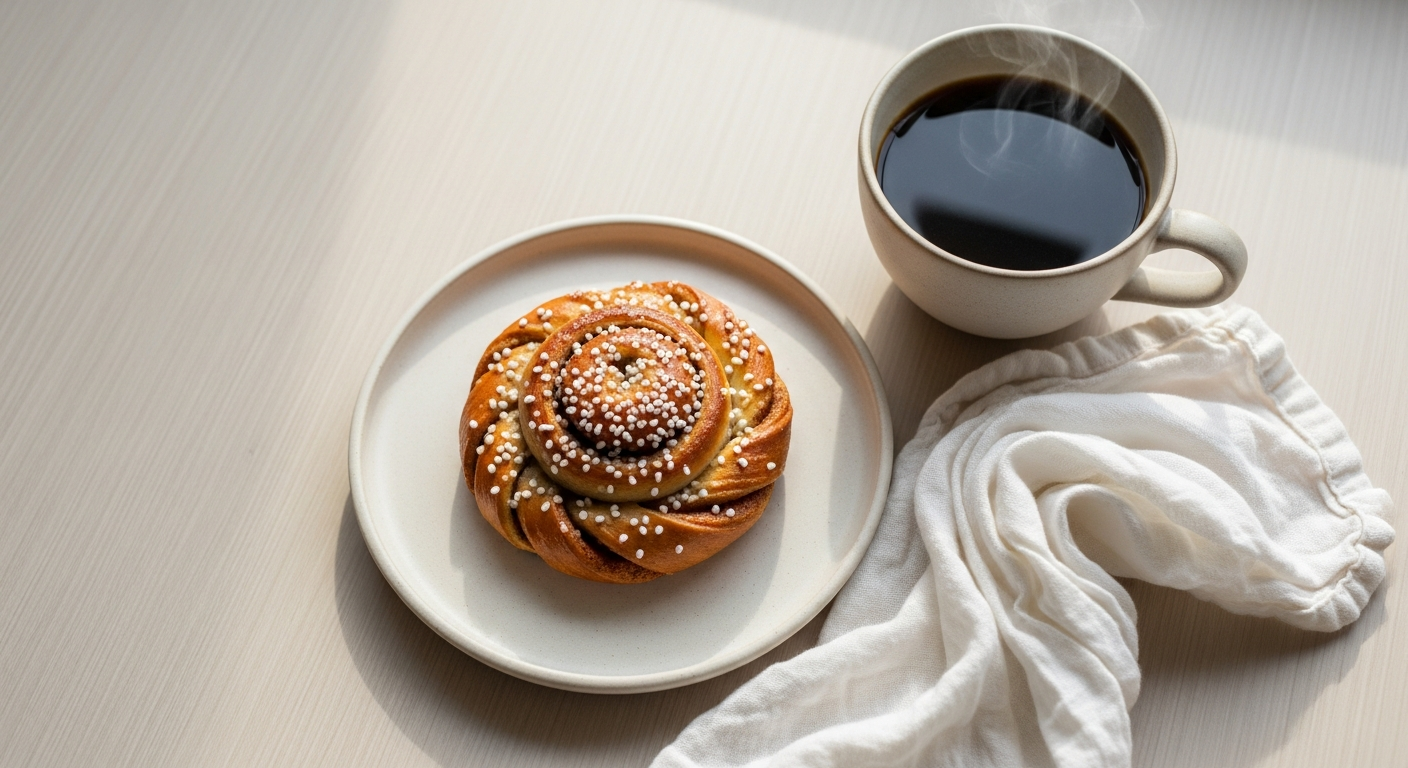
The kanelbulle is the canonical Swedish cinnamon bun: yeasted dough rolled with cinnamon, cardamom, butter, and sugar, baked in a knot or spiral form, often topped with pearl sugar. Café Husaren in Gothenburg’s Haga district is famous for its plate-sized version. Vete-Katten in Stockholm is the city’s most-cited heritage kanelbulle. The bun is served everywhere in Sweden and is the default fika pastry across all registers from the konditori to the specialty café.
Earning with Pulled Coffee in Sweden
Stockholm holds the highest specialty café density in Sweden. The Pulled Coffee directory holds approximately three thousand qualifying coffee shops in Stockholm, including specialty cafés, heritage konditoris, and chain locations. Gothenburg, Malmö, Uppsala, Lund, and a network of smaller Swedish cities each contribute additional café counts. The First 15 challenge ($10) is achievable within forty-eight hours of normal Swedish café-going, particularly given how natively the daily fika ritual produces multiple café visits per day.
The Daily 50 challenge ($150 to $350 at Devoted or Origin tiers) is achievable in three weeks of consistent fika rhythm. The structural advantage of Swedish coffee culture for Pulled users is that fika is already daily and already non-negotiable. The challenge is not building the habit; the habit was there for a hundred years. The Pulled Coffee app simply records check-ins for visits that were going to happen anyway.
A walking corridor through Södermalm, Vasastan, and Östermalm in Stockholm produces five to seven qualifying café check-ins in a single morning. The Gothenburg Haga and Magasinsgatan corridor produces a comparable count. Malmö and Copenhagen, connected by the Öresund Bridge in thirty-five minutes, can be combined into a cross-border weekend that produces fifteen to twenty unique specialty check-ins on the Pulled directory.
The Swedish price register is moderate to high. A flat white at a Stockholm specialty café typically runs forty-five to fifty-five Swedish kronor, roughly four euros to five euros at recent exchange. Bryggkaffe at a heritage konditori runs around thirty kronor. Pulled Coffee’s rewards are paid in US dollars at the same rates that apply globally. The earnings ratio is favorable, particularly for the daily-fika user who would have made the visits regardless. See also: best coffee cities in Sweden, what is a pour over, light vs dark roast.
Explore coffee in Sweden