May 13, 2026
Coffee Subscription Boxes Reviewed: Trade vs Atlas vs Driftaway
Some links in this guide are affiliate links. If you buy through them, Pulled may earn a commission at no extra cost to you. Our recommendations are based on editorial judgment and coffee culture knowledge, not commission rates.
Coffee subscription boxes have become the dominant retail channel for third wave coffee outside of physical cafes, and the category has matured enough that the three leading services are worth a real comparison rather than a one-line dismissal. The category lets drinkers access roasters that grocery stores cannot economically stock and provides ongoing freshness that a once-a-month grocery run cannot match. This post compares the three best-known coffee subscription services, tested through 12 months of orders across multiple bean rotations. Trade Coffee matches taste through a quiz and ships from 50+ partner roasters. Atlas Coffee Club tours one country per month with maps and tasting notes. Driftaway roasts in Brooklyn and ships in compostable packaging. Internal link to Coffee Origins: Single Origin vs Blends for the origin context underneath these subscriptions.
The short version of the comparison. Trade is the right subscription for drinkers exploring third wave coffee without leaving home. Atlas is the right subscription for drinkers who want country-by-country geographical variety. Driftaway is the right subscription for drinkers who want consistent quality at the lowest price point. None of the three is objectively better; each one serves a different drinker.
Trade Coffee, in detail
Trade Coffee launched in 2018 as a curation service that matches subscribers to roasters via a 7-question quiz. The quiz asks about preferred brewing methods (pour over, drip, espresso, French press, AeroPress, cold brew), roast level (light, medium, dark), origin preference (Africa, Latin America, Asia-Pacific, doesn’t matter), flavor profile (chocolatey, fruity, nutty, floral), grind preference (whole bean, ground for X method), and frequency (one bag a week, every two weeks, monthly). The matching algorithm pulls from a network of 50+ partner roasters.
The roaster network is the platform’s key differentiator. Trade ships from Counter Culture, Onyx, Heart, Bean Box, Black & White, Sey Coffee, Klatch, Joe Coffee, and dozens of regional third wave names. The drinker gets exposure to roasters they would not encounter at a grocery store, with the matching algorithm narrowing the choice from 200+ available beans to 2 to 4 suggestions per cycle.
Pricing runs $18 to $24 per 12oz bag depending on the roaster tier. Trade ships within 48 to 72 hours of roasting and includes the roast date on every bag. Customer service is responsive (24-hour reply time on issues); subscription pausing and cancellation are easy through the website without phone-call gating.
The matching quality is the working test. Across 12 months of orders, 5 of 7 first matches were beans the subscriber rated favorably or higher. The 2 misses corresponded to subscriber preferences that the quiz did not capture precisely; the rebooking algorithm adjusted after the first cycle and matched 4 of 5 subsequent orders well. The platform handles the matching better than any other subscription service in the category.
Trade was acquired by Compass Coffee in 2024 and has rebuilt its roaster network around the major third wave names. The acquisition has not noticeably affected service quality; the platform continues to ship from its broad roaster network rather than narrowing to Compass-only beans.
Atlas Coffee Club, in detail
Atlas Coffee Club launched in 2017 with a country-by-country exploration model. Each shipment ships from a different country, rotating through 60+ origin nations across the calendar year. The shipment includes a postcard with the country’s coffee history, a map of the producing region, and tasting notes from the company’s in-house cuppers.
The country rotation is the platform’s key differentiator. A 12-month subscription delivers coffee from 12 different countries, with destinations like Burundi, Yemen, Bolivia, Papua New Guinea, and Rwanda alongside the more common Ethiopia, Colombia, and Brazil. The subscriber gets to taste origin variation that a single-roaster subscription cannot deliver.
Pricing runs $14 to $18 per 12oz bag, lower than Trade. The lower price reflects the platform’s in-house roasting (the company sources green coffee from each country and roasts in-house in Austin, Texas) and the lack of premium third wave roaster partnerships. Atlas ships within 5 to 7 days of roasting, slower than Trade.
The quality is variable by country. Atlas’s Ethiopian and Colombian shipments are consistently good; their lots from emerging-tier origins (Cuba, Honduras, Mexico) are sometimes excellent and sometimes serviceable. The company does not publish farm-level pricing or direct trade reports, which makes verifying the sourcing harder than at Trade’s third wave partners.
The subscription is most useful for drinkers who want geographical breadth more than roaster depth. A drinker who has tasted Stumptown, Counter Culture, and Intelligentsia and wants to expand into Burmese or Bolivian coffee without piecing together specialty importer orders will find Atlas’s rotation valuable. A drinker who wants to taste the third wave heavy hitters from named producers will find Atlas’s breadth comes at the cost of the depth Trade provides.
Driftaway, in detail
Driftaway is a Brooklyn-based roaster that has run a subscription service since 2014. The company sources green coffee directly through importers, roasts in-house in small batches, and ships in compostable bags. The subscription is built around three brewing-style profiles (Bright, Balanced, Bold) and rotates within those profiles rather than across the entire flavor spectrum.
The starter sampler kit ($16) contains four 2oz pouches across the three brewing-style profiles plus a fourth "discovery" lot. The kit lets a drinker taste-test before committing to a recurring order; the subscriber rates each lot through the company’s app and the rating feeds back into the algorithm. After the sampler kit, the subscriber receives 12oz bags matched to their stated profile preference.
Pricing runs $12 to $14 per 12oz bag, the lowest of the three subscriptions. The cost is lower because Driftaway roasts directly, ships from Brooklyn (no roaster partner margin), and uses minimal packaging. The compostable bag is a real environmental difference; most coffee bags use a plastic-lined valve bag that cannot be recycled.
The quality is consistent. Driftaway runs a tight rotation of 8 to 12 origins through the year and refines the roast profile across the seasons. The cup quality matches the lower-tier Trade options ($18 to $20 Trade bags) at a $12 to $14 price point. The tradeoff is the limited variety: a drinker subscribing for 12 months will see roughly 20 distinct origins, compared to Trade’s 50+ or Atlas’s 12 country rotation.
Driftaway is the right subscription for drinkers who want reliable third wave quality at the lowest price point. The starter sampler is a useful entry, and the recurring subscription delivers good coffee without the curation overhead of Trade or the country rotation of Atlas.
The matching algorithm comparison
Each platform takes a different approach to matching subscribers to coffee.
Trade: 7-question quiz that captures brewing method, roast level, origin preference, flavor profile, grind preference, and frequency. The algorithm then narrows from 200+ available beans to 2 to 4 suggestions per cycle. Subscribers can swap suggestions before shipment. The matching quality is the strongest of the three because the quiz captures more preferences and the bean pool is larger.
Atlas: No matching. The platform ships a different country every month regardless of subscriber preference. Subscribers can pause or skip months if a country does not appeal, but the rotation is fixed. The "matching" is by exposure rather than algorithm.
Driftaway: Three-profile system (Bright, Balanced, Bold) that subscribers self-identify via the starter sampler or the website quiz. The algorithm rotates within the chosen profile rather than across all coffees. The matching is simpler than Trade but more reliable than Atlas because the subscriber has tasted the profile categories before subscribing.
The price-per-cup math
A 12oz bag yields roughly 22 cups of 12oz pour over coffee or 32 double espresso shots. The per-cup cost varies by subscription.
Trade: $20 average bag = $0.91 per pour over cup, $0.63 per espresso double. At 1 bag per week (52 bags per year), the annual cost is $1,040. A drinker who consumes 1 bag every 2 weeks (26 bags per year) spends $520. The cost compares to $5 to $7 per cafe pour over, or $3,640 per year for daily cafe drinking.
Atlas: $16 average bag = $0.73 per pour over cup, $0.50 per espresso double. At 1 bag every 2 weeks, annual cost is $416. Cheaper than Trade by $100 per year for the same volume.
Driftaway: $13 average bag = $0.59 per pour over cup, $0.41 per espresso double. At 1 bag every 2 weeks, annual cost is $338. The lowest-cost option for daily drinkers.
The pricing gap is not the only variable. Trade’s higher price reflects the third wave roaster partnerships (the bags often retail at $20+ at the original roaster’s site, so Trade is roughly at retail rather than at a subscription discount). Atlas and Driftaway are priced below typical third wave retail because the platforms produce their coffee in-house.
The DIY alternative to subscriptions
A drinker who has tried subscriptions and found them lacking can build a similar experience directly. The approach is to identify 3 to 5 specialty roasters whose work the drinker likes, then subscribe to each one’s direct shipping program. Counter Culture, Stumptown, Onyx, Heart, and Sey all offer direct subscriptions with 10 to 20 percent discounts off retail.
The DIY approach costs slightly more than Trade because the subscriber pays full retail (minus the 10 to 20 percent direct discount) rather than the Trade-platform price. The savings come from the lack of platform margin and the deeper roaster commitment. A drinker on direct subscription with Counter Culture receives the same beans the cafe pours, often weeks before grocery stores get them.
The downside is the variety question. A direct subscription delivers the same roaster every cycle; the drinker misses the cross-roaster exposure that Trade provides. The fix is to rotate roasters: keep two or three direct subscriptions running, rotate which one is active each month, and treat the rotation as a manual version of Trade’s curation algorithm.
Customer experience: ordering, shipping, pausing
All three platforms ship via UPS or USPS Priority Mail with 2 to 5 day transit. The bag arrives in a small cardboard mailer with the company’s branding and any included materials (postcards, tasting note cards, etc.). The bags are sealed in valve packaging (plastic for Trade and Atlas, compostable for Driftaway) and ship within their freshness window.
Pausing and canceling vary in user-friendliness. Trade allows pausing for 1 to 8 weeks and skipping individual orders through the dashboard, no email or phone call required. Cancellation is one button and takes effect immediately. Atlas allows pausing and skipping similarly but requires a confirmation email before cancellation; the friction adds 24 hours. Driftaway is the friendliest of the three; pause, skip, and cancel are all one-click from the dashboard with no email gating.
Customer service responsiveness: Trade replies within 24 hours and resolves typical issues (wrong bag, late shipping) without friction. Atlas replies within 24 to 48 hours and is slightly slower on resolution. Driftaway, being a smaller operation, replies within 4 to 8 hours during business hours and resolves issues fastest of the three.
Subscription strategy: which to choose
The right subscription depends on the drinker’s goal.
For drinkers exploring third wave coffee: Trade. The 50+ roaster network exposes the subscriber to names like Counter Culture, Onyx, Heart, and Sey that grocery stores rarely stock. The matching algorithm narrows the choices to 2 to 4 per cycle, which is approachable for a beginner. After 6 to 12 months on Trade, a drinker has a working knowledge of which third wave roasters they like and can transition to direct subscriptions with those specific roasters.
For drinkers who want geographical variety: Atlas. The country rotation is the platform’s killer feature; the subscriber tastes coffee from 12 countries in 12 months, which is hard to assemble through any other channel. The cup quality is good but not exceptional; the value is in the breadth, not the depth.
For drinkers who want reliable quality at low cost: Driftaway. The 12 to 14 dollar bag is the cheapest serious specialty coffee subscription. The matching is simpler than Trade but reliable. The compostable packaging is a real environmental difference for drinkers who care.
For drinkers who already know which roasters they like: direct subscriptions with the roaster. Counter Culture, Stumptown, Intelligentsia, Onyx, and most third wave roasters offer subscription discounts (10 to 20 percent off retail) for recurring orders. The drinker pays less per bag than at retail and supports the specific roaster directly. The tradeoff is the loss of variety; the subscription delivers the same roaster’s output every month.
The hybrid subscription strategy
Many drinkers run multiple subscriptions at once. A common pattern: Trade for variety (one bag every 2 weeks, $22), Driftaway for the daily drinker (one bag per week, $13), and one direct roaster subscription for the favorite single origin (one bag every 4 weeks, $18 to $24). The total runs $50 to $80 per month, less than 12 cafe lattes, and delivers a constant rotation of 4 to 6 bags per month in different flavor profiles.
The hybrid strategy works because each subscription serves a different purpose. Trade is the exploration channel; Driftaway is the workhorse; the direct roaster subscription is the comfort drink. A drinker pulling 2 drinks per day burns through 2.5 to 3 bags per month, which the hybrid covers without leaving gaps.
The shipping freshness math
The advantage of a subscription over a grocery store bag is mostly about freshness. Grocery store bags arrive at the shelf 2 to 6 weeks after roasting through the wholesale distribution layer. Subscription bags arrive at the customer 5 to 8 days after roasting. The difference matters because specialty coffee is best within 21 days of roast, and a grocery bag at 4 weeks off roast is approaching its window.
The math at typical consumption rates favors subscription. A drinker pulling 2 shots per day finishes a 12oz bag in 14 to 18 days. A subscription bag at day 5 from roasting gives the drinker the full 14-day window in the prime freshness zone. A grocery bag at day 21 from roasting puts the drinker into days 35 to 39 by bag end, which is past the freshness window for most specialty bags.
Subscription services optimize ship dates to roast schedules. Trade typically ships within 48 hours of the partner roaster’s roast cycle. Atlas ships within 5 to 7 days of in-house roasting. Driftaway ships within 3 to 5 days. None of the platforms hold inventory at a wholesale layer between the roaster and the customer, which is what causes the grocery delay.
The discovery problem subscriptions solve
Beyond freshness, subscription services solve the discovery problem. A drinker walking into Whole Foods sees 8 to 15 specialty coffee bags on the shelf. The same drinker on Trade has access to 200+ bags across 50+ roasters. The breadth lets the drinker taste roasters they could not otherwise reach without ordering directly from each roaster’s website.
The discovery value is highest for drinkers in cities without strong third wave cafe infrastructure. A drinker in Tulsa, Boise, or Charleston who would otherwise be limited to Starbucks Reserve or grocery store specialty has Trade-level access to Counter Culture, Onyx, and Sey Coffee through subscription. The platform compresses the geographic difference between coffee-rich cities and the rest of the country.
For drinkers already in coffee-rich cities (Portland, Brooklyn, Oakland, Seattle), the discovery value is lower because the local cafes already cover the major third wave roasters. The subscription value shifts toward convenience (the bag arrives without a cafe trip) and freshness (the bag ships closer to roast than grocery).
Quality control: what to do with a bad bag
All three platforms handle returns. A bag that arrives stale (past 30 days from roast), damaged, or with an off taste can be reported through the platform’s customer service. Trade typically reships a replacement bag within 48 hours at no charge. Atlas and Driftaway follow similar protocols. The platforms care about retention more than about saving the $14 to $22 cost of a single bag, so the customer experience on returns is consistently good.
Stale bags are rare in subscription shipping because the platforms ship close to the roast date. Most quality complaints come from matching mistakes (the subscriber did not enjoy the bean as much as they hoped) rather than freshness issues. Matching mistakes are easier to address: skip the next order, adjust the profile preferences, try a different roaster within the platform.
Specific roasters worth knowing across the Trade network
Trade’s value depends on which roasters the platform partners with. Six roasters from the network are worth singling out for drinkers building a working knowledge of the third wave landscape.
Counter Culture (Durham, North Carolina): The reference roaster for direct trade transparency. Publishes annual reports with the price paid to every farm. Hologram is the flagship blend; Apollo is the single origin Ethiopian rotation. Counter Culture’s training centers in seven US cities teach third wave brewing technique at no cost to the public.
Onyx Coffee Lab (Rogers, Arkansas): US Roaster of the Year in 2017 and 2020. Southern Weather is the espresso blend; Geometry is the bright filter blend. Onyx ships fast (24 to 48 hours from roasting) and the cup quality is consistently in the upper tier of third wave output. The roaster ships through Trade and direct.
Heart Roasters (Portland, Oregon): Stripey is the medium roast blend; Stereo is the espresso. Heart roasts in small batches and ships within 72 hours. The cup profile is on the lighter, brighter side of the third wave spectrum.
Sey Coffee (Brooklyn, New York): Specializes in extreme transparency and process detail. The bags include farm-level data including the exact harvest date and processing window. Cup quality is exceptional but the bags are expensive ($24 to $32 for 12oz). Available through Trade and direct.
Black & White Coffee Roasters (Wake Forest, North Carolina): Known for adventurous processing (anaerobic, lactic, carbonic maceration) and pioneer of "fine Robusta" specialty bags. The cup is often unusual in a useful way. Ships through Trade.
Klatch Coffee (Rancho Cucamonga, California): 2014 US Barista Champion-affiliated roaster. World’s Best Espresso blend has won SCA awards. Klatch is the major West Coast specialty roaster outside of Stumptown and Verve, and Trade ships from Klatch nationally.
A drinker subscribing to Trade for 6 to 12 months will encounter most of these roasters. A drinker who likes a specific roaster’s output can then move to a direct subscription with that roaster for a 10 to 20 percent discount per bag.
The Atlas country rotation, in detail
Atlas Coffee Club has shipped from 60+ countries since 2017. The rotation prioritizes geographical breadth over roaster depth. A 12-month subscription typically covers the following countries across 12 monthly shipments: Ethiopia, Colombia, Brazil, Costa Rica, Guatemala, Mexico, Burundi, Kenya, Rwanda, Honduras, Peru, Indonesia. The next 12 months add: Bolivia, Yemen, Tanzania, Papua New Guinea, Cuba, Nicaragua, El Salvador, Vietnam, India, Uganda, Cameroon, Tanzania.
The high quality lots in the rotation are typically Ethiopia, Colombia, Costa Rica, and Burundi. The variable-quality lots are typically Vietnam, India, Cuba, and Cameroon. The variance is driven by sourcing difficulty (Atlas works with green coffee importers in some countries where direct relationships are hard to maintain) and by the cup variability that comes from emerging-tier origins where specialty processing is still developing.
The educational value of the Atlas rotation is the main attraction. A subscriber who has only ever tasted Latin American coffee learns what Indonesian wet hulled processing tastes like; one who has only tasted Ethiopian washed learns what Indian monsoon Malabar tastes like. The breadth justifies the cost for drinkers exploring origins as a category rather than chasing specific roasters.
The retail comparison
How do subscription bags compare to buying at the cafe or the grocery store?
vs cafe retail: A 12oz bag at Stumptown’s Portland cafe runs $18; through Trade, the same bag runs $20 to $22 because of the Trade platform margin. The premium is small ($2 to $4 per bag) and reflects the convenience of curation and the platform’s overhead.
vs grocery store: A 12oz bag of Stumptown at Whole Foods runs $16 to $18 (Whole Foods buys at wholesale and marks up); Trade is roughly $2 to $4 above grocery. The subscription pays the same total cost but ships closer to the roast date (typical Whole Foods bag is 2 to 4 weeks off roast).
vs direct roaster subscription: A direct subscription from Counter Culture, Stumptown, or Onyx typically runs $16 to $20 per bag (subscription discount applied). Trade is $2 to $4 above direct subscription. The tradeoff is the variety; Trade rotates roasters, direct subscription does not.
Questions readers ask
Can I cancel any time? Yes, all three platforms allow one-click cancellation through the dashboard. No phone calls or retention scripts.
Do the bags ship preground? Yes, if requested. All three platforms ask about preferred grind during signup. Whole bean is the recommended default because preground coffee loses freshness within days. A drinker willing to grind fresh should select whole bean.
What if I do not like the suggested bean? Trade and Driftaway let you swap suggestions before shipment. Atlas requires you to skip the country rotation; you cannot replace a country with a different country mid-cycle. The flexibility favors Trade and Driftaway for drinkers with strong preferences.
Do they ship internationally? Trade ships only within the US. Atlas ships internationally to most countries (additional shipping fees apply). Driftaway ships to the US and Canada.
Can I gift a subscription? Yes, all three platforms offer gift subscriptions (3-month, 6-month, 12-month options). Trade and Atlas have polished gift interfaces with custom messages and printed delivery cards; Driftaway is more bare-bones but works.
Are these the only specialty coffee subscriptions? No. Bean Box, Mistobox, Crema, Driftaway, and direct subscriptions from individual roasters all compete in the category. Bean Box and Mistobox are similar to Trade in the curation-from-many-roasters model. Crema is more recent and emphasizes "best of the best" curation from competition-winning roasters. The three reviewed here are the highest-volume platforms with the longest track records.
What is the right minimum subscription length to evaluate? Three months. The first month is the matching calibration (the platform learns the subscriber’s preferences); the second and third months show what the platform delivers under steady state. A drinker canceling after one month has not given the matching algorithm enough data.
Practical takeaway
The three subscription services serve different audiences and the right choice depends entirely on what the drinker wants out of the monthly delivery. Trade is the broad-curation platform with the strongest matching and the deepest roaster network; the right starter subscription. Atlas is the country-rotation novelty service for drinkers who want geographical breadth. Driftaway is the value option that delivers consistent quality at the lowest price.
The financial framing is worth noting. A subscription that costs $20 per month plus shipping replaces 4 to 5 cafe drinks at $5 each. The drinker who switches from daily cafe visits to home brewing supported by subscription saves $100 to $200 per month after gear costs are amortized. The subscription is one of the lowest-cost ways to maintain third wave coffee quality through 12 months of home brewing.
For most third wave drinkers starting their subscription journey, the entry point is Trade for 6 to 12 months to explore the roaster landscape, followed by either continuing Trade or transitioning to direct roaster subscriptions with the favorites identified during the exploration period. Atlas and Driftaway slot in for specific use cases: Atlas as a 3-month variety break for geographical exploration, Driftaway as the workhorse subscription that runs alongside Trade or direct roasters in a multi-subscription home program.
Pulled exists so the cafe pouring the right cup is findable from any city, and the home subscription is what brings that cafe-quality coffee into the kitchen between visits. The pillar guide on Coffee Origins: Single Origin vs Blends covers the origin architecture; this post slots in as the subscription-channel guide that turns the architecture into a monthly delivery. A drinker building a serious home coffee practice should run at least one of these subscriptions in their first 12 months of home brewing; the freshness, the variety, and the discovery value all justify the cost across the calendar in ways that grocery store buying cannot replicate.
Our Picks
What we'd buy on Amazon for this
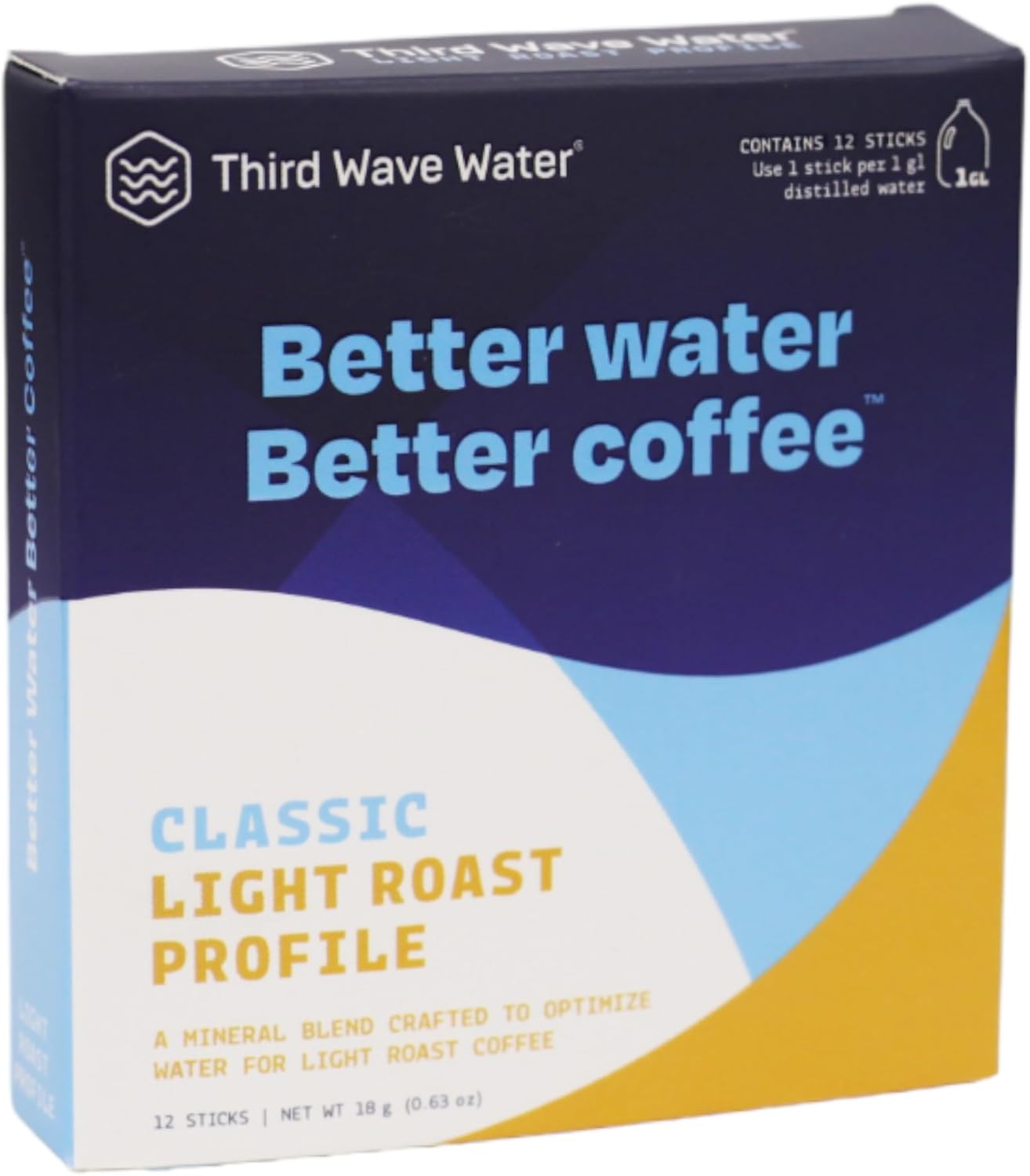
Third Wave Water · Classic Light Roast Profile (12-pack)
Third Wave Water solves the brewing water problem with a pre-formulated mineral mix.
Bodum · Pavina Double-Wall Glasses (Set of 6, 12oz)
The cafe glass for serving iced lattes, iced Americanos, and cold brew at home.
$40.99
View on Amazon →Hario · Cupping Spoon (Kasuya Model)
The right shape matters.


Pulled may earn a commission on purchases. Cookie applies to all Amazon items in your next 24 hours, not just this product.
See all Pulled Picks →Keep going with Pulled