May 13, 2026
Why Your Home Coffee Tastes Different Than the Cafe (And How to Fix It)
Some links in this guide are affiliate links. If you buy through them, Pulled may earn a commission at no extra cost to you. Our recommendations are based on editorial judgment and coffee culture knowledge, not commission rates.
A drinker who buys a bag of Stumptown Hair Bender at a cafe, brings it home, and brews it the same way the cafe did almost always gets a worse cup, sometimes dramatically so, despite identical beans and apparently identical technique. The disappointment is a common third wave experience: the cafe espresso pulls bright and chocolatey, the home espresso pulls sour and thin, the bean is identical, and the variables that explain the gap are not immediately obvious. This post walks through the seven variables that drive the home-versus-cafe quality gap, ranks them by impact, and explains how to close each one. Internal links to The Pour Over Coffee Guide and The Espresso Machine Buying Guide for the deep architecture.
The short version of the diagnosis. The biggest variable is the grinder, not the machine. The second biggest is water. The third is freshness. The cafe’s technique advantages (calibrated dose, dialed grind, even tamp) close most of the remaining gap, and these are learnable at home over a few weeks of practice. The home setup that closes 85 to 90 percent of the cafe gap costs $500 to $1,500 and consists of a good grinder, a brewing scale, a temperature-controlled kettle, and an espresso machine (or a V60 for non-espresso households).
Variable 1: the grinder
The grinder is the single largest variable in the home-versus-cafe gap. A specialty cafe uses a commercial grade grinder (Mahlkonig E65S, Anfim Pratica, Mazzer Major) that costs $2,000 to $4,000 and produces particle distributions tighter than any home grinder under $800. The grind consistency drives the extraction consistency, which drives the cup quality. A drinker pulling cafe beans through a $150 home grinder is brewing the right coffee through the wrong tool.
The fix is a quality burr grinder. For pour over and drip, the Baratza Encore at $170 is the entry-level standard. For espresso, the Eureka Mignon Specialita at $640 or the Niche Zero at $800 is the working sweet spot. The full grinder buying guide is at the dedicated blog post on grinder selection, but the principle for closing the cafe gap is to spend at least 25 percent of the total home coffee setup on the grinder.
Most home drinkers spend the wrong direction. A $1,500 espresso machine paired with a $200 grinder produces worse shots than a $500 machine paired with a $700 grinder. The grinder limits the cup more than the machine does at every price tier below $4,000.
Variable 2: the water
Coffee is 98.5 percent water and 1.5 percent dissolved solids. Whatever is already in the water before brewing is part of the cup. Cafes typically use filtered water tuned to the Specialty Coffee Association standard: 150 ppm total dissolved solids, 51 to 85 ppm calcium hardness, 40 ppm alkalinity. Home tap water rarely matches these targets.
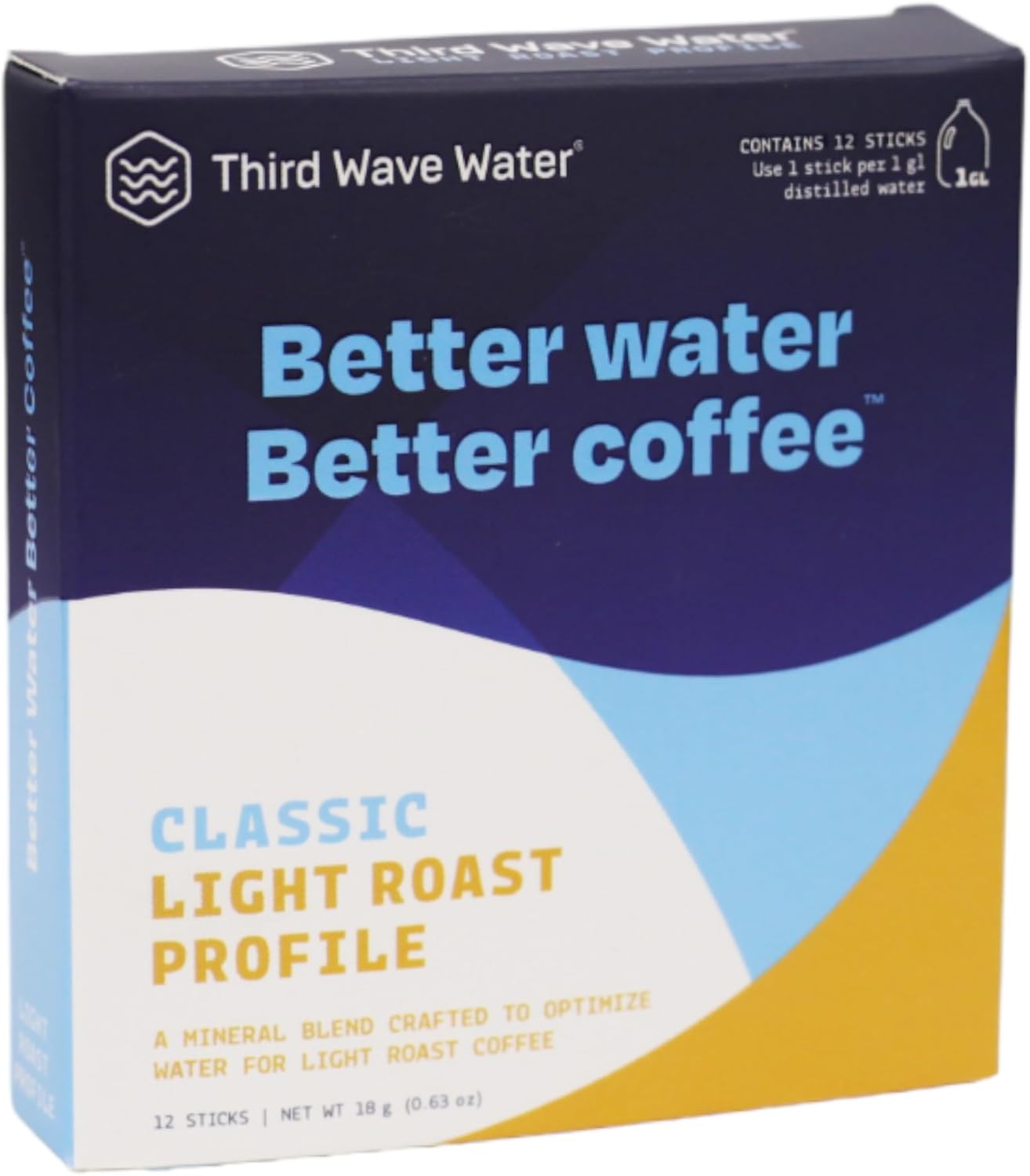
Hard water (high mineral content, common in much of the US) under-extracts coffee and produces a flat, dull cup. Distilled water (very soft) cannot extract enough and produces a thin, weak cup. Bottled spring water from a brand that publishes its mineral content (Crystal Geyser Alpine, Iceland Spring) often falls close to the SCA target. Third Wave Water sachets, added to a gallon of distilled water, produce a precise brewing-water profile that matches third wave cafe water within a few ppm.
The fix is a Brita pitcher at minimum (removes chlorine and softens hardness slightly), bottled spring water for serious brewing, or a Third Wave Water setup for a dialed-in home program. The investment is small ($5 to $20 per month) and the cup improvement is large. Most drinkers who close the cafe gap do so partly through water before they realize it.
Variable 3: bean freshness
Cafe beans are fresher than home beans for a structural reason. A specialty cafe turns through a 5lb bag of beans in 1 to 3 days. A home drinker takes 2 to 6 weeks to finish a 12oz bag. The cafe is brewing beans within their freshness window every shot; the home drinker is brewing toward the end of the window for many shots.
The fix is to buy smaller bags more often, store carefully, and brew on the cafe schedule. A drinker pulling 2 shots per day finishes a 12oz bag in 14 to 18 days, within the prime window. A vacuum canister (Airscape, Fellow Atmos) extends the window by 5 to 10 days for the last cups in the bag. The freezer works for unopened bags but creates condensation problems on the bag after opening.
For drinkers who consume slowly (a 12oz bag in 6+ weeks), the right approach is to switch to subscription services that ship smaller amounts more often. Trade Coffee, Atlas Coffee Club, and Driftaway all ship fresh coffee monthly. The drinker who switches from a 1lb bag every 6 weeks to a 12oz bag every 3 weeks closes most of the freshness gap with the cafe.
Variable 4: the technique
A trained barista pulls a shot with calibrated workflow. The dose is weighed to 0.1 grams. The grinder is dialed to the bean. The puck is distributed with a WDT (weiss distribution technique) needle tool. The tamp is level and applied with consistent pressure (30 pounds, roughly). The shot is timed from pump start. The output is weighed. Any variation triggers a re-dial.
Most home drinkers skip three or four of these steps. The dose is approximated (often by volume, not weight). The grinder is set once and never adjusted. The distribution is skipped. The tamp is uneven. The timing is approximate. The output is not weighed. The cumulative effect is a shot that varies every morning and rarely lands in the same cup quality zone the cafe consistently hits.
The fix is a 0.1 gram brewing scale ($25) and the discipline to use it on every shot. The scale forces the dose to be consistent, which forces the rest of the workflow into alignment. A drinker who weighs the dose and the output for 30 days will see their shot consistency improve dramatically without changing any other variable.
Variable 5: the machine
Cafes use commercial grade espresso machines with dual boilers, saturated group heads, and PID temperature control. La Marzocco Linea, Slayer, Synesso, Modbar, and Faema E61 architecture machines cost $15,000 to $45,000 and hold brew temperature within 0.5 degrees Celsius across thousands of shots per day.
Home espresso machines under $1,500 cannot match this temperature stability. The Breville Bambino, Lelit Anna, and similar entry-level machines use single thermoblocks that swing 3 to 6 degrees between shots and heat differently on the first vs the third shot of a session. The cup variation across morning shots is partly the machine’s temperature swing.
The fix is either a better machine or accepting the variation as part of the home tier. The Breville Barista Pro at $800 (thermojet, near-instant heat-up) and the Lelit Bianca at $3,400 (dual boiler, E61 group head) are two tiers that close the temperature stability gap progressively. The La Marzocco Linea Mini at $6,500 is the working answer for drinkers who want to end the upgrade question.
Variable 6: the kettle and pour technique (for non-espresso)
For pour over households, the equivalent of the espresso machine question is the kettle. Cafes use temperature-controlled gooseneck kettles that hold 93 degrees Celsius across a 4-minute brew. Home drinkers using a stovetop or electric kettle without temperature control are pouring water at boil (100 degrees) or near-boil, which over-extracts the coffee and produces bitter cups.
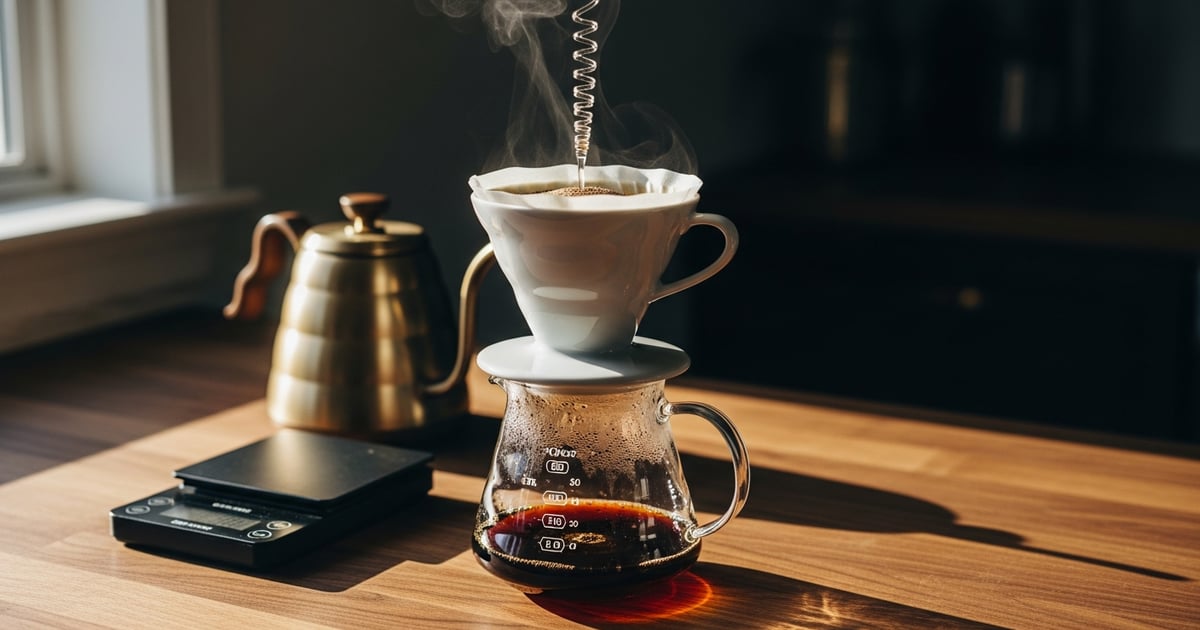
The fix is a temperature-controlled gooseneck kettle. The Fellow Stagg EKG at $165 is the standard pairing for home pour over. The kettle holds temperature precisely, lets the brewer aim the pour, and includes a built in timer for tracking the brew. The investment is the second most impactful gear purchase after the grinder for pour over households.
Pour technique compounds. The brewer should pour in a slow spiral from the center outward, then back to the center, keeping the stream off the paper. Most home pour over fails because the pour is too fast (creating channels) or too aimless (washing grounds against the filter). The technique is learnable in 2 to 4 weeks of daily practice with a video reference.
Variable 7: the cup itself
The final variable is the receiving vessel. Cafes serve espresso in pre-heated 5oz cups (often porcelain), iced drinks in chilled glass tumblers, and pour over coffee in 12oz mugs warmed with hot water before serving. The temperature of the cup matters because cold cups absorb heat from the brew, dropping the drink’s temperature by 5 to 10 degrees in the first sip.
The fix is to preheat cups for espresso and pour over (run hot water through the cup for 30 seconds before pulling the shot) and to pre-chill glasses for iced drinks (5 minutes in the freezer). The Bodum Pavina double-wall glass set ($45) is the cafe-style serving option for both hot and iced drinks; the insulated wall holds temperature and prevents condensation.
The order to fix the variables
The seven variables matter at different magnitudes. A drinker closing the cafe gap most efficiently should work in the following order.
Step 1: Buy a quality grinder. Largest single improvement. $170 to $800 depending on brewing method. Closes 30 to 50 percent of the cafe gap by itself.
Step 2: Switch the water. Cheap and fast. Brita pitcher minimum, bottled spring water or Third Wave Water for serious brewing. $5 to $20 per month. Closes 15 to 20 percent of the gap.
Step 3: Buy a brewing scale. $25. Forces dose consistency. Closes 10 to 15 percent of the gap by tightening technique.
Step 4: Buy a temperature-controlled kettle (for pour over). $30 to $165. Closes 10 to 15 percent of the gap for pour over households.
Step 5: Practice the technique. 30 days of daily brewing with attention. Free. Closes 10 to 15 percent of the gap. Most drinkers improve more from practice than from a new machine.
Step 6: Upgrade the machine. $500 to $6,500 depending on tier. Closes the remaining 10 percent gap for espresso households. Often the last upgrade rather than the first.
Step 7: Preheat the cup. Free. Closes the last 5 percent. Often skipped, often noticeable when added.
Variable 8: the cleanliness of the equipment
An additional variable that cafes manage more rigorously than most home drinkers. A cafe espresso machine gets backflushed with detergent every closing shift. The portafilter, the basket, and the group head are scrubbed daily. The grinder gets cleaned weekly with detergent tablets. Old coffee oils have no time to build up because the cleaning schedule prevents accumulation.
Home equipment usually does not get this attention. A home espresso machine that has run for 6 months without a backflush is contaminating every shot with stale coffee oils embedded in the brew path. The cup tastes "off" in a way the drinker cannot name; the underlying cause is the equipment. The fix is a weekly backflush with Cafiza or Urnex detergent (10 minutes total) and a deeper monthly clean of the basket and portafilter screens.
For pour over households, the equivalent is the V60 cone itself and the kettle. The V60 ceramic absorbs oils over time; running it through the dishwasher monthly or scrubbing with detergent every 2 to 4 weeks prevents buildup. The kettle interior accumulates limescale from minerals in the water; descaling with citric acid every 6 to 8 weeks keeps the kettle’s heating element working efficiently.
The variables in actual numbers
Each of the seven variables can be quantified as a percentage of the cafe-versus-home gap. Aggregating across multiple SCA-style blind tests run by specialty publications and roasters, the rough contributions are:
- Grinder quality: 30 to 40 percent of the gap
- Water chemistry: 15 to 20 percent of the gap
- Bean freshness: 10 to 15 percent of the gap
- Brewing technique: 10 to 15 percent of the gap
- Machine quality: 8 to 12 percent of the gap (espresso); 3 to 5 percent (pour over)
- Kettle / temperature control: 5 to 8 percent of the gap (pour over); 2 to 3 percent (espresso)
- Equipment cleanliness: 5 to 8 percent of the gap
- Cup preparation: 2 to 3 percent of the gap
The total is roughly 100 percent. A home drinker who closes all eight variables is at parity with a competent third wave cafe. A home drinker who closes the top three (grinder, water, freshness) is at 60 to 75 percent of cafe quality, which is enough for daily satisfaction. A home drinker who closes only the cheapest variables (water, freshness) is at 30 to 40 percent of cafe quality, which is what most casual home setups achieve.
The honest gap that does not close
Even with all seven variables optimized, a home setup will not exactly match a cafe’s output. Three components remain unique to the cafe.
The volume effect. A cafe pulls 100 to 300 shots per day; the machine, the grinder, and the workflow are warmed up and consistent. A home drinker pulls 2 to 8 shots per day; the equipment cycles between cold and hot states. The first shot of a cafe morning is the worst shot of the day; the first shot of a home morning is the only shot of the day until the second one.
The experience layer. A cafe is a different physical space than a kitchen. The lighting, the staff, the other customers, the music, the smell of fresh-roasted coffee. These contextual elements affect how the drink tastes through pure perception. The same coffee tasted in a cafe versus a kitchen registers differently because the brain is in a different mode.
The barista’s skill. A trained barista has dialed in this specific bean across hundreds of shots before serving the customer. The home drinker is dialing in the same bag from scratch, with fewer reps per bag. The technique gap is real and only fully closes after years of home practice.
For most drinkers serious about home brewing, the practical target is 85 to 90 percent of the cafe’s output at home, which lands the cup within the band that satisfies daily drinking. That level matches the cafe on a casual morning and falls short only on the best-in-class shots from a high end cafe. The investment to reach that target is roughly $500 to $1,500 in one-time gear cost, less than 50 cafe lattes per year saved by switching to home brewing for daily drinks, and most households break even on the gear inside the first 12 months.
The morning-routine variable
One variable that does not appear on most home-versus-cafe gap analyses but matters significantly is the time the drinker has to brew. A cafe has 60 to 90 seconds to produce a drink because that is the throughput a paying customer expects. A home drinker can take 5 to 10 minutes if the morning permits, which is more time than the cafe ever gets.
The extra time should be used. A 7am morning that includes a 4-minute pour over brewed deliberately produces a better cup than a 90-second brew. The home setup’s structural disadvantage in equipment can be partially offset by the time advantage in technique. A drinker who treats the morning brew as a 5-minute ritual instead of a 90-second utility closes 10 to 15 percent of the gap that pure equipment cannot reach.
The opposite is also true. A home drinker rushing through a brew before work undoes the equipment advantage. A $1,500 setup brewing a 30-second drip from a Keurig produces worse coffee than a $200 setup brewing a careful pour over. The time investment is part of the home advantage and worth preserving when the morning permits.
The bean choice as a home-versus-cafe variable
Cafe beans are tuned to the cafe’s equipment, water, and brewing methods. A bag of Stumptown Hair Bender pulled at home from a Breville Bambino tastes different from the same bag pulled at the Portland cafe even with identical technique because the cafe’s commercial grinder and water profile are optimized for that specific bean. A drinker who buys the cafe’s flagship beans for home brewing is fighting that optimization.
The fix is bean selection that matches home equipment. A home drinker with a $200 grinder should buy beans tuned for that price tier rather than buying the cafe’s flagship and feeling the gap. Counter Culture Hologram, Stumptown House Blend, and Driftaway’s house blends are roasted with home equipment in mind; they pull well on entry-level grinders and forgive small technique errors. The flagship single origins (Counter Culture Apollo, Stumptown Hair Bender competition lots, Onyx auction lots) are tuned for commercial grinders and produce dramatic cup quality drops when pulled through home equipment.
A drinker who consistently feels their home setup falls short might be buying the wrong beans for the equipment. Match the bag to the home tier and the gap closes faster than upgrading the equipment to match the bag.
The setup that closes the gap
The full home setup that closes 85 to 90 percent of the cafe gap consists of:
- Grinder: Eureka Mignon Specialita ($640) for espresso, or Baratza Encore ($170) for pour over only
- Brewing scale: Hario 0.1g scale or similar ($25)
- Kettle: Fellow Stagg EKG ($165) for pour over households
- Brewer: Hario V60 02 Ceramic ($23) for pour over, or Breville Bambino Plus ($500) for espresso entry, or Breville Barista Pro ($800) for espresso mid-tier
- Cups: Bodum Pavina double-wall glasses ($45) or pre-heated porcelain
- Water: Third Wave Water sachets ($15/month) or bottled spring water
- Beans: A 12oz bag from a third wave roaster every 2 to 3 weeks ($20)
Total upfront for pour over only: $228 to $458. Total upfront for espresso: $760 to $2,000 depending on machine tier. The setup pays back in 80 to 200 cafe lattes worth of savings, which lands at 4 to 8 months for a daily drinker.
Common failure points after the setup is built
Even with the right gear, the home cup can underperform for predictable reasons.
Stale beans. The most common failure. Beans past 28 days off roast lose enough character that the cup tastes flat regardless of technique. The fix is to write the open date on the bag and treat 21 days as a hard deadline.
Dirty equipment. Coffee oils accumulate on burrs, group heads, portafilters, and basket screens. The buildup gradually degrades the cup over months. The fix is to backflush the machine weekly with a cleaning detergent (Cafiza) and run grinder cleaning tablets (Urnex Grindz) every 6 to 8 weeks.
Inconsistent dose. Eyeballing the dose introduces 1 to 2 gram variation per shot, which is 5 to 11 percent of an 18 gram target. The fix is the scale, used every shot without exception.
Wrong grind for the brewer. The same coffee through espresso and pour over needs different grind settings. The fix is to write down the working setting for each brewing method and re-dial after every new bag.
Water that changed. A drinker who moves cities, has a water softener installed, or switches from tap to filtered may not notice the cup changing for a few days. The fix is to test the water TDS periodically and re-tune the brewing setup when the water changes.
Questions readers ask
Can I match cafe quality with a $400 setup? Probably not 100 percent. The grinder limitation is real below $500. But a $400 setup (Baratza Encore + V60 + scale + decent kettle) closes 70 to 80 percent of the gap for pour over, which is enough for most drinkers to be satisfied. Espresso below $400 total is harder; the grinder needs more budget.
Why does home drip coffee taste different from the cafe drip? Same answer as pour over. The grinder is the largest variable, the water is the second, the dose consistency is the third. A home drip machine paired with a $150 grinder and tap water cannot match a cafe drip pulled through a $3,000 grinder and tuned water.
Is the home espresso versus cafe espresso gap bigger than the pour over gap? Yes, by a significant margin. Espresso depends on pressure-driven extraction in 25 to 30 seconds, which exposes every flaw in the bean, the grind, the dose, and the technique. Pour over is more forgiving; the 4-minute brew time absorbs minor variations. A home pour over can match a cafe pour over within a year of practice; a home espresso reaches cafe quality only with a $5,000+ gear investment and years of dial in work.
Should I drink at the cafe or invest in home gear? Depends on the volume and the household. A drinker pulling 1 to 2 drinks per week is better served at the cafe; the home setup pays back too slowly. A drinker pulling 1+ drink per day breaks even on the home setup in 4 to 8 months and saves $2,000 to $5,000 per year afterward. Most daily drinkers should invest in home gear and reserve cafe visits for the weekend.
What is the single best upgrade for a household stuck in the home-coffee-tastes-bad zone? The grinder. Almost always the grinder. A household with a Mr. Coffee machine and a $30 blade grinder should buy a $170 Baratza Encore before changing anything else; the cup improvement is the largest single upgrade available at any price point.
Practical takeaway
The home-versus-cafe gap is real, measurable, and largely fixable with the right ordering of variables. The seven variables identified above explain 95 percent of the difference; the order in which to fix them matters because the grinder and water account for half the gap by themselves. A drinker willing to invest $500 to $1,500 in gear plus 30 days of practice can reach 85 to 90 percent of cafe output for daily drinks, which is enough to make home brewing the default and cafe visits a deliberate choice rather than a quality-driven one.
The compounding lesson behind the seven variables is that home coffee quality is a long game and not a quick equipment fix. The first month of a new home setup typically produces worse cups than the previous setup as the drinker learns the equipment. The second month flattens. The third month exceeds the cafe on some drinks. The drinker who quits after a bad first month never reaches the payoff. The cafe gap closes only after the drinker has put time into the variables, and the time investment is part of the equation that pure spending cannot replace.
A useful checkpoint at 30 days into a new home setup is to brew the same coffee at home and order it at the cafe on the same morning. Compare side by side. If the home cup is within 80 percent of the cafe’s, the setup is working. If the gap is wider, audit the seven variables above and identify which ones still need work. The grinder and water are usually the culprits at the 30-day mark; technique improvements show up at the 60 to 90 day mark.
The unexpected lesson is that the machine is rarely the limiting factor. Most home drinkers blame their espresso machine for poor shots; the actual culprit is the grinder, the water, or the dose consistency. The machine matters but it is the fifth variable to fix, not the first. The drinker who works through the order above closes the cafe gap faster and at lower total cost than the drinker who upgrades the machine first.
Pulled exists so the cafe pouring the cup the drinker is calibrating toward is findable from any city, and the home setup is what brings that cafe quality into the kitchen. The pillars at The Pour Over Coffee Guide and The Espresso Machine Buying Guide cover the deep architecture for each path; the seven variables above are the bridge that turns those guides into morning routines. The cafe gap is real; the gap is fixable through a known set of variables; the order of operations matters considerably more than the total budget for closing the gap. A drinker who follows the order outlined in this post closes the cafe gap faster and at considerably lower total cost than a drinker buying gear in arbitrary order.
Our Picks
What we'd buy on Amazon for this
Third Wave Water · Classic Light Roast Profile (12-pack)
Third Wave Water solves the brewing water problem with a pre-formulated mineral mix.
Hario · Cupping Spoon (Kasuya Model)
The right shape matters.
Chemex · Classic Series 6-Cup Coffeemaker
Thicker bonded filters than V60, which gives the cup more clarity at the cost of body.
$47.95
View on Amazon →


Pulled may earn a commission on purchases. Cookie applies to all Amazon items in your next 24 hours, not just this product.
See all Pulled Picks →Keep going with Pulled