October 31, 2025
How Coffee Is Roasted
Make the coffee, then pull the cafe. Download Pulled.


Coffee roasting transforms green coffee beans into the brown, aromatic seeds that get ground and brewed. The process takes between 8 and 15 minutes for most commercial roasters, and what happens during those minutes determines most of the flavor you taste in the cup.
The roasting machine
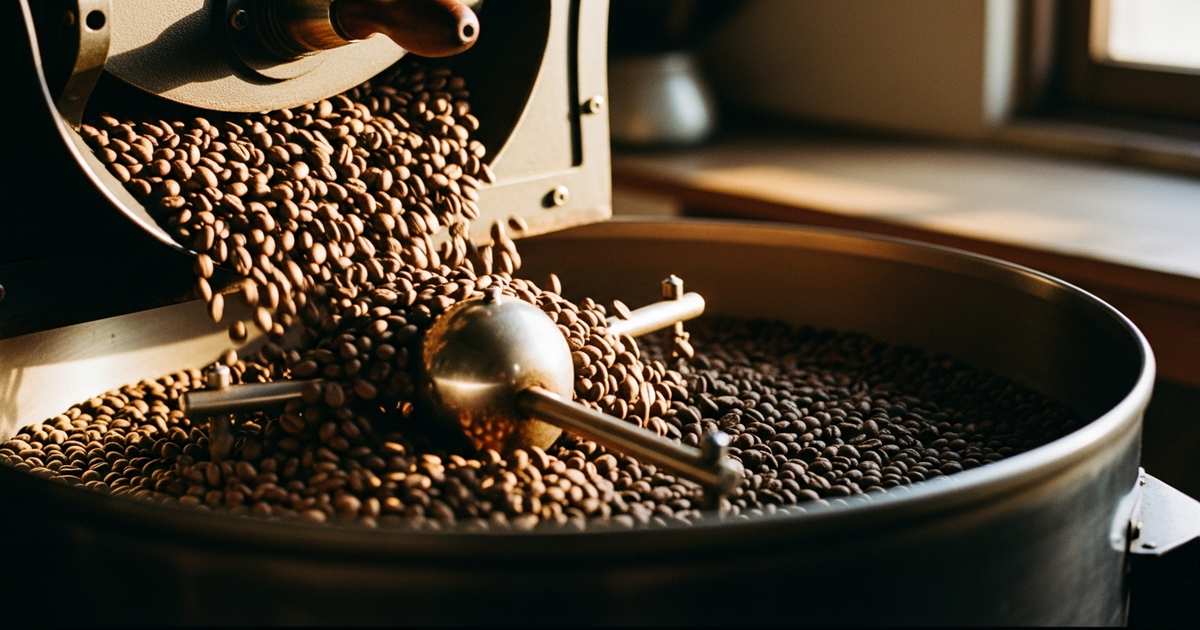
Most specialty coffee is roasted in a drum roaster: a rotating cylindrical drum inside a heat source. The beans tumble continuously as heat is applied, ensuring even exposure. The roaster controls temperature, airflow, and drum speed to guide the beans through the roasting process. Drum roasters range from small 1kg sample roasters to large 100kg+ production machines.
The stages of roasting
Green beans absorb heat slowly at first. They turn yellow and produce a grassy, hay-like smell. As the Maillard reaction begins (the same reaction that browns bread and meat), the beans turn brown and produce the characteristic coffee aromas. At around 196 degrees Celsius, the first crack occurs: the beans expand and crack audibly as internal pressure builds and is released. Light roasts are pulled soon after first crack. Dark roasts continue to second crack and beyond.
Make the coffee, then pull the cafe. Download Pulled.
First and second crack
First crack marks the transition from light to medium roast territory. The beans are expanding, the sugars are caramelizing, and the flavors are becoming coffee-like rather than grassy or bready. Second crack, which occurs around 224 degrees Celsius, begins to break down the bean structure and produce the darker, more bitter compounds associated with dark roasting. Many specialty roasters never take coffee to second crack.
Development time
The time between first crack and the end of the roast is called development time. Longer development produces sweeter, more balanced cups. Shorter development produces more acidic, underdeveloped cups. Managing development time is one of the roaster's primary craft decisions.
Cooling and degassing
After roasting, beans are rapidly cooled to stop the process. Fresh-roasted beans release carbon dioxide for several days, which affects brewing. Most specialty roasters recommend waiting 5-14 days after roast date before brewing to allow adequate degassing.
Start earning from your coffee habit.
Pulled Coffee pays you real money via PayPal for checking in at cafes and coffee shops.
Download Pulled CoffeeRelated reading: light roast vs dark roast, coffee processing methods.
The roasters who do this craft well are exactly the shops that Pulled Coffee pays you to explore.
Make the coffee, then pull the cafe. Download Pulled.
Our Picks
What we'd buy on Amazon for this
Third Wave Water · Classic Light Roast Profile (12-pack)
Third Wave Water solves the brewing water problem with a pre-formulated mineral mix.
Bodum · Pavina Double-Wall Glasses (Set of 6, 12oz)
The cafe glass for serving iced lattes, iced Americanos, and cold brew at home.
$40.99
View on Amazon →Hario · Cupping Spoon (Kasuya Model)
The right shape matters.



Pulled may earn a commission on purchases. Cookie applies to all Amazon items in your next 24 hours, not just this product.
See all Pulled Picks →Keep going with Pulled