May 20, 2026
How to Make Iced Coffee at Home: Four Methods Ranked
Some links in this guide are affiliate links. If you buy through them, Pulled may earn a commission at no extra cost to you. Our recommendations are based on editorial judgment and coffee culture knowledge, not commission rates.
The best iced coffee at home is Japanese-style pour over brewed directly onto ice. It costs $0.40 per cup, takes four minutes, and tastes brighter than anything a chain pours over crushed ice. Cold brew is fine; it is also slower, requires more coffee per finished cup, and tastes flatter.
This guide covers four working methods, the bean choices that actually matter, the three mistakes that ruin most home iced coffee, and the cost math against Starbucks. According to current data from Specialty Coffee Association consumer tracking, iced and cold drinks now account for roughly 75 percent of Starbucks U.S. beverage sales, up from 50 percent in 2019. The home equivalent is cheaper, faster, and almost always better.
The verdict in three sentences
Brew a Japanese-style flash chill if you want one excellent cup right now. Brew cold brew in the fridge if you want a week of grab-and-pour. Skip hot brew over ice unless you have no other option, and skip instant unless you are camping.
Method 1: Japanese-style flash chill (the best iced coffee method)
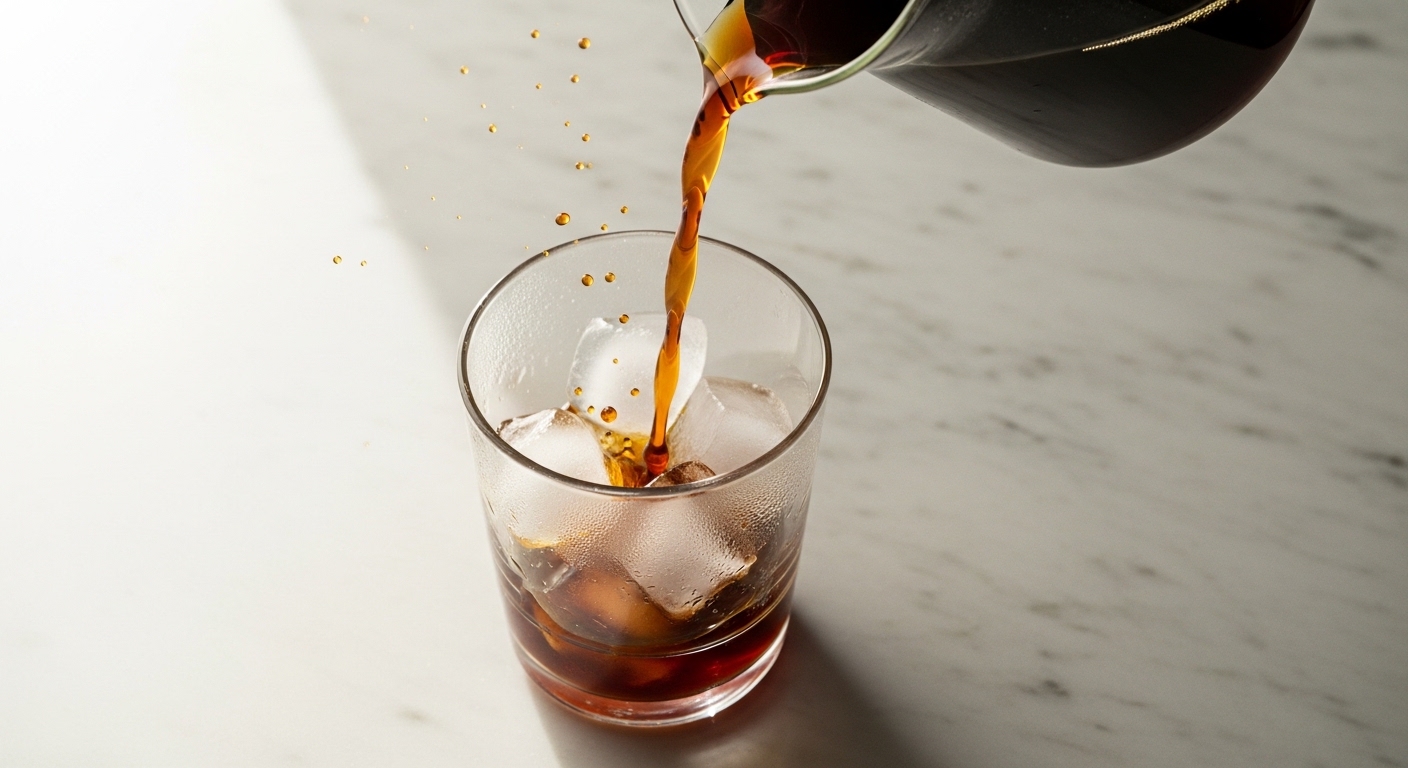
Japanese-style iced pour over, sometimes called flash brew or flash chill, is the method specialty cafes have used since the early 2000s. You replace half the brew water with ice in the server. The hot coffee melts the ice on contact, locking in aromatics that cold brew loses to long contact time.
The iced coffee recipe in ratio form: 20 grams of coffee, 150 grams of hot water, 150 grams of ice. Total brew weight stays at 300 grams. That keeps the strength at 1:15, the same target as a standard hot pour over.
Grind medium-fine, slightly finer than for hot pour over. Heat water to 96 degrees Celsius (205 degrees Fahrenheit). Put 150 grams of ice in the server below the dripper. Bloom with 60 grams of water for 30 seconds. Pour the remaining 90 grams in slow circles. Total brew time: three to four minutes. Swirl the server, pour the chilled coffee over fresh ice in a glass, and drink.
What you taste: clarity, brightness, fruit. A washed Ethiopia tastes like blueberry and bergamot. A Kenya tastes like blackcurrant and grapefruit. These notes survive flash chilling. They get muted by cold brew.
Method 2: Cold brew in the fridge
Cold brew is coffee steeped in cold water for 12 to 18 hours. Long contact extracts caffeine and sugars but skips the volatile acids that taste bright or sour. The result is mellow, low-acid, and slightly thick. It also keeps for a week in the fridge, which is the real reason people make it.
The ratio for concentrate: 100 grams of coarse-ground coffee to 800 grams of cold water (1:8). Steep at room temperature for 12 hours, or in the fridge for 18 hours. Filter through a fine mesh strainer first, then through a paper filter to catch the fines. The yield is roughly 600 grams of concentrate, which you dilute 1:1 with water or milk over ice.
The ratio for ready-to-drink: 100 grams of coffee to 1500 grams of water (1:15). Steep 18 hours in the fridge. No dilution needed. This is the simpler workflow for daily drinkers who do not want to do math at 7 a.m.
Grind coarse. espresso grind in cold water clogs filters and over-extracts. Use a burr grinder set two clicks finer than French press, or whatever your grinder calls cold brew. Pre-ground supermarket coffee is too fine and too stale; it will give you sediment and cardboard notes.
Method 3: Hot brew over ice (the compromise)
If you only have a drip machine, brew a pot at double strength and pour it over a glass full of ice. The ice will dilute it back to normal strength as it melts.
The ratio: 30 grams of coffee, 250 grams of water. Brew into a heat-safe carafe. Fill a tall glass with about 150 grams of ice. Pour the hot coffee directly over the ice. Stir until the ice stops cracking.
This works but flattens the cup. Hot coffee left to cool on its own develops bitter compounds. Hot coffee crashed onto ice retains more, but less than a true flash chill. It is the worst of the three real methods. Use it the morning your V60 is in the dishwasher.
Method 4: Instant iced coffee (the easy iced coffee method)
Instant coffee dissolves in cold water. Two grams of decent instant (Mount Hagen, Waka, Alpine Start, Canyon) in 200 milliliters of cold water gives you an iced coffee in 15 seconds. Stir, add ice, drink.
This is not the best iced coffee method. It is the easy iced coffee method, and it has its place. Camping. Hotel rooms. Offices without a kettle. The good craft instants from 2025 and 2026 are noticeably better than the freeze-dried Folgers your office stocks. They are still instant.
Ratios at a glance
- Japanese flash chill: 20g coffee, 150g water, 150g ice. Yield: 270 to 290g.
- Cold brew concentrate: 100g coffee, 800g water, 12 to 18 hours. Dilute 1:1.
- Cold brew ready-to-drink: 100g coffee, 1500g water, 18 hours. No dilution.
- Hot brew over ice: 30g coffee, 250g water, 150g ice in glass.
- Instant: 2g instant, 200ml cold water, 100g ice.
The best beans for iced coffee in 2026, ranked
Iced coffee rewards different beans than hot coffee. Cold suppresses bitterness and sweetness slightly, and it amplifies acidity and fruit. The list below ranks origins by how well they hold up over ice.
- Ethiopia, natural process. Blueberry, strawberry, jasmine. The single best iced coffee origin. Yirgacheffe and Guji are the names to look for on the bag.
- Kenya AA, washed. Blackcurrant, grapefruit, tomato vine. Aggressive and clean. The best Kenya tastes like a glass of fruit juice.
- Ethiopia, washed. Bergamot, lemon, white tea. Quieter than the naturals but cleaner. Better for drinkers who find natural Ethiopia loud.
- Costa Rica, honey or natural. Stone fruit, brown sugar, almond. Sweetness survives the ice. A safe pick for milk drinks.
- Colombia, washed. Caramel, red apple, cocoa. Reliable. The workhorse iced coffee bean.
- Brazil, natural. Chocolate, peanut, low acidity. Use it only with milk. Black, it tastes flat over ice.
Roast level matters as much as origin. Light to medium-light is the specialty default for iced coffee. Dark roasts taste like ashtray over ice. If your bag says espresso roast or French roast, save it for milk drinks. Roast date should be within the last three weeks. Coffee older than a month over ice tastes like wet cardboard, no matter the origin.
The three mistakes that ruin home iced coffee
Mistake 1: Watering down
Ice melts. A glass of iced coffee left for 20 minutes ends up as flavored water. The fix is coffee ice cubes. Brew a small pot, cool it, pour it into a silicone ice tray, freeze overnight. Use coffee ice cubes in the glass. Use regular ice for the brew water in flash chill (you want that dilution to land on the strength target).
Mistake 2: Bitterness
Bitter iced coffee comes from three sources: over-extraction, dark roast, and stale beans. Over-extraction means too fine a grind or too long a contact time. If your flash chill tastes bitter, grind one click coarser. If your cold brew tastes bitter, steep four hours less. If a fresh medium roast still tastes bitter, the beans are old or the roast is too dark for iced.
Mistake 3: Sourness
Sour iced coffee is the opposite problem: under-extraction. The grind is too coarse, the water is too cool, or the brew time is too short. Sourness in flash chill almost always means the grind. Go one click finer. Sourness in cold brew means more steep time or more coffee. Never confuse acidity (brightness, fruit, juiciness, a positive note) with sourness (puckering, citrus-peel astringency, a flaw).
Milk and syrup additions
Whole milk is the default. The fat carries flavor and the proteins create body. Three to four tablespoons (about 50 milliliters) into a 250 milliliter glass of iced coffee. More milk and you have a glass of cold milk that tastes vaguely of coffee.
For oat milk, only barista blends work. The grocery store regular oat milks split when they hit cold acidic coffee. Oatly Barista, Minor Figures, Califia Barista Blend. Pour them slowly, not all at once, to avoid curdling.
For sweetener, simple syrup beats granulated sugar. Sugar does not dissolve in cold liquid. Make simple syrup once a week: 100 grams sugar, 100 grams hot water, stir until clear, store in the fridge. Five to ten milliliters per glass. For flavored syrups, the same ratio with vanilla extract, a cinnamon stick, or brown sugar instead of white.
Skip whipped cream on iced coffee. It is a chain habit that adds 100 calories and turns the drink into a milkshake. If you want cream, use cold heavy cream, 15 milliliters, and stir.
Iced coffee vs iced latte: the actual difference
Iced coffee is brewed coffee, cold, over ice, with or without milk. The coffee is the base. The water dilutes. Strength sits around 1.2 to 1.5 percent TDS.
Iced latte is espresso shot over cold milk over ice. The espresso is the base. The milk dilutes. Strength sits around 1.0 percent TDS, but the perception of richness is higher because the milk volume is larger and the fat carries flavor.
The practical difference at home: iced coffee needs a brewer (V60, French press, drip machine, cold brew jar). Iced latte needs an espresso machine or a moka pot. Iced coffee is cheaper per cup and works in larger volumes. Iced latte is creamier and works as a dessert-adjacent drink.
The chain menu trap: Starbucks sells an Iced Coffee that is brewed coffee, an Iced Latte that is espresso plus milk, and an Iced Americano that is espresso plus water. The three are different drinks. Order accordingly.
Cost per cup vs Starbucks
A grande iced coffee at Starbucks in May 2026 runs $4.45 in most U.S. markets. A grande iced latte runs $5.95. A grande iced caramel macchiato runs $6.45.
The home flash chill: $0.70 per cup, all in. A 12-ounce bag (340 grams) of single-origin Ethiopia from a roaster like Onyx, Sey, or Black and White runs about $22. At 20 grams per cup, that is $1.29 of coffee. The flash chill yields a near-300-gram drink, which is roughly two cafe-sized servings. Per Starbucks-equivalent serving: $0.65. Add five cents for ice and milk: $0.70.
Cold brew is cheaper per cup because the ratio is wider: 100 grams of coffee yields 1500 grams of finished drink, which is six servings. At $22 per bag, that is $6.47 of coffee, or about $1.08 per serving for premium beans. Use a $14 bag of Counter Culture or Stumptown house blend and it drops to $0.23 per serving. Add milk and syrup: $0.40.
$4.45 minus $0.70 is $3.75 per drink. Daily iced coffee habit, five days a week, 50 weeks a year: $937 saved per year. Same drink, different price.
The cold brew path saves more. $4.45 minus $0.40 is $4.05. Five days a week, 50 weeks: $1,012 saved per year. The labor is 10 minutes of weekend prep for the entire week.
Gear that actually matters
Burr grinder. Pre-ground coffee oxidizes within hours and tastes like wet cardboard over ice within a day. A hand grinder under $100 (1Zpresso Q2, Timemore C2, Kingrinder K6) is plenty for iced coffee. Set to medium-fine for flash chill, coarse for cold brew. The grinder is the single highest-impact piece of gear in the kit.
Glass carafe or pitcher. For cold brew, a 1.5-liter glass carafe with a fine mesh filter insert. The Hario Mizudashi at 1 liter is the cafe standard. For flash chill, any 500-milliliter glass server below your dripper works; pyrex is fine.
Silicone ice tray. Standard plastic ice trays make small ice that melts in five minutes. A silicone tray with 2-inch cubes makes ice that lasts 20 minutes in a glass and dilutes slowly. The same tray doubles for freezing coffee ice cubes.
Scale. Iced coffee fails without weighed inputs. A $20 kitchen scale that reads to 0.1 grams is the difference between a recipe and a guess. Volume measures (tablespoons, scoops) are not precise enough at the small weights involved.
Storage and how long iced coffee lasts
Flash-chilled iced coffee is best drunk inside 30 minutes. The aromatics fade. The acidity flattens. Store-and-reheat is not a thing for flash chill.
Cold brew lasts five to seven days in the fridge in a sealed glass container. After that, it tastes flat and slightly papery but is not unsafe to drink. Cold brew concentrate (the 1:8 ratio) lasts up to two weeks in the fridge because the higher concentration slows flavor loss.
Hot brew over ice is a one-shot drink. Do not save it for tomorrow. Bitter overnight.
Decaf and half-caf iced coffee
Decaf works fine in any of the four methods. Swiss water process decafs from Sumatra, Mexico, or Ethiopia hold their flavor over ice. The Counter Culture Slow Motion decaf and the Onyx decaf single origins are reliable picks. Half-caf at home is two grams decaf to two grams regular for instant, or 10 grams of each for flash chill.
The Pulled recommendation
Buy a Hario V60, a Hario glass server, a silicone ice tray, a hand grinder, and a 12-ounce bag of natural process Ethiopia from a roaster you trust. Total kit cost: under $150. Brew the flash chill recipe every morning for a week. By day five, you will be making better iced coffee than the cafe down the street. By day 30, the savings will have paid for the gear.
Get Pulled.
Our Picks
What we'd buy on Amazon for this
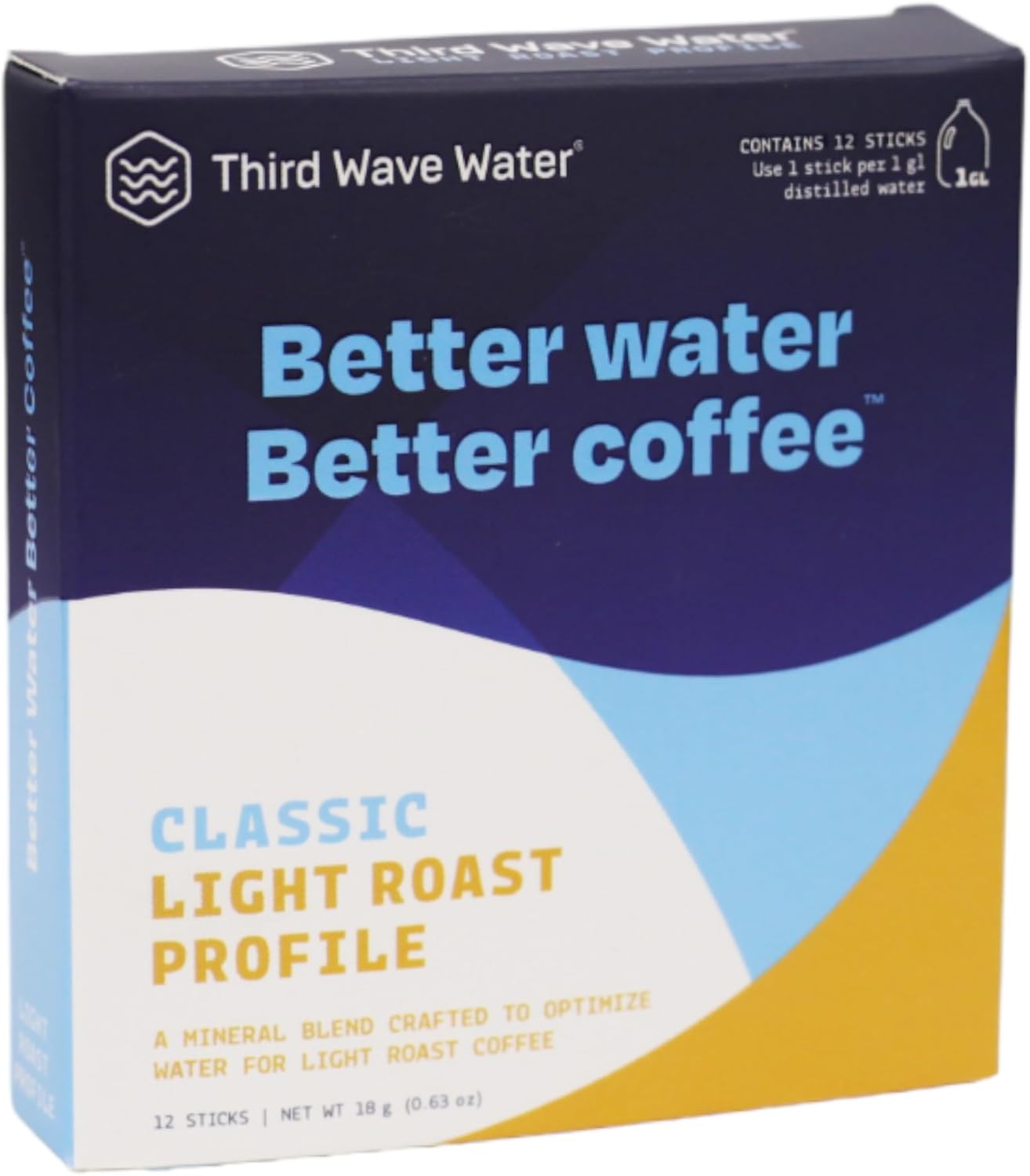
Third Wave Water · Classic Light Roast Profile (12-pack)
Third Wave Water solves the brewing water problem with a pre-formulated mineral mix.
Bodum · Pavina Double-Wall Glasses (Set of 6, 12oz)
The cafe glass for serving iced lattes, iced Americanos, and cold brew at home.
$40.99
View on Amazon →Hario · Cupping Spoon (Kasuya Model)
The right shape matters.


Pulled may earn a commission on purchases. Cookie applies to all Amazon items in your next 24 hours, not just this product.
See all Pulled Picks →Keep going with Pulled