May 13, 2026
How to Read a Coffee Bag Label: Origin, Roast Date, Process, Tasting Notes
A specialty coffee bag is a small dossier dressed up as packaging. The label carries seven to ten distinct fields, each one corresponding to a verifiable point in the journey from cherry to cup, and each one telling the buyer something specific about the coffee inside the bag. Most drinkers ignore the fields and pick by the bag’s graphic design. That is the most expensive way to buy specialty coffee, because the field-by-field information is what separates a $24 bag worth the money from a $24 bag that is mostly branding. This guide walks through every field, explains what each one tells the buyer, and covers the red flags that distinguish real specialty bags from commodity coffee dressed up in third wave packaging. Internal links to Specialty Coffee, Plainly Explained for the foundation and Coffee Origins: Single Origin vs Blends for the origin map.
The short version of what a bag should contain. A specialty bag should carry: a roast date within the last 21 days, a country and region of origin, a producer name or cooperative, a varietal, a processing method, an elevation, and a short list of tasting notes. The bag may also carry the harvest year, the import partner, the SCA score, and direct trade pricing. The absence of any of these fields is a signal that the bag is operating outside the specialty standard and the buyer should weigh accordingly.
Field 1: the roast date
The single most important number on a specialty coffee bag is the roast date, written somewhere between the front label and the side seam. The format varies: "Roasted: 2026-05-08", "Roast date: 05/08/26", or sometimes a hand-stamped date on a sticker near the seal. Specialty coffee is best between 4 and 21 days after the roast date. The first four days are an off gassing window where CO2 makes extraction inconsistent. After 21 days the oils begin to oxidize and the cup loses brightness. After 28 days the coffee is past its window for most brewing methods.
A bag without a roast date is not specialty coffee. The omission is a signal that the roaster does not want to be measured against the freshness standard, which means the bag has been sitting in a warehouse or on a shelf longer than the standard permits. Most commodity coffee carries a "best by" date instead, which lets the manufacturer ship the bag with a 12 to 18 month shelf life. A "best by" date is the inverse of a roast date: it tells the buyer when the coffee will go from stale to staler, not when it was at its peak.
The roast date matters less for espresso blends formulated to be drunk darker. Lavazza Super Crema, Illy Classico, and most Italian tradition blends use heavier roasts that hold up longer than light roast specialty bags; the usable window for these stretches to 6 to 8 weeks rather than 21 days. But for third wave specialty bags from Stumptown, Counter Culture, Onyx, Intelligentsia, and similar roasters, the 21-day rule applies strictly.
Field 2: country of origin
The country is the loosest tier of origin claim. "Ethiopia" tells the buyer the coffee was grown in Ethiopia, but says nothing about which region, which farm, or which harvest. A bag labelled only with the country is functionally a single country blend, with the roaster sourcing from multiple regions within the country and combining the lots before roasting. The cup may be good, but the buyer is paying for traceability they are not receiving.
Single country bags are common at supermarket-tier specialty roasters and at chain cafes serving rotating origins. Look for one tier tighter than just the country. The next tier down is the region: Ethiopian Yirgacheffe, Colombian Huila, Kenyan Nyeri. Region-level traceability is the working specialty floor. The cup profile is recognizable across the region because the climate, soil, and varietal mix are consistent within it.
Field 3: producer name or cooperative
The strongest origin claim names the farm or the cooperative that produced the coffee. "Hacienda La Esmeralda" tells the buyer the coffee came from one named farm in Panama with a verifiable owner, location, and harvest record. "Halo Bariti washing station, Konga district" tells the buyer the coffee came from one named processing site serving a specific cooperative of smallholder farmers in Ethiopia. Both formats are real specialty.
The producer name signals that the roaster paid more for the lot, knows where it came from, and has likely visited the farm. Direct trade roasters (Counter Culture, Intelligentsia, Stumptown, Onyx) publish their producer relationships annually with the prices paid for each lot. The bag carrying a producer name is the bag with the most paper trail behind the price tag.
Auction lots carry the producer name plus the auction details: "2024 Best of Panama, Lot 12, Hacienda La Esmeralda Geisha Natural." These bags often come with the cupping score (90+) and the auction price ($1,500 per pound green in extreme cases). The retail price reflects the auction price; a 50g portion of a high-scoring auction lot can run $50 to $200 retail.
Field 4: the varietal
Coffee plants come in varietals, the same way wine grapes come in cultivars. The varietal shapes the cup. The most common specialty varietals are Caturra, Castillo, Typica, Bourbon, SL28, SL34, and Geisha. Less common but worth knowing: Pacamara, Pacas, Maragogype, Mundo Novo, Catuai.
Varietal information matters because each varietal has a recognizable cup profile. SL28 (developed in 1930s Kenya by Scott Agricultural Laboratories) tastes of blackcurrant and tomato leaf. Geisha (originating in Ethiopia, refined in Panama) tastes of jasmine and bergamot. Bourbon (a French colonial varietal from the island of Reunion) tastes sweet and round with notes of caramel and stone fruit. A bag listing the varietal is a bag where the roaster cares enough about the chemistry to mention it.
Some bags list multiple varietals in a single lot ("Caturra, Castillo, Typica"). This is common at the cooperative tier where smallholder farmers grow different varietals on adjacent plots and combine harvests. Some bags list "heirloom" for Ethiopian lots, which is the umbrella term for the thousands of unique varietals that grow in the country. Heirloom is honest; it means the lot contains varietals that have not been formally categorized.
Field 5: processing method
Between the cherry on the tree and the green bean ready to roast, the coffee is processed. The method shapes the cup almost as much as the country of origin does. Four main processing methods cover most specialty coffee.
Washed (or wet-processed): the cherry is depulped within hours of picking, the bean is fermented in water for 12 to 36 hours to break down the mucilage, then washed clean and dried. The result is the cleanest expression of the bean: bright, acidic, origin-forward. Most Kenyan, Colombian, and Central American specialty coffees are washed.
Natural (or dry-processed): the whole cherry is dried intact on raised beds or patios. The sugars in the fruit transfer into the bean during the long dry. Natural coffees are fruitier, heavier in body, and sometimes funky in a way that brings them close to wine. Ethiopian Harrars and most Brazilian coffees are natural.
Honey or pulped natural: the cherry is depulped but the mucilage is left on the bean during drying. The amount of mucilage retained determines the color of the honey (yellow, red, or black, lightest to heaviest). More mucilage means a sweeter, denser cup with more body. Honey processing was developed in Costa Rica and is now used across Central America.
Anaerobic / experimental: recent processing methods that seal the cherry in tanks without oxygen, sometimes with controlled bacterial or yeast cultures. The cup can be intensely fruity in a way no traditional method produces. Carbonic maceration, lactic fermentation, and yeast inoculated naturals are now standard at the top tier of the category.
The processing method is one of the strongest variables for predicting the cup. A washed Yirgacheffe and a natural Yirgacheffe from the same farm taste like completely different coffees. A drinker who learns the four main methods can predict 70 percent of what the bag will pour by reading the processing line alone.
Field 6: elevation
Coffee grows at elevations between 600 and 2,200 meters above sea level. Higher elevation means slower cherry maturation, denser beans, and more concentrated flavor compounds. The specialty threshold is roughly 1,200 meters. Premium specialty lots come from 1,800 meters and above. The highest commercial lots reach 2,200 meters in Ethiopia and Yemen.
The bag should list the elevation as a number with "masl" (meters above sea level) or "m" appended. "1,650 masl" or "1,650m" both mean the same thing. Some bags use feet for North American customers; 5,400 feet equals roughly 1,650 meters. The conversion is direct.
Elevation predicts cup density and acidity. Higher-elevation lots typically have brighter acidity and more complex flavor compounds. Lower-elevation lots have heavier body and softer acidity. A drinker who likes bright, acidic coffees should look for 1,700m and above; a drinker who likes heavier, rounder coffees should look for 1,200m to 1,600m.
Field 7: tasting notes
Most specialty bags carry a short list of tasting notes the roaster cupped on. Common notes: jasmine, bergamot, blackcurrant, citrus, stone fruit, chocolate, caramel, brown sugar, almond, hazelnut, blueberry, cherry, lemon, milk chocolate. The notes are descriptive rather than prescriptive; they signal what the roaster tasted, not what the drinker is required to taste.
The tasting notes should be specific. "Jasmine, bergamot, milk chocolate" is real information; the drinker can calibrate the cup against those targets. "Smooth, balanced, easy-drinking" is marketing language; nothing in those words tells the drinker what to expect. The most useful tasting notes name specific compounds (blackcurrant, jasmine, caramelized sugar) rather than abstract qualities.
The Specialty Coffee Association publishes a flavor wheel that organizes coffee descriptors into a tree structure. Roasters who reference the wheel produce tasting notes that align across the industry. A roaster who lists notes that do not appear on the wheel is either using a non-standard vocabulary or making them up. The wheel is freely available on the SCA website; a drinker who wants to learn the vocabulary can study it in 30 minutes.
Field 8: harvest year
Some specialty bags list the harvest year separately from the roast date. "Harvest: 2025/2026" or "2025 crop" tells the buyer when the cherry was picked. The harvest year matters because green coffee stores 6 to 12 months before quality declines noticeably; a bag from the 2024 harvest sold in 2026 is well past its best window even if the roast date is recent.
The harvest year is most important for single origin lots from specific countries with known harvest windows. Ethiopian harvest runs October through February; the bean arrives at North American roasters in spring and tastes best from March to August. Buying Ethiopian coffee in December that was harvested the prior February is buying coffee that has been green for 10 months and is on the edge of decline.
Blends typically do not list harvest years because the components rotate seasonally and the roaster blends across harvest cycles to maintain a consistent profile. Single origin bags should list the harvest year; the absence of one in a single origin context is a signal worth questioning.
Fields to ignore: the marketing language
Specialty coffee labels are not regulated as strictly as food labels in most countries, which means roasters can put almost anything on the bag that does not actually deceive the buyer. Several phrases carry no verifiable content and should be ignored when judging the bag.
"100 percent Arabica": nearly all specialty coffee is 100 percent Arabica. The phrase is the lowest possible bar and tells the buyer almost nothing. The exception is Italian tradition blends like Lavazza Super Crema that mix Arabica with Robusta; those bags advertise the percentages clearly.
"Hand-roasted in small batches": all third wave specialty coffee is roasted in small batches by hand. The phrase is description of normal practice, not differentiation.
"Award-winning": coffee competitions are common and award lots are common. The phrase carries no specific information unless paired with the actual award name and year ("2024 Best of Panama, third place").
"Sustainable" / "ethically sourced": both phrases are unregulated. Some roasters use them honestly with backing transparency reports; some use them as decorative language. Look for direct trade pricing data or fair trade certification rather than the marketing phrase.
"Small farm": nearly all specialty coffee comes from smallholder farms (under 10 hectares). The phrase is a description of the industry norm.
"Single origin blend": a contradiction in terms. The phrase usually means single country blend, where the roaster combined lots within one country. Single country blends are fine; the phrase is just imprecise.
The SCA cupping score: what 80+ actually means
Some specialty bags list the SCA cupping score, a number between 60 and 100 that certified Q graders assign based on the cupping protocol. The score breaks down across ten attributes: fragrance/aroma, flavor, aftertaste, acidity, body, balance, uniformity, clean cup, sweetness, and defects. Each attribute is scored from 6 to 10, and defects are subtracted from the total.
The threshold matters. A score of 80 to 84 is the floor of specialty coffee, called "very good." 85 to 89 is "excellent." 90 and above is "outstanding" and rare; lots scoring 90+ typically go through auction and reach $100+ per pound retail. Most third wave specialty bags score 84 to 88; the bags that score 88+ are premium offerings priced at $24 to $32 retail for a 12oz portion.
A bag listing the score is making a verifiable claim. Q graders are certified by the Coffee Quality Institute and the certification requires six days of testing on sensory acuity, defect recognition, and cupping protocol. A bag that lists "SCA Score: 87" is reporting what a trained cupper measured against an industry standard. The number is more meaningful than tasting note language because it sits on a common scale across roasters.
The disclosure trifecta: roast date, traceability, transparency
The three signals that separate a real specialty bag from a marketed-as-specialty bag are the roast date (within 21 days), the traceability (farm or cooperative name, not just country), and the transparency (the roaster publishes prices paid or certifications). A bag with all three is real specialty. A bag with two of three is acceptable specialty. A bag with one of three is commodity coffee in specialty packaging.
Roasters that consistently hit all three: Counter Culture, Intelligentsia, Stumptown, Onyx, Sey Coffee, Black & White Coffee Roasters, Square Mile, Coffee Collective, Tim Wendelboe, La Cabra, Onyx, Heart Roasters. The list is long enough that most North American and European drinkers have access to a real specialty roaster within shipping range.
Reading a Stumptown Hair Bender bag
A worked example helps. The Stumptown Hair Bender label, the company’s flagship espresso blend, carries the following fields on a typical 12oz bag in May 2026.
- Roast date: 2026-05-08 (12-ounce bags ship within 48 hours of roasting)
- Origin: "A blend of coffees from Indonesia, Latin America, and East Africa"
- Producer note: "Includes coffees from Cooperativa Centro Sur (Honduras), Sumatra Mandheling (Indonesia), and Kochere (Ethiopia)"
- Varietals: Various, including Caturra, Catuai, Typica, heirloom Ethiopian
- Processing: Washed and natural lots blended
- Elevation: 1,200 to 1,800 masl across the components
- Tasting notes: "Citrus, milk chocolate, lemon zest"
The bag tells the drinker: this is a multi-origin espresso blend with three named producer relationships, the components are specialty grade (elevation in spec), the processing methods are mixed (which gives the cup its body), and the cup profile is bright (citrus, lemon) with a chocolate finish. A buyer with that information can predict what the bag will pull without tasting it first.
The first 30 days with a new bag
Once the bag arrives, the drinker should follow a simple schedule. Day 1 to 4: rest the bag, do not open. Open at day 4 and pull the first shot or brew. Day 4 to 21: the prime window. Brew daily, dial in the grind every 3 to 5 days as the beans degas and shift. Day 21 to 28: the cup starts to soften. Acidity drops, body holds. Day 28 to 35: most light roast specialty coffees go past their best. The cup becomes drinkable but flat.
For drinkers who consume slowly (a 12oz bag in 6+ weeks), the right approach is to seal the bag tightly between uses and accept that the last cups will be less bright. A vacuum canister (Airscape, Fellow Atmos) extends the window by 7 to 10 days. The freezer is acceptable for unopened bags but creates condensation problems once the bag has been opened.
Questions readers ask
What if the bag has no roast date? The bag is not specialty coffee in any meaningful sense. The omission means the roaster prioritizes shelf life over freshness. Some grocery-store specialty lines (Peet’s, Starbucks Reserve in some markets) follow this convention. The cup may be acceptable for milk drinks but will not deliver third-wave-level brightness for pour over or drip.
How do I know if direct trade is real? Look for the roaster’s transparency report. Counter Culture publishes a "Transparency Report" annually with the price paid for every lot. Intelligentsia publishes "The Black Book." Stumptown publishes direct trade pricing on its website. A roaster claiming direct trade without a published price list is making a marketing claim without verification.
Are tasting notes objective? Partially. The SCA flavor wheel standardizes the vocabulary so different cuppers can communicate. The notes on a bag reflect what trained cuppers at the roaster tasted; a drinker may taste different notes. Both can be correct. The wheel provides a shared language, not a prescriptive list.
Does the bag color matter? No. The graphic design of the bag is marketing. Some third wave roasters use minimalist labels; others use elaborate illustrations. Neither correlates to cup quality. The fields above are what matter.
What about decaffeinated bags? Decaf labels carry the same fields as regular bags plus the decaffeination process: Swiss Water, CO2, mountain water, or chemical solvent. Swiss Water and CO2 are the third wave defaults because they preserve the most flavor compounds. Chemical solvent decaffeination (methylene chloride) is used by Lavazza, Illy, and most commodity decafs; the cup is acceptable but slightly woodier than the chemical-free methods.
Why do some bags list the importer? Specialty green coffee usually passes through an importer between the farm and the roaster. Named importers (Cafe Imports, Nordic Approach, Genuine Origin, Royal Coffee) maintain relationships with specific farms and cooperatives. A bag listing the importer is providing additional traceability. Some roasters work directly with farms and skip the importer entirely; those bags will say "imported directly by the roaster" or similar.
What if I cannot find these fields on a grocery store bag? Most grocery store specialty bags omit the producer name and the processing method. The 12oz Stumptown Hair Bender at Whole Foods carries the roast date and the country information, but not the lot-level transparency. Subscription services (Trade Coffee, Atlas Coffee Club, Driftaway) ship with fuller information because the customer has indicated they care.
Worked example 2: a Counter Culture single origin bag
A second example to contrast with Hair Bender. The Counter Culture Hometown Brews 2026 Ethiopia Sidamo bag, a 12oz single origin offering from spring 2026, carries these fields.
- Roast date: 2026-04-22
- Country: Ethiopia
- Region: Sidamo
- Producer: Smallholder farmers in the Bensa district, processed at the Halo Beriti washing station
- Varietal: Heirloom (mix of indigenous Ethiopian cultivars)
- Processing: Washed
- Elevation: 1,900 to 2,200 masl
- Tasting notes: Jasmine, blueberry, white peach, sugar cane
- Harvest: December 2025 to January 2026
- Price paid: $7.20 per pound green (published in Counter Culture transparency report)
- Cupping score: 88.5 (SCA scale)
The bag tells the drinker considerably more than the Hair Bender label does on its own. A buyer can verify the price paid to the farm, the cupping score, the harvest date, and the precise washing station. The lot is single origin specialty in the strongest sense: traceable to the cooperative level, processed at a named station, scored by certified cuppers, and priced at a premium to the C market. The 12oz bag retail at $24 reflects the supply chain transparency and the cupping quality.
A drinker comparing the two bags learns the difference between blend-tier transparency (Hair Bender) and single-origin-tier transparency (Hometown Brews). Both are real specialty; the labels carry different amounts of information because the bags serve different purposes. A blend label cannot list every component farm because the bag rotates lots quarterly; a single origin label can list the one farm because the bag is sourced from that one place.
What roasters omit and why
Some specialty roasters deliberately omit fields from their labels. The omissions are usually defensible business decisions rather than red flags. Three common cases.
The competitor protection omission. A roaster who has spent years building a direct trade relationship with a specific farm sometimes does not name the farm on the bag, to prevent competitors from sourcing the same lot. The roaster will share the farm name with customers who ask but does not print it. This omission is fine; the tradeoff is between marketing transparency and competitive advantage.
The blend stability omission. A blend with components that rotate seasonally sometimes lists "varied" or "various components" rather than the specific lots. The bag profile stays consistent across the year but the individual components shift. This is honest labeling for a real product; the drinker knows what the blend tastes like without needing to know the exact components in any given month.
The harvest gap omission. A roaster sourcing from a country mid-harvest sometimes does not list the harvest year because the harvest is still in progress at the time of roasting. Ethiopian coffee processed in February 2026 might be labeled simply "2025/2026 harvest" or omit the year entirely. The omission reflects the seasonal nature of coffee rather than evasion.
The bag as a signal
A specialty bag is a signal of the supply chain behind it. Each line on the label corresponds to a verifiable point: who picked the cherry, where, when, how they processed it, who roasted it, when. The drinker paying $20 for a 12oz bag is paying for the supply chain transparency as much as for the cup. The bag with the most fields filled is the bag with the most accountability behind it.
The corollary follows directly. Bags without the fields are bags without the supply chain accountability behind those fields and the buyer is left guessing what the coffee actually is. The roaster who refuses to print the harvest year, the elevation, or the producer name is either sourcing commodity coffee (most likely) or trying to hide the source from a competitor. Either way, the drinker should weigh the bag accordingly. The market eventually sorts the difference: roasters publishing full information attract repeat customers willing to pay $20+ per bag; roasters omitting information operate at lower price points and serve customers who do not prioritize the supply chain.
The reader who learns to read the label is the reader who buys better coffee for less effort across the rest of their drinking life, and the skill compounds across every shop visit and every grocery aisle. Five minutes of label inspection at the cafe before buying a bag saves the drinker from the most common specialty coffee mistake: paying a third wave price for a bag that meets only commodity standards. The fields above are the toolkit for making that distinction reliably across every roaster, every cafe, and every grocery store coffee aisle.
Pulled exists so the cafe pouring the specialty cup is findable from any city, and the bag at home is what brings that cup quality into the kitchen. The label is the document that lets the drinker verify they are buying what they think they are buying. The skill of reading the label transfers across every roaster, every country, and every brewing context; a drinker who learns the fields once carries that knowledge into every coffee aisle and every cafe display rack for the rest of their drinking life. Find the cafes pouring these beans at the Pulled Coffee Map, and learn the broader category at Specialty Coffee, Plainly Explained.
Our Picks
What we'd buy on Amazon for this
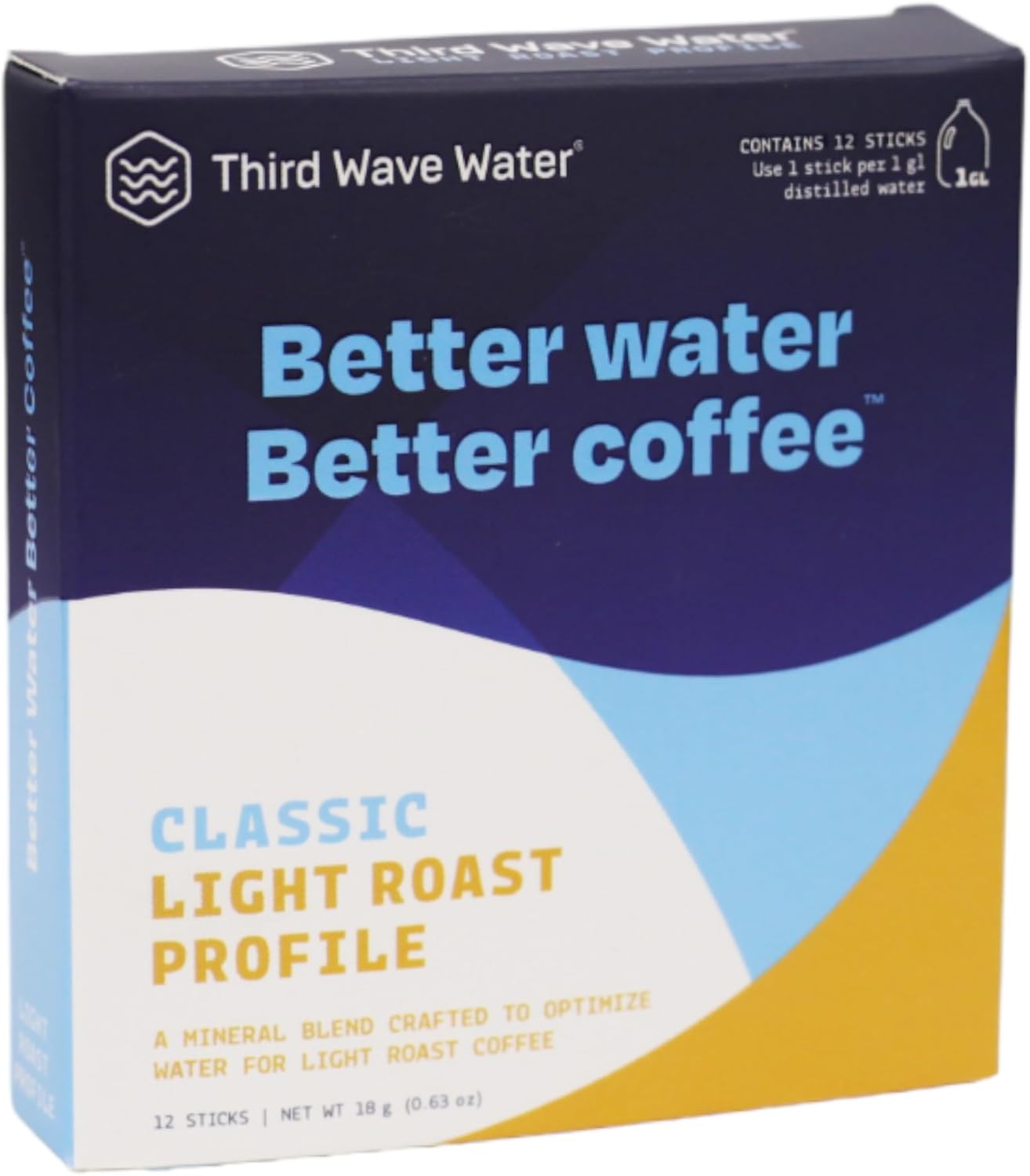
Third Wave Water · Classic Light Roast Profile (12-pack)
Third Wave Water solves the brewing water problem with a pre-formulated mineral mix.
Bodum · Pavina Double-Wall Glasses (Set of 6, 12oz)
The cafe glass for serving iced lattes, iced Americanos, and cold brew at home.
$40.99
View on Amazon →Hario · Cupping Spoon (Kasuya Model)
The right shape matters.


Pulled may earn a commission on purchases. Cookie applies to all Amazon items in your next 24 hours, not just this product.
See all Pulled Picks →Keep going with Pulled