May 13, 2026
How to Store Coffee Beans for Maximum Freshness
Some links in this guide are affiliate links. If you buy through them, Pulled may earn a commission at no extra cost to you. Our recommendations are based on editorial judgment and coffee culture knowledge, not commission rates.
Get paid for the gear you already use to brew.


Coffee beans begin losing freshness the moment they leave the roaster and the decline is faster than most drinkers expect. CO2 escapes through off gassing during the first 4 to 7 days; aromatic compounds volatilize across the next 14 to 21 days; oils begin to oxidize after 21 days; the cup goes measurably flat past 30 to 35 days off roast. Storage can slow this decline but cannot reverse it; the goal is to drink the bag while it is still in its window, not to engineer the bag past its window. This post covers the storage techniques that work, the ones that do not, and the practical math behind the bag size and rotation that keeps a home setup pouring fresh coffee. Internal link to Specialty Coffee, Plainly Explained for the freshness fundamentals underneath this storage discussion.
The short version of bean storage. Buy small bags (12oz or smaller) that the household can finish within 28 days of opening. Store at room temperature in an airtight container away from heat, light, and humidity. Vacuum canisters extend the window by 5 to 10 days; freezer storage works for unopened bags but creates condensation problems on opened bags. The freshness window cannot be extended indefinitely; trying to do so is the most expensive mistake in home coffee.
The freshness curve, in detail
Coffee’s flavor compounds follow a predictable degradation curve from roast date to staleness. Three phases matter.
Days 0 to 4 (off gassing): The bean releases significant CO2 from the roasting process. The gas escapes through the bag’s one-way valve and continues even after opening. CO2 in the brewing process disrupts extraction; shots pulled in the first four days run fast and uneven, and pour overs taste muddy. Rest the bag.
Days 4 to 21 (the prime window): The off gassing slows enough that brewing is stable. The aromatic compounds (volatile oils that create the bean’s smell and flavor character) are still intact. This is the window where the bean tastes most like itself. A drinker brewing in this window experiences the bean at its peak.
Days 21 to 35 (gradual decline): The aromatic compounds volatilize at room temperature. The cup loses brightness first, then complexity, then body. Coffee at day 28 tastes flat compared to coffee at day 18 from the same bag; the gap is small but measurable. Most drinkers can distinguish day-7 coffee from day-30 coffee in side by side blind tests.
Days 35 and beyond (stale): The oils oxidize, the aromatics are mostly gone, the cup tastes flat and woody. Brewing parameters that worked at day 15 produce noticeably worse cups at day 40. Most third wave specialty bags are past their useful window at this point. Some Italian tradition espresso blends, roasted darker, hold up longer (45 to 60 days).
The storage environment
Four environmental factors affect bean degradation. Each matters and the household setup that ignores one fails fast.
Air: Oxygen is the primary cause of staleness. Coffee oils oxidize on contact with air, producing the flat, woody notes that define old coffee. The fix is an airtight seal that excludes oxygen. The bag’s one-way valve handles CO2 release but does not exclude oxygen on opening; once the bag is opened, oxygen ingress begins.
Light: UV light catalyzes oxidation reactions in the bean’s oils. Beans stored on a sunny counter or in a clear glass jar near a window age noticeably faster than beans stored in a dark cabinet. The fix is opaque packaging or storage in a dark location.
Heat: Higher temperatures accelerate every chemical reaction in the bean, including oxidation. Beans stored near the stove, the oven, or a sunny windowsill stale faster than beans stored on a cool pantry shelf. Target storage temperature is 60 to 70 degrees Fahrenheit (15 to 21 degrees Celsius).
Humidity: Moisture is the most dangerous environmental factor. Beans absorb humidity from the air and the absorbed moisture accelerates oxidation, causes the beans to swell unevenly, and degrades flavor compounds. The fix is dry storage with consistent humidity below 70 percent.
Pulled pays cash for cafe visits while you weigh the gear.
The container choice
The original bag the coffee shipped in is the worst long term storage option. The bag’s one-way valve lets CO2 escape but does not exclude oxygen on opening. The bag also does not seal reliably after the first open; the integrated tin tie or zip closure works for a few weeks but degrades over time.
Three storage container categories work better.
Vacuum canisters (best): A canister that actively removes air after closing. The Airscape uses a push-down inner lid that compresses out the air; the Fellow Atmos uses a twist-to-vacuum mechanism. Both extend the freshness window by 7 to 10 days compared to the original bag. The Airscape at $35 is the standard recommendation; the Atmos at $60 is the upgrade for households running multiple bags.
Mason jars (acceptable): A 1L Mason jar with a screw lid provides a tight seal at low cost. The jar lets air in every time the lid opens but otherwise excludes oxygen. Mason jars are best for households with one bag open at a time; the jar empties enough between fills that staleness is not a major concern.
The original bag with a clip (worst): A binder clip or a chip bag clip on the rolled-down bag is the floor of acceptable storage. The seal is leaky and oxygen ingress is significant. Acceptable for the last week of a bag, not for full-bag storage.
The freezer question
Freezer storage is the most contested topic in home coffee. The freezer can extend the freshness window dramatically (months instead of weeks) but the practical execution is harder than most drinkers realize.
Freezer storage works for unopened bags. A vacuum-sealed bag of fresh coffee frozen at zero degrees Fahrenheit stays at peak freshness for 3 to 6 months. The bean’s aromatic compounds are stable at freezing temperatures; the oils do not oxidize significantly. Coffee competition cuppers routinely freeze named-origin lots to preserve them for blind tastings months later.
Freezer storage is problematic for opened bags. The fundamental problem is condensation. When a frozen bag is opened in a room temperature kitchen, atmospheric moisture condenses on the cold beans, introducing humidity into the bag. The next time the bag is opened (still cold from the freezer), more moisture condenses. Within a few weeks of repeated removal, the beans have absorbed enough moisture that the freezer storage has made them worse, not better.
The portion-freezing approach (works): Divide a 12oz bag into single-week portions (3 to 4oz each), vacuum-seal each portion separately, and freeze. Remove one portion per week, defrost in the original (sealed) packaging for 24 hours at room temperature, then open the portion and use within 7 days. The condensation problem is bypassed because the beans warm to room temperature inside their sealed packaging.
The 28-day rule
The practical rule for home coffee storage is the 28-day rule. Buy a bag size that the household can finish within 28 days of opening, then drink the bag through within that window. The 28 days starts the day the bag is opened (not the roast date); the roast date should be within 7 days of opening if the supply chain is working.
For most single-drinker households pulling 1 to 2 drinks per day, 12oz is the right bag size. A 12oz bag yields 22 cups of 12oz pour over or 32 double shots; at 2 drinks per day, the bag empties in 11 to 16 days, well within the 28-day window.
For couples or two-drinker households, the right bag size is also 12oz but the rotation is faster. The bag empties in 6 to 8 days; the household runs through 2 bags per week.
For larger households or coffee-heavy programs, the right size is 1lb or 2.2lb (Lavazza Super Crema ships in 2.2lb tins). The larger bags are economical per ounce but require more careful storage because the bag stays opened longer.
The "stockpile" mistake
One common storage mistake is buying multiple bags at once on sale and stockpiling them. The intent is good (lower per-ounce cost) but the math fails. A 5lb stockpile bought at a 20 percent discount is $20 cheaper than buying weekly at full price. The 5lb bag takes 8 to 12 weeks to consume. The last 2lb of the bag is past the freshness window. The drinker saves $20 and brews worse coffee for the final month.
The right approach to stockpiling is to freeze the surplus in single-week portions immediately after purchase, then thaw and use one portion per week. The freezer extends the freshness window long enough that the stockpile remains in window through consumption. Buying 5lb on sale, freezing 4lb in portions, and using 1lb out of the freezer rotation keeps the bag fresh through the full consumption cycle.
The ground coffee question
Ground coffee loses freshness 10 to 100 times faster than whole bean. The cell walls of the bean protect the aromatic compounds; grinding ruptures the cells and exposes everything inside to oxygen. A bag of preground coffee at day 7 already tastes like whole bean coffee at day 30.
The right approach is to buy whole bean and grind before brewing. The 30 to 60 seconds of daily grinding is the small price for fresh coffee. Preground coffee is acceptable only for drinkers who cannot grind fresh (no grinder, traveling) and even then the cup quality drops noticeably within days.
For drinkers with no grinder who buy preground, the storage approach changes. Preground coffee should be stored in a smaller vacuum canister and used within 7 to 10 days of grinding rather than the 28 days that whole bean allows. The freezer is more useful for preground; the ground coffee freezes well in small portions and thaws quickly for daily use.
The valve bag, in detail
The standard specialty coffee bag uses a one-way valve to manage the CO2 that beans release after roasting. The valve is a small disk near the top of the bag, usually with a Mylar membrane that opens under internal pressure and closes when pressure equalizes. The mechanism lets CO2 escape during the post-roast off gassing phase while preventing oxygen from entering the bag.
The valve works well for the first 21 to 28 days after sealing. After that, the membrane starts losing its seal integrity, and oxygen ingress increases. Bags older than 4 weeks should be transferred to a vacuum canister for the rest of their consumption window.
Some specialty roasters use nitrogen flushing in addition to the valve. The bag is sealed with nitrogen filling the air space inside, displacing oxygen. The nitrogen flush extends the prime freshness window by 5 to 7 days at the start. Sey Coffee and Onyx Coffee Lab use nitrogen flushing on their premium bags; the technique adds $0.20 to $0.50 per bag to the manufacturing cost.
The post-grind freshness math
Once coffee is ground, the freshness clock accelerates. Preground coffee loses 30 to 50 percent of its aromatic intensity within 24 hours. By day 3, the cup tastes flat. By day 7, the ground coffee is past its useful window even if the original whole bean bag would have been fresh for another two weeks.
The grinder retention adds another wrinkle. A home grinder retains 0.5 to 3 grams of ground coffee in the burr chamber and the chute between sessions. The retained coffee oxidizes between brews; the next session’s dose includes some of the previous session’s stale grounds. Low-retention grinders (Niche Zero, single dose models) minimize this effect; high-retention grinders (most consumer hopper-fed grinders) amplify it.
The fix is single dose grinding (load only the day’s coffee into the grinder) plus consistent grinder cleaning. A drinker grinding only what they will brew immediately, and clearing the grinder chute with a small puff of air between sessions, keeps every shot pulled from freshly ground beans regardless of the grinder’s base retention.
The "old bag rescue" question
A bag past its freshness window is not garbage but is also not specialty coffee. Three approaches work for stale bags.
Switch the brewing method. Stale beans pull terrible pour over but acceptable French press or moka pot. The heavier-body methods mask the loss of brightness. A 6-week-old bag of Yirgacheffe that tastes flat as pour over makes a respectable French press cup.
14 day free trial. Real PayPal cash on every coffee run.
Use for cold brew. Cold brew is the most forgiving method for stale beans. The cold extraction does not pull the brighter aromatic compounds anyway; the long steep produces a cup that survives bean age better than hot brewing.
Bake them. Stale beans can be re-roasted (carefully, on a low oven setting) to drive off the oxidation products. The technique requires practice and is rarely worth the effort for $20 bags. Better to compost the stale beans and buy fresh.
The bag splitting strategy
One approach for drinkers who finish bags slowly is to split a 12oz bag into smaller portions immediately on opening. The procedure: open the bag, weigh out 3 to 4oz portions into separate vacuum-sealed canisters or mason jars, refrigerate one for current use and store the others sealed and cool. Each smaller portion gets opened and consumed within 10 to 14 days, well within the freshness window.
The split-and-store approach works because each portion experiences a smaller total air exposure. A 12oz bag opened daily for 6 weeks gets oxygen exposure on every opening; the same bag split into four 3oz portions experiences each portion opened daily for only 10 days each, with the other three portions sealed and protected. The total exposure across the bag’s consumption is reduced.
The tradeoff is the upfront effort. Splitting a bag takes 5 to 10 minutes the day it arrives. For households that buy multiple bags per month, the effort compounds; some drinkers find the routine annoying. The split makes the most sense for households with one bag open at a time and slow consumption.
The freezer technique, in detail
Freezer storage done correctly produces excellent results; done incorrectly produces stale, moist beans that are worse than refrigerated coffee. The technique that works.
Step 1: portion the beans the day they arrive. 3oz portions for daily-use, 6oz portions for weekly use. Use small vacuum-sealed bags or jars; the seal must be airtight before freezing.
Step 2: freeze at zero degrees Fahrenheit or below. A standard household freezer is acceptable; a chest freezer is colder and produces better long term storage. Avoid the freezer door, which experiences temperature fluctuations.
Step 3: thaw before opening. When ready to use a portion, remove the sealed package from the freezer and let it warm to room temperature for 8 to 24 hours, still sealed. The condensation that forms during thaw occurs on the outside of the package, not on the beans. Open the package after the package itself has warmed.
Step 4: use within 7 to 10 days of opening. The thawed beans are at fresh-coffee freshness but have a slightly compressed usable window because they have already been through one storage cycle. Treat the opened portion like a small bag with a 10-day shelf life.
Step 5: never refreeze. Once a portion has been thawed and opened, the freshness clock starts. Refreezing produces condensation cycles that damage the beans. Use the portion completely or compost what is left.
The traveling drinker question
Drinkers who travel face a specific storage challenge: the bag at home goes stale while the drinker is away. Three approaches work.
For trips under one week, the home bag in a vacuum canister can survive. The drinker returns to a bag at day 7 to 14 off roast (assuming fresh on departure), which is still in window.
For trips of one to three weeks, the right approach is to portion-freeze the remaining coffee before leaving. The 4oz portions remain fresh in the freezer for the duration of the trip. The drinker returns to fresh coffee.
For trips longer than three weeks, the right approach is to finish the bag before leaving and order a new bag for return. Most subscription services (Trade, Atlas, Driftaway) can pause and resume shipments to align with travel schedules.
What does not work
Several storage approaches popular online do not actually work. Avoid them.
The fridge. Refrigerator storage is the worst long term option. The high humidity damages the beans, the bag absorbs ambient food odors, and the temperature cycling (opening the fridge cycles air over the bag) accelerates oxidation. Beans in the fridge for 2 weeks taste worse than beans at room temperature for 4 weeks.
The countertop in a clear jar. The light and the temperature fluctuations age the beans faster than dark cabinet storage. Beans on the counter are also exposed to kitchen humidity from cooking, which adds another stressor.
The freezer door. Even ignoring the condensation problem, the freezer door experiences temperature swings as the door opens. The swings cycle the beans between deep-frozen and just frozen states, which accelerates flavor loss compared to a stable freezer interior.
Vacuum-packing at home with a kitchen vacuum sealer. Home vacuum sealers do not remove enough air to make a meaningful difference for short term storage. The cost and effort do not justify the marginal improvement over a $35 Airscape canister.
The subscription as a freshness strategy
One of the strongest freshness strategies is to outsource the rotation to a subscription service. Trade Coffee, Atlas Coffee Club, and Driftaway all ship within 2 to 7 days of roasting, which means the drinker receives bags closer to roast than any grocery store can match. The 12oz bag arrives at day 5 off roast, the drinker finishes it by day 23, and the next bag arrives in time to continue the rotation.
The subscription approach eliminates the freshness math because the rotation is automatic. The drinker does not need to remember to order; the bags arrive on schedule. The drinker does not need to manage stockpile freshness; each bag is consumed within window before the next arrives.
For drinkers serious about freshness without the daily logistics, a subscription is the working answer. The full subscription comparison is at the related post on coffee subscription boxes; this post slots in as the storage-side guide that complements the subscription rotation.
The supermarket-bag freshness reality
Most grocery store coffee bags are dramatically past their freshness window by the time they reach the shelf. The supply chain typically runs as follows: the coffee is roasted at a regional facility, packaged in valve bags, shipped to a distribution warehouse (1 to 2 weeks), shipped to regional grocery distribution (1 to 2 weeks), shipped to individual stores (3 to 7 days), and sits on the shelf for 2 to 8 weeks before purchase. Total time from roast to consumer: 4 to 12 weeks.
A 4-to-12-week-old bag is well past the prime freshness window. The cup tastes flat regardless of brewing technique, and the consumer who attributes the flatness to their home setup is misdiagnosing the problem. The bean itself is the variable.
The exceptions are direct-roaster sales at grocery stores. Whole Foods, Bristol Farms, and similar specialty grocers stock some bags from regional third wave roasters that ship within 2 to 4 weeks of roasting. These bags are still slower to market than direct subscription, but they are within an acceptable window. Look for the roast date printed on the bag; if the date is more than 4 weeks ago, the bag has lost most of its character.
For commodity-tier supermarket coffee (Folgers, Maxwell House, Dunkin’, Starbucks store-brand), the bag is roasted darker and treated as shelf-stable. The cup quality is acceptable for 4 to 8 weeks after packaging because the dark roast and the bean profile do not depend on aromatic complexity. These bags are not specialty coffee but they tolerate the supply chain in a way third wave bags do not.
The flavor impact, quantified
Industry blind tastings consistently show that drinkers can distinguish bean ages by 7 to 14 day intervals. A bag at day 14 tastes meaningfully different from the same bag at day 28. The difference compounds across age groups: day 14 versus day 35 is even more pronounced.
The specific compounds that decline first are the most aromatic ones: the floral and fruit notes in light roast washed Africans, the caramel and brown sugar in honey-processed Central Americans, the wine-like notes in anaerobic processed lots. These compounds are the most valuable in third wave specialty coffee and the most fragile to time.
The heavier compounds (chocolate, body, bitterness) hold up longer. A medium roast Brazilian or a dark roast Italian blend can survive 6 to 8 weeks with most of its character intact because the dominant flavors are the durable ones. This is part of why Italian tradition espresso blends ship in 2.2lb tins that take months to consume; the bean profile is built for shelf life rather than peak freshness.
Questions readers ask
How long does a bag of coffee really last? Optimally, 4 to 28 days from roast date. Acceptably, 4 to 35 days. Past 35 days, the cup quality has declined enough that the drinker is brewing a different coffee than the bag intended.
Can I tell if coffee is stale by smell? Yes, with practice. Fresh coffee smells of its origin character (florals, fruits, chocolate, depending on the bean). Stale coffee smells flat, woody, sometimes slightly sour or musty. The transition happens gradually over 2 to 3 weeks; a side by side smell of fresh and old beans makes the difference obvious.
Should I buy in bulk if the per-ounce price is much lower? Only if storage handles the freshness. A 5lb bag of grocery-store coffee at $14 per pound costs less per ounce than 12oz bags of specialty at $20 per pound, but the 5lb stockpile loses cup quality faster than the small bags. Bulk only works with freezer-portioning.
Do beans need to "rest" before brewing? Yes, 4 days minimum. The off gassing window from day 0 to day 4 produces unstable brewing. Day 4 to day 7 is when the bag enters its prime window. Some bags ship from the roaster within 24 hours of roasting; resting for the first few days at home is part of the workflow.
Is the brown bag better than the silver bag? Slightly. Brown bags (kraft paper) are sometimes opaque enough to block UV light; silver bags (foil-lined) are uniformly opaque and slightly more sealed. The difference is small. The bag material matters less than the storage environment after opening.
Does grinding fresh actually matter that much? Yes, significantly. Preground coffee loses 50 to 70 percent of its aromatic intensity within 24 hours of grinding. Grinding fresh is the single largest storage-side improvement most drinkers can make.
Practical takeaway
Coffee storage at home is mostly about respecting the freshness window rather than engineering around it through clever techniques. Buy 12oz bags from a third wave roaster, finish each one within 28 days of opening, store in a vacuum canister at room temperature in a dark cabinet, and grind whole bean fresh before every brew. The storage decisions described above account for roughly 10 to 15 percent of total home cup quality; the freshness practices behind them account for another 10 to 15 percent of the gap. Together, a good storage approach protects a quarter of the home cup quality from going to waste across the bag’s consumption window, which compounds across a year of brewing into a meaningfully better coffee program.
The cheapest improvement in home coffee for most drinkers is not new gear, not better beans, and not improved technique but simply better storage habits applied to the bags already in the kitchen. A drinker who switches from the original bag with a clip to an Airscape canister and starts buying smaller bags more often closes 8 to 12 percent of the home-versus-cafe gap with $35 in equipment and no technique changes.
Pulled exists so the cafe pouring the fresh cup is findable from any city, and the home storage is what brings that freshness into the kitchen. The pillar guide on Specialty Coffee, Plainly Explained covers the broader category architecture; this post slots in as the freshness-side practical guide that turns the bag rotation into a working morning routine.
Earn cash on every coffee run. Download Pulled.
Our Picks
What we'd buy on Amazon for this
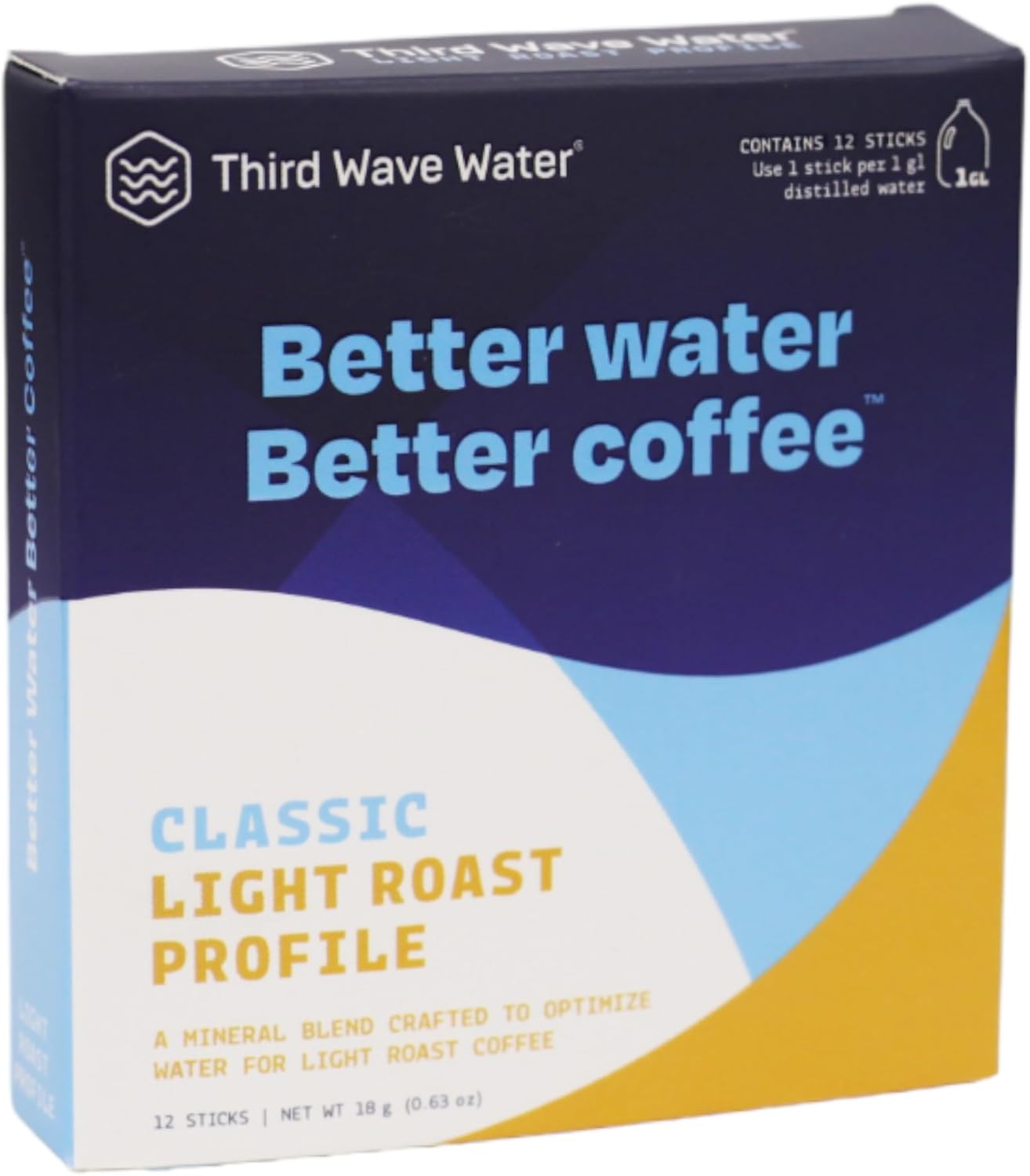
Third Wave Water · Classic Light Roast Profile (12-pack)
Third Wave Water solves the brewing water problem with a pre-formulated mineral mix.
Bodum · Pavina Double-Wall Glasses (Set of 6, 12oz)
The cafe glass for serving iced lattes, iced Americanos, and cold brew at home.
$40.99
View on Amazon →Hario · Cupping Spoon (Kasuya Model)
The right shape matters.


Pulled may earn a commission on purchases. Cookie applies to all Amazon items in your next 24 hours, not just this product.
See all Pulled Picks →Keep going with Pulled