May 22, 2026
The Complete Guide to Matcha: Benefits, Brewing & the Real Science
Some links in this guide are affiliate links. If you buy through them, Pulled may earn a commission at no extra cost to you. Our recommendations are based on editorial judgment and coffee culture knowledge, not commission rates.
When I'm working with patients in eating disorder recovery, one of the questions I get most often is whether matcha is "actually healthy" or just another wellness trend dressed up in beautiful packaging. The honest answer is more interesting than either yes or no.
Matcha is a 900-year-old preparation of Japanese green tea, not a 2020 trend. It does have real, research-backed effects on the body: sustained energy via a unique amino acid called L-theanine, high concentrations of a polyphenol called EGCG, and measurable effects on cognitive focus. And it has been studied carefully enough that we can talk about what it does without making it a miracle.
This guide is what I'd say to a friend or patient who asked me, honestly, what the science on matcha actually shows. No supplement marketing language. No weight loss framing. Just the research, the dosage realities, and the honest caveats.
What Matcha Actually Is
Matcha is finely ground powder made from shade-grown green tea leaves, called tencha. The key difference from regular green tea is that when you drink matcha, you ingest the entire leaf, suspended in water. With steeped green tea, you only consume the compounds that dissolve into the water. With matcha, you consume the leaf itself.
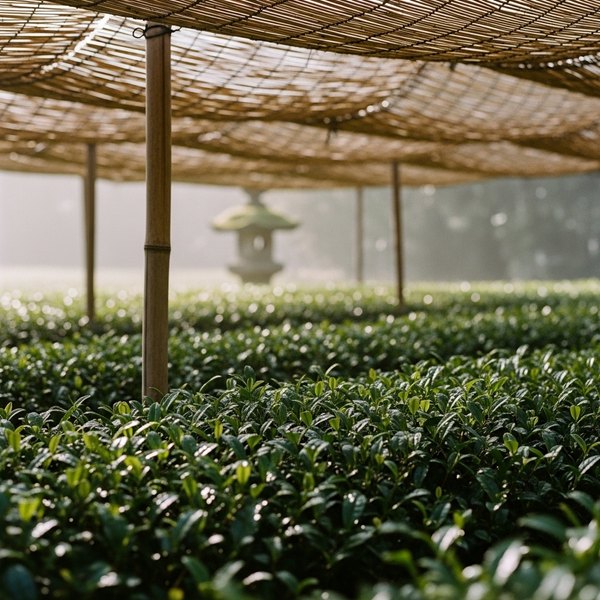
The shade-growing process is what makes matcha distinct. Three to four weeks before harvest, tea farms cover the tencha plants with bamboo screens or shade cloth, reducing sunlight by 70 to 90 percent. This stress triggers the plants to produce more chlorophyll, which is why high-grade matcha is vivid green rather than olive, and more L-theanine, the amino acid responsible for matcha's unusual energy profile.
After harvest, the leaves are steamed to halt oxidation, dried, and stone-ground into powder so fine it suspends in water rather than steeping. Traditional stone mills produce roughly 30 to 40 grams of matcha per hour, which is part of why high-quality matcha is expensive.
The Japanese tea ceremony, chanoyu, formalized matcha preparation in the 12th century. The drink existed in China before that, but the practice of grinding and whisking the leaf into a frothed beverage was perfected in Japan. Today the highest-quality matcha still comes from two regions: Uji in Kyoto Prefecture and Nishio in Aichi Prefecture.
The Six Science-Backed Benefits of Matcha
I'll walk through six benefits where the research actually supports the claims, with honest caveats about dosage, bioavailability, and what the studies do and do not show.
Sustained Energy Without the Crash
This is the benefit I trust most because the mechanism is clear and the research is consistent. Matcha contains both caffeine and L-theanine, an amino acid that occurs in significant quantities almost nowhere else in the human diet.
L-theanine crosses the blood-brain barrier and increases alpha-wave activity in the brain, which is associated with a state of relaxed alertness, calm focus without sedation [1]. When L-theanine is consumed with caffeine, it smooths the caffeine response curve. The energy comes on more gradually and lasts longer. There is no sharp peak and no equivalent crash.

A 2008 study by Owen and colleagues at Unilever Research found that a combination of 50 mg caffeine and 100 mg L-theanine improved both speed and accuracy on cognitive tasks more than either compound alone [2]. A follow-up study by Nobre et al. that same year confirmed the alpha-wave effect using EEG measurement [3].
The honest dosage reality: a standard 1-gram serving of ceremonial-grade matcha contains roughly 25 mg of L-theanine and 30 mg of caffeine. A 2-gram serving (a usucha bowl) doubles those numbers. To reach the cognitive doses used in research studies, you would need 4 to 8 grams of matcha, which is more than most people drink in a sitting.
What this means practically: one serving of matcha will give you a smoother energy curve than one cup of coffee, with about a third of the caffeine. Two servings will give you research-relevant L-theanine levels. More than that, and you're crossing into caffeine doses that interfere with sleep if consumed after early afternoon.
High Concentration of EGCG
EGCG (epigallocatechin gallate) is a polyphenol in the catechin family, and matcha contains it in concentrations that genuinely stand out among foods.
A frequently cited 2003 study by Weiss and Anderton at the University of Colorado found matcha to contain up to 137 times more EGCG than commercially available steeped green tea [4]. That number is sometimes treated as marketing copy, but it's a real research finding. The mechanism is straightforward: with matcha, you're consuming the entire leaf rather than a thin extraction.
EGCG has been studied for anti-inflammatory and antioxidant effects in cell cultures, animal models, and human trials. The mechanisms are real. The honest caveat is bioavailability: EGCG is poorly absorbed in the human gut, and most of what you consume doesn't reach systemic circulation. A 2007 study by Chow et al. measured serum EGCG after green tea consumption and found that fasting consumption increased bioavailability roughly threefold compared to consumption with food [5].
What this means practically: matcha is a real source of EGCG, and morning consumption on an empty stomach maximizes absorption. But EGCG is not a magic compound. It's a polyphenol that does measurable things in laboratory settings, and the human effects are real but modest. Anyone selling you EGCG as a disease cure is selling you something the research does not support.
Cognitive Performance and Focus
I separate this from the energy benefit because the research is specifically about cognitive task performance, not subjective alertness.
Multiple controlled trials have measured improvements in attention, working memory, and reaction time after L-theanine and caffeine consumption at doses found in 1 to 2 servings of matcha [6, 7]. The effect is most pronounced on tasks requiring sustained attention rather than acute reaction time.
Japanese students have historically used matcha during exam preparation for exactly this reason. The cognitive effects are subtle but measurable.
What this means practically: matcha is a better study aid than coffee for most people because the calm-alertness combination supports sustained focus rather than the jittery, distractible energy that high-caffeine coffee can produce. This is most useful for work that requires concentration over time, not for tasks that need quick bursts.
Cardiovascular Markers
The research on green tea and cardiovascular health is some of the strongest in nutritional science, primarily from large population studies in Japan.
A 2006 study published in JAMA followed 40,000 Japanese adults for 11 years and found that those who consumed 5 or more cups of green tea daily had significantly lower mortality from cardiovascular disease compared to those who consumed less than 1 cup daily [8]. The effect was strongest for women and for stroke mortality specifically.
The mechanism appears to be a combination of catechin effects on LDL cholesterol oxidation, blood pressure, and endothelial function. EGCG and other catechins have been shown in controlled trials to modestly reduce LDL and blood pressure [9].
The honest caveats: population studies show correlation, not causation. People who drink a lot of green tea in Japan also tend to have other lifestyle patterns that affect cardiovascular health. The controlled trials show modest effects, not dramatic ones. Matcha is not a substitute for cardiovascular medications or lifestyle changes when those are clinically indicated.
What this means practically: regular matcha consumption is a reasonable habit for cardiovascular health, on the same level as eating more vegetables or walking more. It's a contribution, not a treatment.
Cognitive Aging and Long-Term Brain Health
This is a benefit where I want to be careful about the language. Several observational studies have associated regular green tea consumption with lower rates of cognitive decline and dementia in older adults [10]. The mechanism appears to involve EGCG's anti-inflammatory effects in neural tissue and catechins' interactions with amyloid-related pathways.
The research is suggestive, not conclusive. We do not have controlled trials showing that matcha prevents dementia. We have population data showing that people who drink green tea regularly tend to have better cognitive outcomes in old age, after controlling for other factors.
What this means practically: this is a reasonable thing to incorporate into a long-term healthy diet if you enjoy it. It is not a medical intervention for cognitive decline.
Anti-Inflammatory Effects
EGCG and other catechins in matcha have well-documented anti-inflammatory effects at the cellular level. The mechanisms involve inhibition of NF-kB signaling and modulation of pro-inflammatory cytokines [11].
In practice, the human-level effects of dietary EGCG on inflammation are modest. Studies have shown small improvements in inflammatory markers like CRP with regular green tea consumption, but the effects are not on the scale of pharmaceutical anti-inflammatories.
What this means practically: matcha contributes to an anti-inflammatory dietary pattern. It is not a treatment for inflammatory conditions.
Matcha vs Coffee: The Honest Comparison
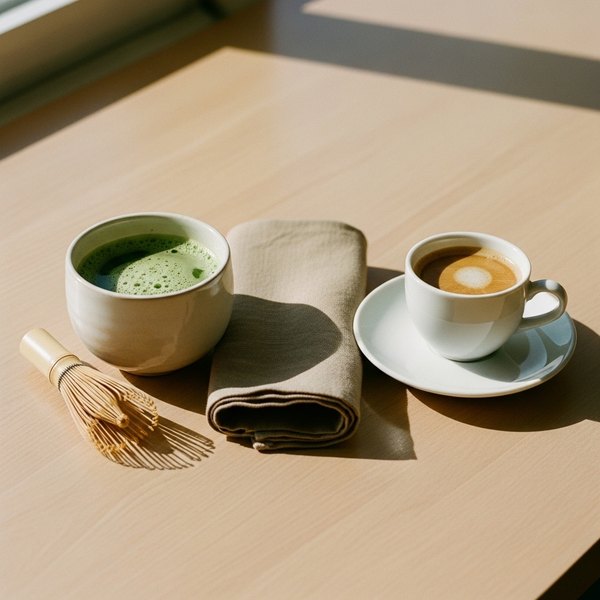
I get this question constantly, and the answer is that they do different things and there's no reason you can't drink both.
Caffeine content per serving: 8oz brewed coffee contains roughly 95 mg of caffeine. A single espresso shot contains about 63 mg. One gram of ceremonial matcha (a single bowl) contains roughly 30 mg. Two grams of ceremonial matcha (a full usucha preparation) contains roughly 60 mg.
Energy curve differences: Coffee has a rapid onset of 15 to 30 minutes, peaks at 30 to 60 minutes, and begins declining within 90 minutes. Matcha has a gradual onset of 30 to 60 minutes, a broad plateau over 3 to 4 hours, and a gentle decline.
When to choose matcha: when you need sustained focus over hours, when you have anxiety sensitivity to caffeine, when you want energy without a crash, or as an afternoon caffeine source if you would otherwise overcaffeinate on coffee.
When to choose coffee: when you need rapid alertness, when you enjoy coffee's flavor more (this matters because drinks you enjoy are drinks you actually consume consistently), or when you're not caffeine sensitive and want a stronger hit.
The both-and option: morning coffee for the immediate ritual and rapid alertness, afternoon matcha for sustained focus through the workday without compromising sleep.
Types of Matcha and How to Choose
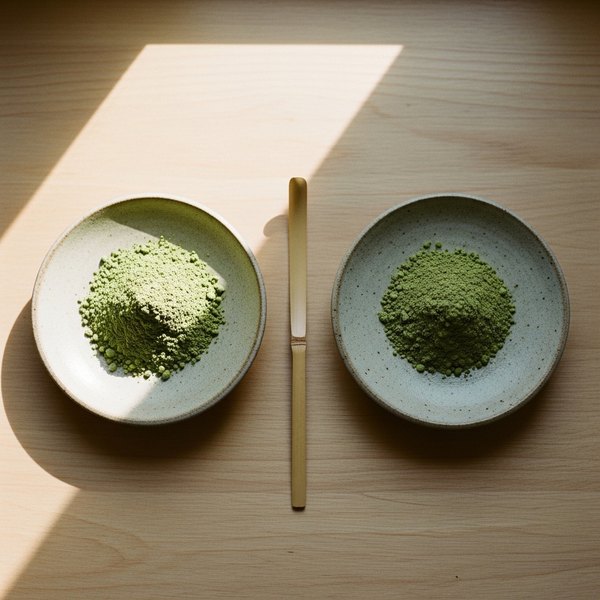
Not all matcha is the same. The two broad categories are ceremonial grade and culinary grade, and the difference matters more than most product packaging suggests.
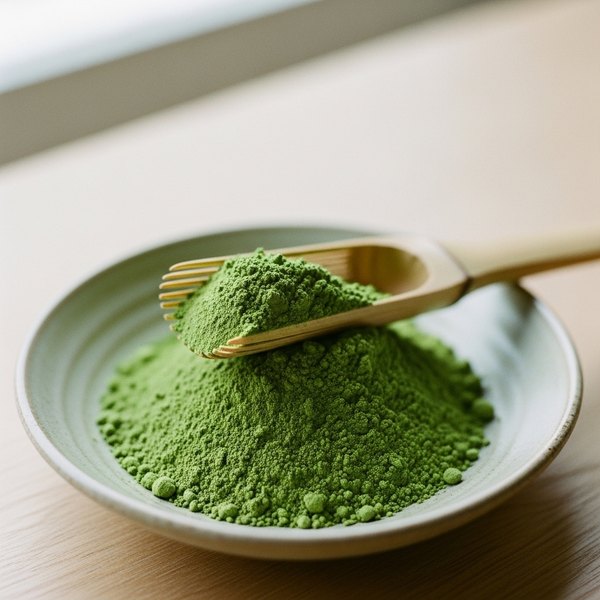
Ceremonial grade matcha is made from the youngest, most tender tencha leaves, typically the first harvest of the year in April or May. The leaves are stone-ground slowly enough to preserve the vibrant green color and the delicate flavor. The taste is smooth and slightly sweet, with no bitterness. This is what you want for drinking straight as usucha or koicha.
Culinary grade matcha is made from later harvests and processed less carefully. The color is more olive than vivid green, and the flavor is more bitter and grassy. This grade is intended for baking, smoothies, and lattes where the matcha is combined with sweeteners or other strong flavors. It is not pleasant to drink straight.
Within ceremonial grade, there are price tiers ranging from $15 per 30g (entry-level ceremonial) to $80 or more per 30g (premium ceremonial from named tea masters). The differences are real and noticeable in side-by-side tasting, but for daily drinking, mid-range ceremonial at $25 to $40 per 30g is the practical sweet spot.
How to spot quality matcha by appearance: The color should be vibrant electric green, not olive or yellow-green. Olive color suggests older leaves, lower grade, or oxidation from poor storage. The texture should be fine and silky, almost like powdered sugar in feel. Coarse or gritty matcha was not stone-ground properly. The smell should be fresh, vegetal, and slightly sweet, with no mustiness or hay smell. The origin should be Japan only, ideally Uji (Kyoto) or Nishio (Aichi) for the highest quality.
What to avoid: "matcha" from China or Korea (these countries produce green tea powder, but the shade-growing tradition and stone-grinding standards are Japanese); olive-green or yellow-green powder (almost always indicates lower grade or staleness); pre-sweetened "matcha mixes" with added sugar, milk powder, and stabilizers (these are dessert mixes, not matcha); anything in a clear container (light degrades matcha quickly, so quality matcha is sold in opaque, sealed packaging).
How to Prepare Matcha
The traditional preparation is more forgiving than it looks, and the modern matcha latte is a reasonable adaptation. Both are worth knowing.
Traditional Usucha (Thin Tea)
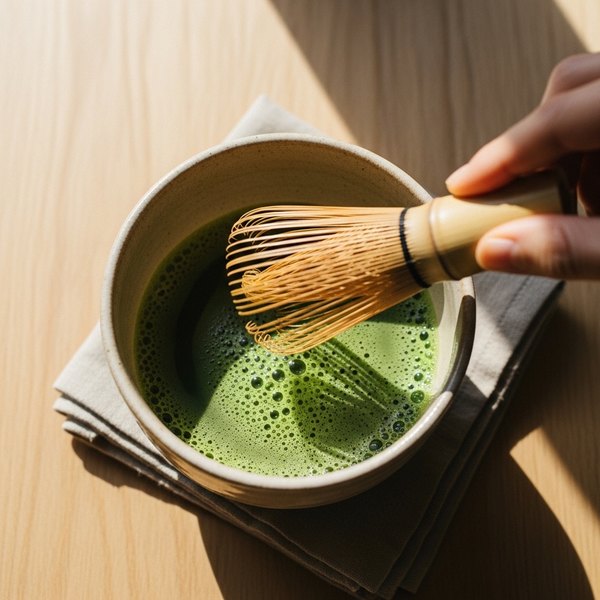
Equipment: a chawan (bowl), a chasen (bamboo whisk), and a chashaku (bamboo scoop). Substitutes work in a pinch: any wide bowl, a small handheld electric milk frother, and a small spoon.
- Sift 1 to 2 grams of matcha (roughly 1 to 2 teaspoons) into the chawan. Sifting prevents clumping.
- Heat water to 175F (80C). Do not use boiling water. Boiling water makes matcha bitter and damages the delicate compounds.
- Pour 60 to 80 ml of hot water over the matcha.
- Whisk in a zigzag W or M motion (not circular) for 15 to 20 seconds until a fine foam forms on the surface.
- Drink immediately, while the foam is still present.
Common mistakes: using boiling water, whisking in circles instead of zigzag, not sifting (you get clumps), using too much or too little water.
Modern Matcha Latte
- Sift 1 to 2 grams of matcha into a small bowl or cup.
- Add 30 ml of 175F water and whisk into a smooth paste.
- Steam 200 ml of milk (dairy or oat work best; almond is too thin) to 140F.
- Pour the steamed milk over the matcha paste while gently stirring.
- Sweeten if desired with simple syrup or honey. Do not use refined white sugar; it overpowers the matcha.
The two-step process (paste first, then milk) is what prevents the clumping that ruins most homemade matcha lattes. For the full method, see how to make a matcha latte at home.
When to Drink Matcha
This is where individual physiology matters more than general advice, but the principles are consistent.
Morning matcha works for most people. The L-theanine smooths the morning caffeine effect, and you get the full sustained energy curve through the workday.
Afternoon matcha between 1 and 3 PM is the sweet spot for sustained focus without disrupting sleep. The half-life of caffeine is roughly 5 hours, so a 2 PM matcha is mostly cleared by 10 PM.
Evening matcha is generally a mistake unless you have very low caffeine sensitivity. Even smaller doses can interfere with sleep architecture in caffeine-sensitive individuals.
With or without food: as discussed in the EGCG section, fasting consumption maximizes bioavailability of the catechins. But matcha on a completely empty stomach can cause nausea in some people, especially at first. A small snack 30 minutes before is a reasonable compromise.
Who Should Be Cautious With Matcha
This is the section I wrote first, before any of the benefits, because as a registered dietitian I want to be clear about what matcha is not.
Pregnancy: the American College of Obstetricians and Gynecologists recommends limiting total caffeine to under 200 mg daily during pregnancy. That allows for 1 to 2 servings of matcha. The L-theanine has not been studied extensively in pregnancy, so traditional doses (the equivalent of usucha, not concentrated supplements) are the appropriate guidance.
Iron absorption: the tannins in matcha can interfere with non-heme iron absorption when consumed with iron-rich plant foods. If you eat a plant-forward diet and are managing iron status, separate matcha from iron-rich meals by at least an hour.
Caffeine sensitivity: matcha contains less caffeine than coffee, but it is still caffeine. People with caffeine-sensitive anxiety, panic disorders, or sleep difficulties should approach matcha the same way they would coffee, carefully, in measured doses, with attention to timing.
Medication interactions: green tea catechins can interact with anticoagulant medications, beta-blockers, and some chemotherapy drugs. If you're on medication, talk to your prescribing physician before adding significant daily matcha to your routine.
Liver concerns at extremely high doses: there are case reports of liver toxicity at very high doses of concentrated green tea extract supplements (1000+ mg EGCG daily). Drinking matcha at normal beverage doses is not the same as taking concentrated supplements. Stay with the leaf, not the pill.
How to Choose Quality Matcha: A Practical Buying Guide
I'll be specific here because vague advice doesn't help anyone shopping at 11 PM on Amazon.
For daily drinking ceremonial grade in the mid-range price tier ($25 to $40 per 30g): Ippodo Ummon-no-mukashi or Sayaka-no-mukashi, Mizuba Tea Co. organic ceremonial, or Marukyu Koyamaen Eiju-no-Mukashi.
For premium ceremonial when you want to experience the top of the category: Ippodo Kuon, Marukyu Koyamaen Tenju-no-Mukashi, or Hibiki-an Premium Ceremonial Matcha.
For culinary grade for baking and smoothies: Mizuba Tea Co. organic culinary, or Encha Latte Grade.
What I personally avoid: most US grocery store matcha (typically poor quality), Amazon matcha without verified Japanese sourcing, and anything sold with weight loss claims attached.
Storage matters more than people realize. Matcha begins degrading within weeks of opening. Keep it sealed, in the original opaque container, in the refrigerator. Drink it within 6 weeks of opening for best flavor.
Frequently Asked Questions
Is matcha healthier than coffee? They have different health profiles. Matcha has more antioxidants, less caffeine, and the L-theanine effect on sustained energy. Coffee has its own polyphenols and more research behind its cardiovascular and longevity associations. Neither is clearly healthier; they are different.
How much matcha can I drink in a day? For most healthy adults, 1 to 4 servings (1 to 8 grams) daily is reasonable. Limit total caffeine from all sources to under 400 mg daily for healthy non-pregnant adults, less if you're caffeine sensitive.
Does matcha actually help with weight management? The research on EGCG and energy expenditure shows modest, real, but small effects. Matcha is not a weight loss intervention. It can be part of an overall healthy eating pattern, but framing it as a weight loss tool misunderstands what nutrition is for.
Can I drink matcha while breastfeeding? Yes, in moderate amounts. The same caffeine guidelines as pregnancy apply (under 200 mg daily). The L-theanine passes into breast milk in small quantities; established literature is limited.
Why is my matcha bitter? Most likely you used water that was too hot (above 180F) or used culinary-grade matcha as if it were ceremonial. Cooler water and a better grade should solve both.
Why is my matcha clumpy? You didn't sift it. Always sift matcha before adding water. A small fine-mesh sieve works fine.
What's the best matcha brand for beginners? Mizuba Tea Co. organic ceremonial is a reasonable starter: high quality, widely available, fairly priced.
Does matcha go bad? It doesn't become unsafe, but it loses flavor and antioxidant content. Drink within 6 weeks of opening for best results.
Can I make matcha with cold water? Yes. Cold-brewed matcha (made with cold water instead of hot) is a reasonable preparation, especially in summer. It produces a slightly less bitter and more refreshing drink, though the antioxidant extraction is slightly lower.
Is organic matcha worth the extra cost? The tea industry has historically had pesticide concerns, and organic certification provides meaningful assurance. I generally recommend organic when it's an option.
Why is high-quality matcha so expensive? Stone-grinding produces only 30 to 40 grams per hour. Shade-growing requires expensive infrastructure. The youngest, most tender leaves used for ceremonial grade are picked by hand. You're paying for slow craftsmanship.
How is matcha different from green tea powder? Green tea powder is just ground regular green tea. Matcha is ground from tencha leaves that were shade-grown specifically to be made into matcha. The chemistry, color, flavor, and effects differ significantly.
A Note From Sara
I'm a registered dietitian, and my clinical practice focuses on eating disorder recovery and substance abuse nutrition. I don't write about weight loss, because that's not the work that matters in nutrition. What matters is whether food and drink contribute to a life that's actually sustainable and enjoyable.
Matcha fits that frame for me. It has real, research-backed effects that improve daily function (sustained energy, calm focus) without the volatility of high-caffeine coffee. It's a 900-year-old tradition that's been studied carefully enough that we can talk about it without making it a miracle. And it tastes good when it's made well.
If you've read this far, you have the science. Drink it because you like it. Drink it because the sustained energy works better for your day than coffee crashes do. Drink it because the ritual of whisking a bowl of bright green powder is a quiet pleasure.
Just don't drink it because someone told you it would change your body. That's a different conversation, and not one this article is for.
— Sara Naouchi, RDN
References
- Juneja, L. R., Chu, D. C., Okubo, T., Nagato, Y., & Yokogoshi, H. (1999). L-theanine, a unique amino acid of green tea and its relaxation effect in humans. Trends in Food Science & Technology, 10(6-7), 199-204.
- Owen, G. N., Parnell, H., De Bruin, E. A., & Rycroft, J. A. (2008). The combined effects of L-theanine and caffeine on cognitive performance and mood. Nutritional Neuroscience, 11(4), 193-198.
- Nobre, A. C., Rao, A., & Owen, G. N. (2008). L-theanine, a natural constituent in tea, and its effect on mental state. Asia Pacific Journal of Clinical Nutrition, 17 Suppl 1, 167-168.
- Weiss, D. J., & Anderton, C. R. (2003). Determination of catechins in matcha green tea by micellar electrokinetic chromatography. Journal of Chromatography A, 1011(1-2), 173-180.
- Chow, H. H., Hakim, I. A., Vining, D. R., et al. (2005). Effects of dosing condition on the oral bioavailability of green tea catechins after single-dose administration of Polyphenon E in healthy individuals. Clinical Cancer Research, 11(12), 4627-4633.
- Haskell, C. F., Kennedy, D. O., Milne, A. L., Wesnes, K. A., & Scholey, A. B. (2008). The effects of L-theanine, caffeine and their combination on cognition and mood. Biological Psychology, 77(2), 113-122.
- Giesbrecht, T., Rycroft, J. A., Rowson, M. J., & De Bruin, E. A. (2010). The combination of L-theanine and caffeine improves cognitive performance and increases subjective alertness. Nutritional Neuroscience, 13(6), 283-290.
- Kuriyama, S., Shimazu, T., Ohmori, K., et al. (2006). Green tea consumption and mortality due to cardiovascular disease, cancer, and all causes in Japan: the Ohsaki study. JAMA, 296(10), 1255-1265.
- Onakpoya, I., Spencer, E., Heneghan, C., & Thompson, M. (2014). The effect of green tea on blood pressure and lipid profile: a systematic review and meta-analysis of randomized clinical trials. Nutrition, Metabolism and Cardiovascular Diseases, 24(8), 823-836.
- Kuriyama, S., Hozawa, A., Ohmori, K., et al. (2006). Green tea consumption and cognitive function: a cross-sectional study from the Tsurugaoka Project 1. American Journal of Clinical Nutrition, 83(2), 355-361.
- Singh, B. N., Shankar, S., & Srivastava, R. K. (2011). Green tea catechin, epigallocatechin-3-gallate (EGCG): mechanisms, perspectives and clinical applications. Biochemical Pharmacology, 82(12), 1807-1821.
Our Picks
What we'd buy on Amazon for this
Encha · Ceremonial Grade Organic Matcha (30g)
Single source Uji organic, USDA certified. Great daily matcha.
$26.99
View on Amazon →

Pulled may earn a commission on purchases. Cookie applies to all Amazon items in your next 24 hours, not just this product.
See all Pulled Picks →Keep going with Pulled