May 20, 2026
Starbucks vs Dunkin: 2026 Head to Head
Starbucks has better coffee, more drinks, and a stronger app. Dunkin has lower prices, quicker service in most markets, and a rewards program that pays out sooner. Order a medium black coffee five days a week and Dunkin saves you roughly $230 a year. Order anything with espresso, milk, and flavor and Starbucks makes a better drink. Ranked 2026, here is the head to head with prices, milligrams, and the math.
The two chains share a category but run different businesses. Starbucks operates roughly 17,200 stores in the United States and 38,000 worldwide, sells a 90 plus drink menu built around espresso, and prices a Grande latte at $5.45. Dunkin operates 9,500 US stores concentrated in the Northeast, sells a 50 plus drink menu built around drip coffee, and prices a medium latte at $4.49. Both have rewards apps. Both serve breakfast. They feel different inside.
Verdict by category
- Better coffee quality: Starbucks.
- Cheaper across the menu: Dunkin.
- More milligrams of caffeine per dollar: Dunkin.
- Bigger menu: Starbucks.
- Faster rewards payout: Dunkin.
- Higher dollar value on rewards: Starbucks.
- Better app and mobile order: Starbucks.
- Better food: Starbucks, narrowly.
- Fewer calories on the average sweet drink: Dunkin, slightly.
- Wider US availability: Starbucks.
- The third option that pays you cash at both: Pulled Coffee.
The two chains by the numbers
Starbucks opened in 1971 at Pike Place Market in Seattle, founded by Jerry Baldwin, Zev Siegl, and Gordon Bowker. Howard Schultz bought the company in 1987 and rebuilt it around Italian espresso bar service. Dunkin opened in 1950 in Quincy, Massachusetts, founded by William Rosenberg as Open Kettle, renamed Dunkin Donuts a few years later, and shortened to Dunkin in 2019. Inspire Brands acquired Dunkin in 2020 for $11.3 billion. The two companies sell adjacent products at adjacent prices to overlapping customers, but they were built for different daily rituals: a Seattle espresso bar and a New England commuter counter. The product strategies still reflect that split.
Coffee quality: single origin versus blend
Starbucks roasts its own coffee. The default brew, Pike Place Roast, is a Latin American blend pulled toward the dark side of medium. The Reserve program offers single origin lots and small batch roasts in select stores, though most locations never see them. The cheaper end of the menu, the steamed milk and syrup drinks, hides the bean quality behind sugar. The espresso program is the most consistent operation at any major chain in North America. The grind is automated, the doses are weighed, and the shots are pulled to a recipe that produces the same Caramel Macchiato in Boise as in Brooklyn.
Dunkin roasts a blend through a contract with Massimo Zanetti Beverage USA. The Original Blend is 100 percent Arabica, lighter than Starbucks Pike Place, and built for paper cup drip coffee. It is a known quantity. It is not bad. It will not surprise you. The espresso program rebooted in 2018 with a new machine line and faster shots, and the lattes improved noticeably. They still trail Starbucks lattes on milk texture and shot quality, but the gap closed.
The difference between the two is the difference between a company that built its identity on coffee and a company that built its identity on a New England commuter ritual. Starbucks treats the bean as the product. Dunkin treats the cup as the product. Both are valid commercial answers. One produces better coffee.
The blind taste test answer
Independent blind panels in the past decade have called the result inconsistent. Dunkin tends to win on plain hot drip coffee at lower price points. Starbucks tends to win on espresso based drinks and cold brew. The honest answer is that neither chain is what specialty coffee people drink at home. Both serve their commercial purpose well.
Caffeine content: exact milligrams
Caffeine is the most asked question about both chains. The official numbers from the published nutrition pages as of 2026:
Starbucks (Grande, 16 oz)
- Blonde Roast brewed: 360 mg
- Pike Place Roast brewed: 310 mg
- Cold Brew: 205 mg
- Nitro Cold Brew: 280 mg
- Caffe Americano: 225 mg
- Iced Shaken Espresso: 225 mg
- Caffe Latte: 150 mg
- Cappuccino: 150 mg
- Caramel Macchiato: 150 mg
- Caffe Mocha: 175 mg
Dunkin (Medium, 14 oz hot or 24 oz iced)
- Original Blend Hot Coffee: 210 mg
- Dunkin Dark Roast: 221 mg
- Iced Coffee (24 oz): 297 mg
- Cold Brew (24 oz): 260 mg
- Americano: 187 mg
- Macchiato: 167 mg
- Latte: 119 mg
- Cappuccino: 119 mg
- Signature Latte: 119 mg
- Espresso single shot: 98 mg
The highest legal hit at either chain is a Starbucks Venti Blonde Roast brewed at 475 mg. The highest at Dunkin is a large iced coffee at 396 mg. Both exceed the FDA daily caffeine guidance of 400 mg in a single cup if you size up. If you are chasing milligrams of caffeine per dollar, Dunkin iced coffee at 297 mg for $3.49 is the unit economic winner. Starbucks Blonde drip at 360 mg for $3.45 is close behind.
Pricing across menus
Prices vary by region. The figures below are the modal 2026 menu prices in mid cost US metros (Chicago, Atlanta, Denver). Coastal cities run 8 to 15 percent higher. Rural Midwest stores run roughly 5 percent lower.
Hot brewed coffee
- Starbucks Grande Pike Place: $3.45
- Dunkin medium hot coffee: $2.69
- Delta: $0.76 in Dunkin's favor.
Latte
- Starbucks Grande Caffe Latte: $5.45
- Dunkin medium latte: $4.49
- Delta: $0.96 in Dunkin's favor.
Cold brew
- Starbucks Grande Cold Brew: $4.95
- Dunkin medium cold brew: $4.19
- Delta: $0.76 in Dunkin's favor.
Specialty drink (caramel)
- Starbucks Grande Caramel Macchiato: $5.95
- Dunkin medium caramel signature latte: $5.29
- Delta: $0.66 in Dunkin's favor.
Frozen blended drink
- Starbucks Grande Caramel Frappuccino: $6.25
- Dunkin medium frozen coffee: $4.99
- Delta: $1.26 in Dunkin's favor.
Across the comparable drink basket, Dunkin runs $0.66 to $1.26 cheaper per drink. Take the average at $0.88. Five drinks a week. $228.80 a year saved by ordering Dunkin. That is the real number. Anyone selling you a Starbucks habit is selling you a habit that costs roughly $230 more a year than the Dunkin alternative for the same drink category.
Iced coffee head to head
Iced coffee is the most consumed category at Dunkin and one of the top three at Starbucks. The chains approach it differently. Dunkin pours fresh hot brew over ice and serves it in 24 oz or 32 oz cups. Starbucks pours a chilled brew (or, for Cold Brew, a 20 hour steeped concentrate) over ice in 16 oz or 24 oz cups. A Dunkin large iced coffee is $3.99 and 297 mg of caffeine. A Starbucks Venti Iced Coffee is $4.45 and 235 mg. Dunkin wins on price, volume, and caffeine. Starbucks wins on cleanness of flavor, particularly on the Nitro Cold Brew, which is the best drink in either chain's cold lineup.
Menu breadth
Starbucks publishes a core menu of more than 90 drinks. Add seasonal items (Pumpkin Spice in fall, Peppermint Mocha in winter, Iced Lavender Cream Oatmilk Matcha in spring) and the live menu in any month sits between 95 and 110 drinks. Add customizations and the number of orderable permutations runs into the tens of thousands. The chain markets 170,000 ways to customize a Frappuccino, which is a marketing number, but the underlying breadth is real.
Dunkin publishes a core menu of roughly 50 to 55 drinks. The signature lattes, the swirl iced coffees, refreshers, and a small matcha line round it out. The customization options are narrower. You cannot order most non dairy flavor combinations the same way you can at Starbucks. The Dunkin menu is built for speed, not for a screenshot.
If menu breadth matters to you, Starbucks wins by 40 plus drinks and a much wider customization library. If you order the same drink every day, the breadth never matters. The choice collapses to coffee quality and price.
Rewards programs: Stars versus DD Perks
Both chains run loyalty programs through their apps. They use different point currencies and different redemption thresholds. The math is not equivalent.
Starbucks Rewards
- Earn rate: 2 Stars per $1 spent (paying through the app with a loaded Starbucks Card). 1 Star per $1 paid directly with cash or external card.
- Redemption tiers: 25 Stars for an extra shot or dairy substitute. 100 Stars for brewed coffee or a bakery item. 200 Stars for a handcrafted drink or hot breakfast. 300 Stars for a sandwich or salad. 400 Stars for select merchandise.
- Effective return: a 200 Star redemption on a $5.45 latte requires $100 of app loaded spend. That is a 5.45 percent rebate.
Dunkin Rewards
- Earn rate: 10 points per $1 spent.
- Redemption tiers: 150 points for a hash brown or donut. 250 points for a medium coffee. 400 points for a baked good or breakfast sandwich. 700 points for a medium specialty drink. 900 points for a large signature latte.
- Effective return: a 700 point redemption on a $5.29 signature latte requires $70 of spend. That is a 7.55 percent rebate.
Dunkin pays out faster in points and at a higher percentage rebate. Starbucks pays out at a higher dollar value per redemption when the redeemed drink is one of the high ticket items (Frappuccino, oat milk latte, breakfast sandwich combo). For most regular drinkers, Dunkin Rewards is the math winner. For Frappuccino and sandwich combo drinkers, Starbucks pulls even or ahead.
Neither program pays cash. Both lock value inside the chain. This is the structural ceiling on both: you save money but only within the same store.
App and ordering experience
The Starbucks app is the strongest in the category. Mobile order accuracy runs above 95 percent in the chain's published reports. Payment, reload, gifting, order ahead, and customization all live in one place. The app is the reason Starbucks mobile order represents 30 plus percent of US transactions.
The Dunkin app is functional. Mobile order works. The customization flow is shallower because the underlying drink set is narrower. The pickup signage in stores is also weaker. The app has improved meaningfully since the 2018 rebrand, but it has not caught Starbucks.
For mobile order, ahead of time payment, and gift card management, Starbucks wins on both interface and reliability. The gap is real but narrowing.
Food quality
Starbucks runs a bakery and sandwich program through a centralized supply chain. The Bacon Gouda breakfast sandwich, the Spinach Feta wrap, and the Impossible Breakfast Sandwich are the chain's best selling food items. They are heated from frozen on demand. Quality is consistent and slightly above the chain coffee benchmark.
Dunkin's strength is the donut and the breakfast sandwich. The classic glazed donut, the bacon egg and cheese on a croissant, and the wake up wrap are the volume drivers. Food is cheaper. The croissant is buttery. The donut is, depending on store and time of day, between excellent and stale.
Starbucks edges Dunkin on food quality by a narrow margin. Dunkin edges Starbucks on food value. A Dunkin bacon egg and cheese is $4.49. A Starbucks bacon gouda is $5.95. If the rotating donut quality holds, Dunkin's $1.79 classic donut is the best dollar for calorie food item at either chain.
Calorie comparison: top 10 drinks each
Starbucks Grande, official 2026 nutrition data:
- Pike Place brewed black: 5 cal
- Caffe Americano: 15 cal
- Cold Brew unsweetened: 5 cal
- Caffe Latte (2 percent milk): 190 cal
- Caramel Macchiato: 250 cal
- Caffe Mocha: 360 cal
- White Chocolate Mocha: 430 cal
- Caramel Frappuccino: 380 cal
- Java Chip Frappuccino: 470 cal
- Pumpkin Spice Latte: 390 cal
Dunkin medium, official 2026 nutrition data:
- Black hot coffee: 5 cal
- Americano: 15 cal
- Cold Brew unsweetened: 5 cal
- Latte (whole milk): 120 cal
- Caramel Macchiato: 270 cal
- Mocha Latte: 270 cal
- Caramel Signature Latte: 270 cal
- Frozen Coffee: 670 cal
- Caramel Swirl Iced Coffee: 290 cal
- Vanilla Bean Coolatta: 730 cal
The plain coffee numbers are identical. The latte numbers favor Dunkin (whole milk, smaller portion). The frozen blended categories favor Dunkin on the smaller end but explode at the top: a medium Coolatta is 730 calories, higher than any Starbucks Frappuccino. If the goal is calorie discipline, the rule is the same at both chains: order black coffee, an Americano, or an unsweetened cold brew. Add milk for 100 to 200 calories. Add flavor syrup for another 100 to 300. Frozen blended is a dessert.
Regional availability
Starbucks operates 17,200 US stores across all 50 states. There is a Starbucks within 20 miles of roughly 90 percent of the US population. The chain is dominant on the West Coast, in the Pacific Northwest (its home), Texas, Florida, and most major airports.
Dunkin operates 9,500 US stores concentrated in the Northeast. Massachusetts, New York, New Jersey, Pennsylvania, Connecticut, Rhode Island, and New Hampshire account for more than 40 percent of all US Dunkin locations. Outside the Northeast, the chain is patchier. The Midwest has steady coverage. The West has historically been thin (a 2017 push into California stalled). Florida is a strong market. The South is mixed.
If you are in Boston, Providence, Hartford, or any New England commuter town, Dunkin is the default and the line is shorter than Starbucks. Anywhere else, Starbucks is more available, period.
Who should pick which
Pick Starbucks if you order espresso based drinks, value menu breadth, want the better app, travel a lot, or live in a metro area outside the Northeast. The Caramel Macchiato, the Brown Sugar Oatmilk Shaken Espresso, and the Nitro Cold Brew are three drinks the chain makes better than any direct competitor.
Pick Dunkin if you order plain hot coffee, plain iced coffee, donuts, or anything where price per drink matters more than the drink itself. The Original Blend hot at $2.69 and the large iced coffee at $3.99 are the two pillars of the chain. Both are good values and consistent across stores.
Pick both, in different moments, if you live somewhere with access to both. Order Dunkin on weekday commutes and Starbucks on weekend espresso runs. This is what most regular customers in dual coverage cities actually do. The chains know it. The rewards programs are built around it.
The third option: Pulled Coffee earns cash at both
Both rewards programs lock value inside the chain. You earn Stars, you spend Stars at Starbucks. You earn DD Perks points, you spend them at Dunkin. The points expire. You cannot move them between chains. You cannot turn them into cash.
Pulled Coffee is built differently. It is a coffee discovery app that pays cash by PayPal for the orders you already place. It works at Starbucks. It works at Dunkin. It works at the independent third wave roaster on the corner. You order, you log the receipt and the drink, you earn. The headline is Earn up to $5,000 exploring coffee. The tagline is Get Pulled.
This does not replace either chain's loyalty program. Run Pulled Coffee alongside Starbucks Rewards or Dunkin Rewards and you stack the rebate. The chain pays you in store credit. Pulled pays you in cash. The math compounds.
For a daily coffee drinker who spends $4 to $6 a day at either chain, the combined annual value of (a) the chain's own rewards program and (b) Pulled Coffee on top is the difference between treating coffee as pure expense and treating it as a small but real income stream. Get Pulled.
Common questions
Does Starbucks or Dunkin have higher quality espresso?
Starbucks. The shot is heavier bodied, the milk steaming is more consistent across stores, and the espresso machine line is calibrated tighter. Dunkin closed the gap after the 2018 espresso program reboot but did not catch up.
Which chain has the cheapest large iced coffee?
Dunkin. A large iced coffee runs $3.99 in most US markets, against $4.95 for a Venti at Starbucks. The Dunkin large is also 32 oz versus the Starbucks Venti iced at 24 oz, which makes the per ounce price gap larger than the sticker gap.
Which app has better customization?
Starbucks. The customization tree on a single Frappuccino covers milk choice, syrup type and pump count, espresso shot add ons, whipped cream choice, drizzle, topping, and ice level. Dunkin offers fewer toggles on a smaller drink set.
Can you buy whole bean coffee at both?
Yes. Starbucks sells whole bean Pike Place, House Blend, Veranda, Espresso Roast, and Reserve lots in store and online. Dunkin sells Original Blend, Dark Roast, French Vanilla, and seasonal flavors as bagged ground coffee, less commonly as whole bean.
Which chain is better for breakfast?
Dunkin on price and speed. Starbucks on quality. The Dunkin bacon egg and cheese on a croissant is $4.49, fast, and consistent. The Starbucks bacon gouda is $5.95, slower out of the oven, and slightly better food.
What is the most caffeinated drink at each chain?
Starbucks: Venti Blonde Roast brewed at 475 mg. Dunkin: large iced coffee at 396 mg. Both flirt with the FDA daily guidance of 400 mg in a single cup.
The verdict in one paragraph
Starbucks makes better espresso, runs a better app, has a wider menu, and is open more places. Dunkin is cheaper across the board, pays out rewards faster, dominates the Northeast, and wins on plain hot drip coffee. If you order black coffee, Dunkin is the answer and saves you about $230 a year. If you order anything with espresso and milk, Starbucks is the answer and the better drink is worth the dollar. If you want both options to actually pay you back, install Pulled Coffee and stack it on top of whichever chain you use.
Our Picks
What we'd buy on Amazon for this
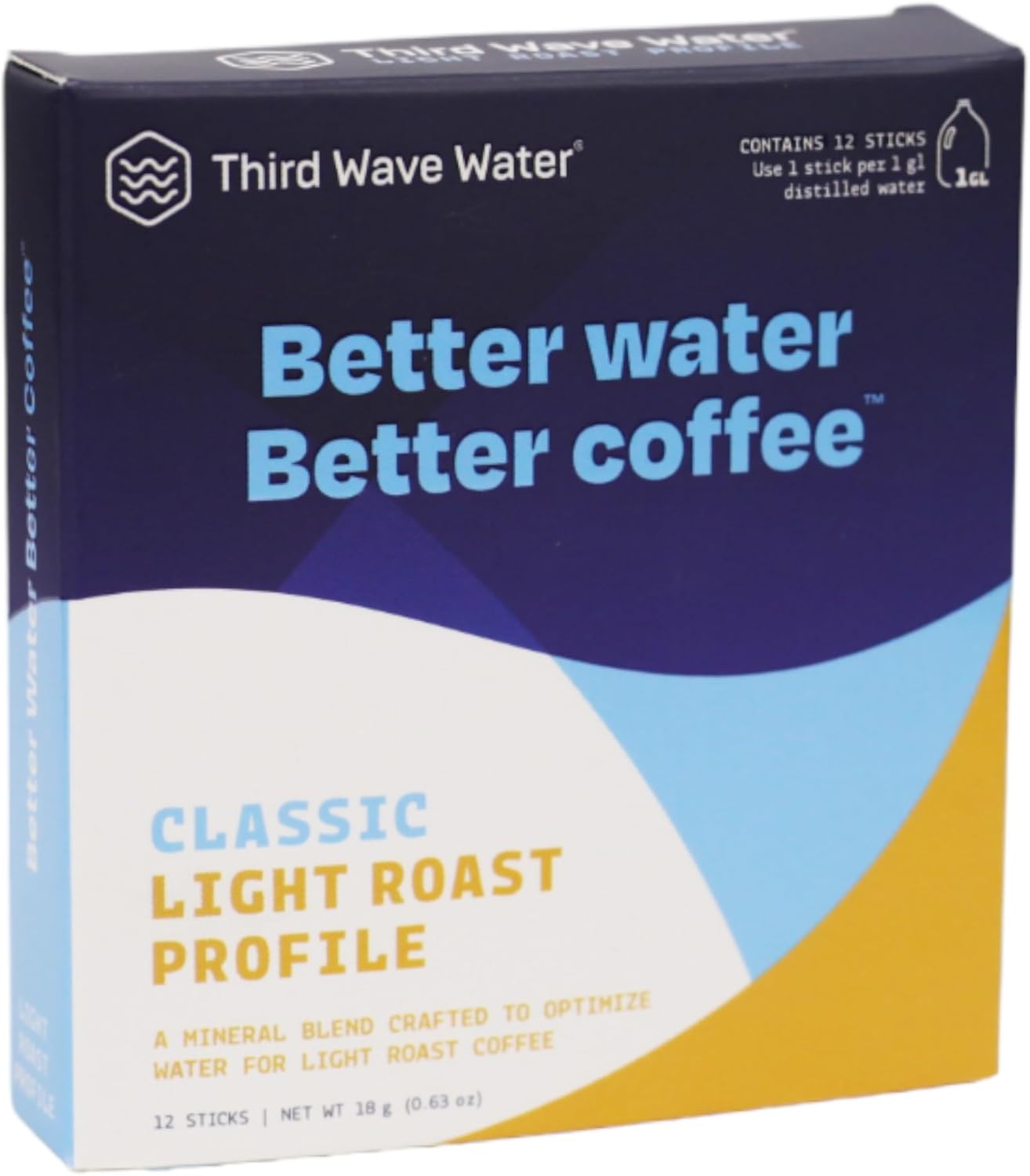
Third Wave Water · Classic Light Roast Profile (12-pack)
Third Wave Water solves the brewing water problem with a pre-formulated mineral mix.
Bodum · Pavina Double-Wall Glasses (Set of 6, 12oz)
The cafe glass for serving iced lattes, iced Americanos, and cold brew at home.
$40.99
View on Amazon →Hario · Cupping Spoon (Kasuya Model)
The right shape matters.


Pulled may earn a commission on purchases. Cookie applies to all Amazon items in your next 24 hours, not just this product.
See all Pulled Picks →Keep going with Pulled