April 29, 2026
France Coffee Guide: 21 Specialty Shops, Roasters, and Cafes
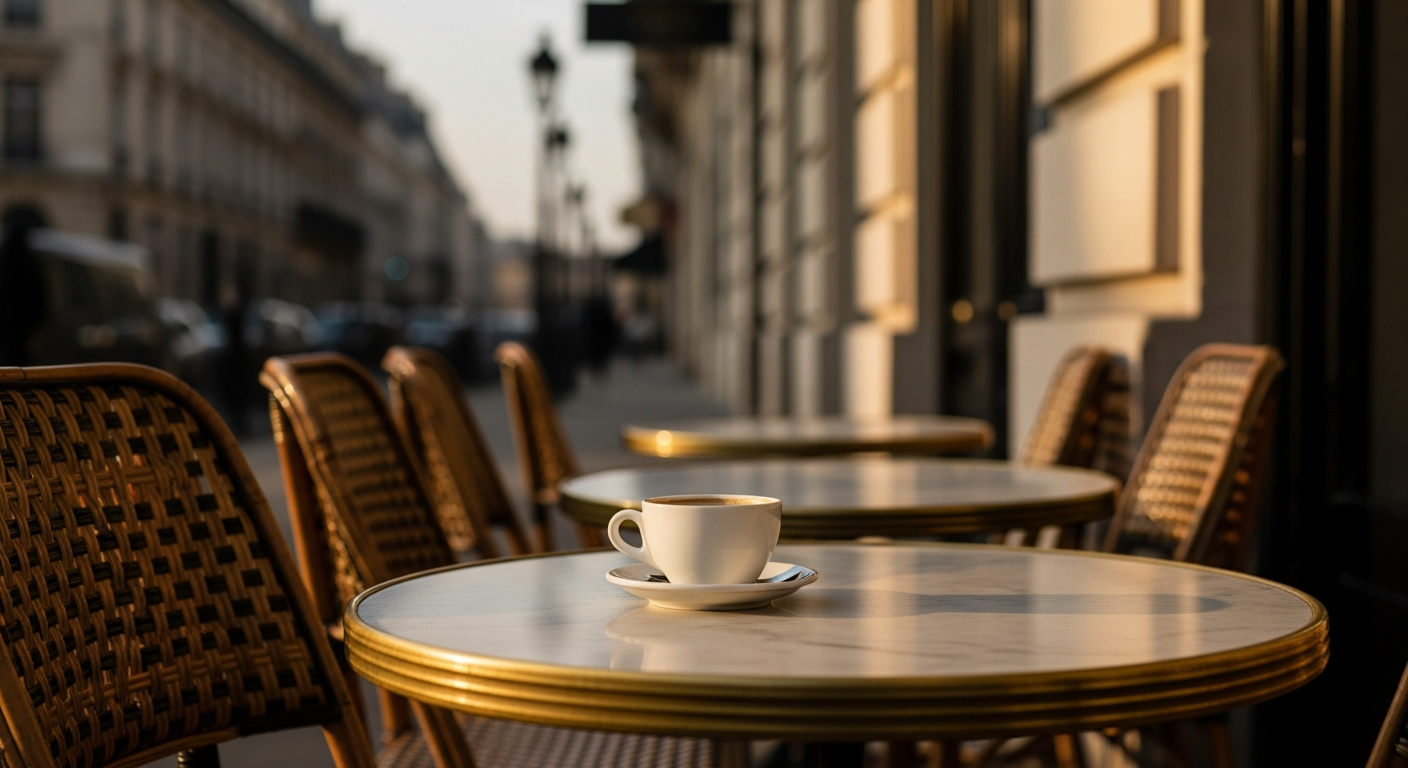
For decades, Paris had a reputation among traveling coffee drinkers: the cafés are beautiful, the coffee is bad. The cliché was earned. Most Paris cafés bought industrial roast from a handful of suppliers and served it cheaply alongside the rent. The price kept the rent paid. The coffee was an accessory to the table.
Around 2010, a quiet revolution began. A few independent roasters opened spaces in arrondissements that had previously been café deserts. The new wave didn't replace the brasseries. It opened up alongside them.
Paris
Telescope Café operates with a small footprint and a serious approach. Coutume runs roastery-cafés across multiple arrondissements. Boot Café, in the 3rd, is a former cobbler's shop turned into one of the smallest cafés in the city, with some of the best espresso. Ten Belles, the original specialty café in the 10th, opened in 2012 and remains one of the city's reference points. Belleville Brûlerie, the roastery, supplies many of the cafés that matter. Explore all coffee shops in Paris. See also: our full Paris coffee guide.
Lyon
Lyon's specialty scene is younger than Paris but moves with less self-consciousness. Anticafé and Caféier are anchors. Mokxa, the roastery, has supplied the city's better restaurants for over a decade. Explore all coffee shops in Lyon.
Bordeaux and Marseille
In Bordeaux, Café Piha is the locally-respected reference. L'Alchimiste does pour over in a serious way. In Marseille, Coogee Café brings Australian-influenced flat white culture to the Vieux-Port. Deep Coffee in the 6th arrondissement does light roast pour over that the city is just learning to expect. Bordeaux coffee shops. Marseille coffee shops.
The history of French coffee
Coffee arrived in France through Marseille in 1644 and through Paris in 1669, when the Ottoman ambassador to Louis XIV introduced the bean to the French court. The first commercial Parisian café, Café Procope, opened in 1686 in the 6th arrondissement and is still operating, making it one of the oldest cafés in continuous operation in the world. The French Enlightenment was largely written in Procope and the cafés that followed it, including Café de Flore (1887) and Les Deux Magots (1812), both still functioning on Saint-Germain-des-Prés.
For most of the twentieth century, French coffee was an afterthought to French wine and food culture. Industrial blends, cheap beans, and the dominance of café-tabacs as everyday infrastructure produced a national coffee culture that locals defended and tourists complained about. The shift began in 2010 when Belleville Brûlerie opened in the 19th arrondissement and started supplying restaurants and cafés with light roasted single origin coffee. Coutume Café opened on Rue de Babylone in 2011. Telescope on Rue Villedo, Lomi in the 18th, and Fragments in the Marais followed within five years. By 2018 Paris had a serious specialty scene that rivaled London and Berlin.
French coffee terminology
Un café is espresso, the default French coffee. Un café noisette is espresso with a small dollop of warm milk, similar in spirit to an Italian macchiato. Un café crème is a larger preparation with espresso and steamed milk, similar to an Italian cappuccino but typically served in a wider cup with less foam. Un café allongé is espresso with hot water added, similar to an Italian Americano.
Un café au lait is the French breakfast drink: roughly equal parts brewed coffee and steamed milk, served in a bowl rather than a cup, accompanied by a tartine (buttered baguette with jam) or a croissant. Un déca is decaffeinated coffee. Un café serré is a more concentrated extraction. Au comptoir means at the bar, with prices roughly fifty percent below the table service. En terrasse means at the outdoor seating, the most expensive option in tourist areas. The price tier is regulated and clearly posted on every café menu.
How French coffee compares to other traditions
Compared to Italy, France has more variety in cup styles but a smaller absolute coffee culture. Italians drink three or four espressos a day. The French drink one or two coffees plus a wine and a beer. Compared to the United Kingdom, France has older café infrastructure but a younger specialty wave. London developed serious specialty between 2008 and 2015. Paris developed serious specialty between 2010 and 2018, slightly later but at comparable quality.
Compared to the contemporary Australian model, French specialty cafés are slower and more seated. The flat white exists in Paris but is a relatively recent addition; the local default is the noisette, the café crème, or the espresso. The Australian and New Zealand barista influence on Paris in the 2010s was significant, particularly through KB Caféshop in Montmartre, but the French specialty register has retained more of the European seated café tradition than London or Brooklyn.
Visiting France for coffee
For the classical Parisian café, plan a Saint-Germain morning at Café de Flore or Les Deux Magots. The price reflects the room. Both cafés have hosted most of the major French intellectual movements of the twentieth century, and the chair you sit in has a literary lineage. The coffee itself is conventional, but the transaction is for the seat and the room.
For contemporary specialty, plan a Marais walk that includes Fragments, Boot Café, and Telescope. Add a Belleville Brûlerie visit in the 19th if you have time for the longer trip. Lyon and Marseille both have credible specialty scenes worth a half-day visit each. The total French coffee landscape is concentrated in Paris but increasingly distributed across major cities. A national coffee tour benefits from a high-speed train pass and a willingness to sit through long café conversations.
France coffee FAQ
Is the coffee in Paris still bad?
No. Paris’s specialty coffee scene developed rapidly between 2010 and 2018 and is now comparable to London or any major Northern European city. Belleville Brûlerie, Coutume Café, Telescope, Lomi, Fragments, and a wide network of newer cafés produce excellent coffee. The brasserie espresso tradition still exists alongside the specialty wave, and the reputation for bad Parisian coffee dates from twenty years ago and has not been accurate for at least a decade.
What is a café-tabac?
A café-tabac is a French establishment that combines a café, a small bar, and a tobacco license. They are everyday French infrastructure, particularly in working-class neighborhoods. Open from early morning to late evening, they serve espresso at the cheapest price in the country, sell cigarettes and lottery tickets, and function as the de facto neighborhood social hub.
What is the difference between a café and a café crème?
A café in France is an espresso, served short and dark in a small cup. A café crème is a larger drink, similar to a cappuccino, made with espresso and steamed milk. The proportions vary, but a café crème is generally larger than an Italian cappuccino, served in a wider cup, and ordered primarily at breakfast. A noisette is a smaller variation: espresso with a small dollop of warm milk, equivalent in spirit to a macchiato.
Why is coffee so expensive at Café de Flore?
Café de Flore charges six-fifty euros for an espresso because the price reflects the chair, the room, and the location. The café has been in operation since 1887 and has hosted most of the major French intellectual movements of the twentieth century. The coffee itself is conventional. The transaction is for the seat at the corner of Saint-Germain and Boulevard Saint-Germain. The price is a museum admission disguised as a beverage.
Where can I find specialty coffee outside Paris?
Lyon, Marseille, Bordeaux, Lille, and a growing number of secondary French cities have credible specialty cafés. Lyon has Mokxa and Anticafé. Marseille has Coogee Café and Deep Coffee. Bordeaux has Café Piha and L’Alchimiste. The wave is smaller outside Paris but has grown significantly since 2018, and most major French cities now have at least one credible specialty option.
French coffee at home
French home coffee culture historically centered on bowl-sized café au lait at breakfast and small espressos throughout the day. Capsule machines, particularly Nespresso (founded by Nestlé in Switzerland in 1986 and dominant in France), achieved very high market penetration in French households through the 2000s and 2010s. The capsule model produces consistent espresso at home with minimal effort, and it shaped a generation of French home coffee drinkers who came to expect espresso quality at home rather than only at cafés.
Specialty home brewing has grown significantly since 2015 alongside the third wave café wave. French specialty roasters like Belleville Brûlerie and Coutume now sell beans for home brewing, often through café retail and online subscriptions. The home brewing register includes pour over (V60, Chemex), AeroPress, and increasingly French press (which, despite the name, was invented in Italy and Germany rather than France). The combination of café-quality home brewing and the surviving café culture produces a French coffee landscape that operates at multiple registers simultaneously.
Earning with Pulled Coffee in France
France’s café density makes Paris one of the most efficient European cities for completing Pulled Coffee challenges. The city has roughly thirteen thousand qualifying coffee shops in the Pulled directory across all twenty arrondissements. A traveler can complete the First 15 challenge ($10) within forty-eight hours of landing at Charles de Gaulle, and the Daily 50 challenge ($150 to $350) within a long week. The mix of café-tabacs and contemporary specialty cafés means a single morning walk through the Marais or the 11th arrondissement produces five or six check-ins without effort.
Outside Paris, Lyon, Marseille, and Bordeaux all support meaningful Pulled Coffee earnings, particularly for the Pulled 50 challenge that rewards visits to unique specialty shops. Lyon’s Mokxa and Anticafé, Marseille’s Coogee Café and Deep Coffee, and Bordeaux’s Café Piha all qualify and combine to make a four-day French specialty trip productive on multiple challenges simultaneously.
The French price register works in the user’s favor. Standing-bar espresso at one euro forty in Belleville, café crème at three to four euros at most cafés, and even six-fifty espresso at Café de Flore all qualify for the same Pulled check-in reward. Travelers who plan an itinerary around café-tabacs in working-class districts spend less on coffee than they earn back from Pulled, particularly at the Devoted or Origin tiers.
The contemporary specialty wave has a particular value for the Pulled 50 and Pulled 100 challenges, which reward unique specialty shop visits. Belleville Brûlerie, Coutume, Telescope, Lomi, Fragments, KB Caféshop, and Honor are all distinct qualifying shops within a single Paris stay. A coffee-focused week in Paris can advance a serious annual Pulled Coffee earning trajectory by several hundred dollars at the higher tiers.
The French understanding of coffee was that quantity, frequency, and price mattered more than the cup itself. The new wave added a second register where the cup is the point. Both still operate. Both are now correct. See also: Best coffee cities in France, latte vs cappuccino.
Explore coffee in France