December 30, 2025
Rome Coffee Guide: 23 Specialty Shops, Roasters, and Cafes
Get paid for the gear you already use to brew.


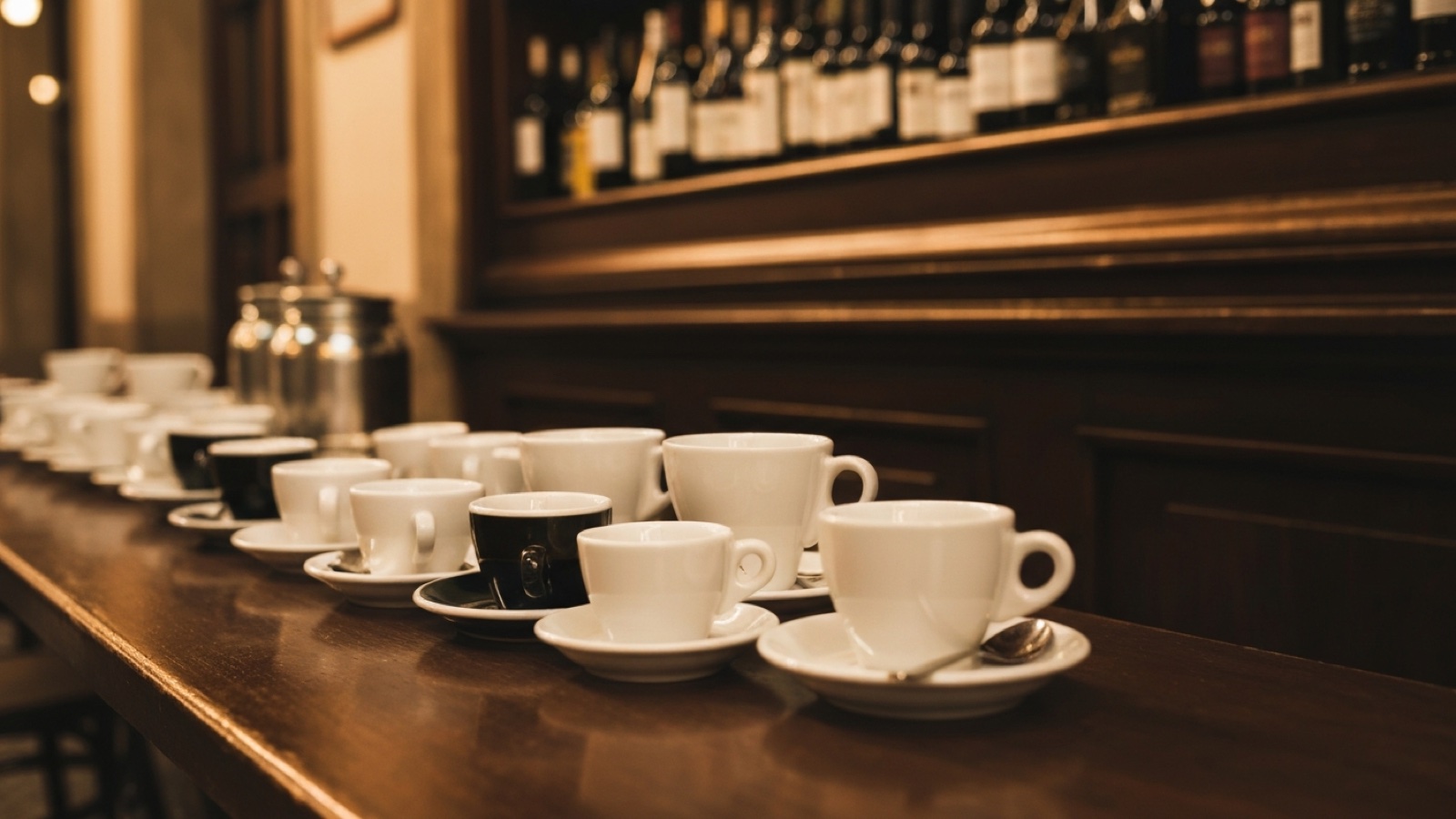
Antico Caffè Greco opened on Via Condotti in 1760, two doors down from where it operates today. Stendhal, Goethe, Byron, Keats, Casanova, and Mark Twain all drank there. The marble counter, the velvet banquettes, and the original mid-eighteenth-century rooms remain largely intact. Rome did not invent the European coffeehouse, but the city did codify the standing-bar espresso ritual that became the global Italian café format. Most Roman bars charge one euro and ten cents to one euro and fifty cents for a single espresso served standing. The cup is short, dense, often pre-sweetened, and consumed in under three minutes. The competition is fierce at street level, which means the baseline quality at a neighborhood bar in Trastevere or Prati exceeds most shops in North America.
Centro Storico
Sant’Eustachio Il Caffè, opened in 1938 on Piazza Sant’Eustachio just behind the Pantheon, is the city’s most internationally cited heritage espresso bar. The shop is known for its cream-topped sweetened espresso, prepared without disclosing the technique. Order “amaro” for the unsweetened version. The price has barely moved in decades. La Casa del Caffè Tazza d’Oro on Via degli Orfani, opened in 1944 just north of the Pantheon, is the heritage rival and runs a strong granita di caffè program in summer. Caffè Greco on Via Condotti, the city’s oldest, holds the heritage register for the broader Centro Storico. Roscioli Caffè on Piazza Benedetto Cairoli pours competition-grade espresso alongside its bakery and restaurant. Coromandel near Piazza Navona pours contemporary specialty espresso. The Centro Storico density of credible bars within a fifteen-minute walk is unmatched anywhere outside Naples. Explore all coffee shops in Rome.
Trastevere
Trastevere’s working-class character and its preserved medieval streets produce the most embedded neighborhood café culture in the historic city. Bar San Calisto on Piazza San Calisto has operated for over six decades and remains a working neighborhood bar where the espresso is excellent and the prices are among the lowest in central Rome. Pergamino Caffè on Via dei Banchi Vecchi crosses the Tiber from the rive sinistra but operates within the broader Trastevere-adjacent specialty register and pours single origin pour over with attention to provenance. Bar du Parc and a network of smaller bars on the side streets between Viale di Trastevere and Via della Lungara serve the broader neighborhood at lower commercial intensity than the Centro Storico. Explore Rome coffee shops.
Pulled pays cash for cafe visits while you weigh the gear.
Esquilino and Monti
Faro Caffè Specialty in Esquilino is the closest thing Rome has to a contemporary international specialty café. The shop pours single origin coffee from light European roasters, applies careful brewing technique, and operates a strict no-laptop policy past mid-morning. The room is quiet. The cups are small. The flight from Esquilino on espresso bar quality recalls the early Berlin specialty wave more than central Roman tradition. Monti, just north of the Esquilino, holds Tram Depot and a network of newer specialty operations within walking distance of the Forum and the Colosseum. The Esquilino-Monti corridor is the densest contemporary specialty walk in Rome.
Prati and Borgo
Prati, the residential neighborhood north of the Vatican, holds one of Rome’s densest concentrations of credible neighborhood bars. The streets between Piazza Cavour, Piazza Risorgimento, and Lepanto Metro hold dozens of bars within a fifteen-minute walking radius. Bar Faro Prati, Bar San Calisto’s Prati branch, and a network of smaller bars produce the working-day Roman café experience without the tourist-driven foot traffic of the Centro Storico. The Borgo, the small neighborhood directly adjacent to St. Peter’s Basilica, holds bars that serve the Vatican workforce and the long lines of pilgrim foot traffic. Coffee tourism here is unusually layered.
Testaccio and Ostiense
Testaccio’s position as the historical Roman slaughterhouse district has produced a working-class neighborhood character that survived the broader Roman gentrification of the 2010s. The Mercato di Testaccio holds several stalls that serve Roman espresso shoulder-to-shoulder with cheese, salumi, and the broader Roman market food register. Tram Tracks on Via Galvani pours specialty espresso. Ostiense, just south, holds Garbatella’s broader 1920s-era housing project district and a small contemporary specialty register. The neighborhood’s combination of preserved working-class character and post-industrial creative economy produces one of Rome’s most interesting coffee corridors outside the historic center.
San Lorenzo and the university district
San Lorenzo, the neighborhood directly east of the Stazione Termini and adjacent to La Sapienza University, holds the densest student-driven café culture in Rome. The bars and small specialty operations along Via dei Volsci and Via Tiburtina produce the working-day Roman café experience for the university population. The neighborhood is one of the few in central Rome that survived the post-war redevelopment with its working-class character largely intact. The contemporary specialty wave has arrived in San Lorenzo over the past decade with a small number of newer bars operating alongside the heritage neighborhood operations.
The history of Roman coffee
Coffee arrived in Rome in the late seventeenth century through Venice. The first commercial Roman coffeehouses opened in the early eighteenth century. Antico Caffè Greco opened in 1760 on Via Condotti and remains the city’s oldest continuously operating café. Caffè degli Inglesi, on Piazza di Spagna, was the favored gathering spot for British Grand Tour travelers in the late eighteenth and early nineteenth centuries. The contemporary Roman café register, with its standing-bar service, regulated bar pricing, and the standardized Italian espresso preparation, crystallized in the early twentieth century alongside the Italian espresso machine industry.
Sant’Eustachio opened in 1938. Tazza d’Oro in 1944. Both operations descend from the broader Italian café tradition that emerged in Naples, Milan, and Turin during the late nineteenth and early twentieth centuries. The Roman bar typically uses dark-roasted blends from one of several Italian commercial roasters: Lavazza, Illy, Segafredo, Kimbo, Caffè Mauro. Roman dark roast espresso is closer to Naples in cup profile than to the lighter Milan specialty register. The contemporary specialty wave arrived in Rome around 2010, decades after Berlin or London, and operates at lower café density than in Northern European specialty capitals. Faro Caffè, Pergamino, and a small number of other contemporary specialty operations have built a credible third wave register over the past decade.
How Roman coffee differs from Naples and Milan
Naples runs the densest classical Italian espresso tradition in the country. The Naples bar serves espresso shorter, denser, and often pre-sweetened. The Milan bar runs faster and more efficient, with the cappuccino as a morning drink and the standing-bar service operating at the country’s tightest pace. Rome sits between, with a slower bar tempo than Milan and a slightly lighter cup profile than Naples. The Roman café operates as a neighborhood institution more than as a commercial transaction. The bar staff often know the regular customers by name and order. The cornetto-and-espresso breakfast is a city ritual that is older than specialty coffee by a century.
14 day free trial. Real PayPal cash on every coffee run.
Compared to international specialty cities, Rome operates at lower contemporary specialty café density than Berlin, London, or Tokyo. The density of credible classical Italian bars, however, vastly exceeds anywhere else outside Naples. The combination produces one of the most layered coffee landscapes in the world: 1760 heritage cafés, 1938 working-class espresso bars, contemporary specialty operations, and the broader network of neighborhood bars that have been pulling excellent espresso for forty or fifty years.
Best coffee shops in Rome
Sant’Eustachio Il Caffè in the Centro Storico, opened 1938, is the city’s most-cited heritage espresso bar. La Casa del Caffè Tazza d’Oro near the Pantheon, opened 1944, runs the heritage rival flagship. Antico Caffè Greco on Via Condotti, opened 1760, is the oldest continuously operating Roman café. Faro Caffè Specialty in Esquilino is the contemporary specialty flagship. Pergamino Caffè in Trastevere-adjacent Centro Storico pours single origin specialty pour over. Roscioli Caffè on Piazza Benedetto Cairoli runs competition-grade espresso. Bar San Calisto in Trastevere is the heritage neighborhood bar. Bar du Parc and Tram Depot in Monti pour contemporary espresso. Coromandel near Piazza Navona is a smaller specialty operation. Tram Tracks in Testaccio operates within the working-class Roman bar register. Ditta Artigianale, the Florence specialty import, has multiple Rome locations including a flagship near the Pantheon.
Rome coffee FAQ
What should I order at a Roman bar?
Stand at the bar. Order “un caffè” and you receive an espresso. “Un caffè macchiato” is espresso with a teaspoon of foamed milk. “Un cappuccino” is a morning drink, traditionally consumed before eleven in the morning. “Un caffè doppio” is a double espresso. “Un caffè ristretto” is a shorter, more concentrated extraction. Sitting at a table costs more, sometimes double the bar price. The bill is usually settled at the cash register first; you carry the receipt to the bar.
Why is Sant’Eustachio espresso pre-sweetened?
Sant’Eustachio adds sugar and prepares the espresso using a technique that produces the cream-topped texture for which the bar is known. The recipe is not disclosed. Order “amaro” for the unsweetened version, which is served on request. The shop’s reputation rests on the cream-topped sweetened cup, which has been roughly the same product since 1938.
What is the best Roman neighborhood for coffee?
The Centro Storico holds the densest concentration of heritage cafés, anchored by Sant’Eustachio, Tazza d’Oro, and Caffè Greco. Esquilino-Monti holds the contemporary specialty corridor, anchored by Faro Caffè. Trastevere holds the heritage neighborhood bar register, anchored by Bar San Calisto. Prati holds the working-day residential register. Each operates at a different cultural cadence and a Rome coffee tour benefits from including all four.
Why is cappuccino frowned on after lunch?
Italian digestive culture treats milk-heavy drinks as breakfast food. The combination of milk, foam, and bread fits the morning meal structure. After lunch or dinner, the standard order is a small dark espresso, sometimes a macchiato. Ordering a cappuccino at three in the afternoon is permitted but marks the customer as a tourist. The convention is older than the specialty wave by at least a century.
Can I find third wave specialty in Rome?
Yes, increasingly. Faro Caffè in Esquilino, Pergamino in the Centro Storico, Coromandel near Piazza Navona, and a small but growing number of contemporary specialty operations have built a credible third wave register over the past decade. The Roman specialty scene operates at lower café density than Berlin or London, but the quality at the top of the register holds up internationally. Ditta Artigianale, the Florence specialty import, runs multiple Rome locations.
Earning with Pulled Coffee in Rome
Rome holds approximately twenty-one thousand qualifying coffee shops in the Pulled Coffee directory, including specialty cafés, heritage cafés, and the broader network of Roman neighborhood bars. The First 15 challenge ($10) is achievable in a single day at normal Roman café-going pace. The Daily 50 challenge ($150 to $350 at Devoted or Origin tiers) is achievable in two weeks of consistent café visits. The Pulled 50 challenge (fifty unique specialty shops) is achievable in a Rome stay of one month or longer.
A walking corridor through the Centro Storico produces six to eight qualifying check-ins in a single morning. The Trastevere walk produces five to seven. The Prati and Borgo walk produces six to eight at lower commercial intensity. Rome is the densest city in the Pulled Coffee directory by qualifying café count per square kilometer, which makes the Pulled 50 and Pulled 100 challenges more achievable per visit-day in Rome than in any other European city.
The Roman price register is among the most favorable in major European capitals. An espresso al banco runs one euro and ten cents to one euro and fifty cents at most neighborhood bars. A cappuccino runs one euro and thirty cents to one euro and eighty cents. The Pulled Coffee subscription cost is recovered within the first week of normal café visit cadence at Devoted or Origin tier. The combination of high café density and low per-cup cost makes Rome one of the most economically favorable Pulled Coffee setups in the world. Track your check-ins in Rome on the Pulled map. See also our guide to what a macchiato actually is before you land.
Start earning from your coffee habit.
Pulled Coffee pays you real money via PayPal for checking in at cafes and coffee shops.
Download Pulled CoffeeRelated: Best coffee in Madrid, Best coffee in Paris, What is a macchiato?
Earn cash on every coffee run. Download Pulled.
Explore coffee in Rome