May 17, 2026
How to Make an Espresso Martini
Some links in this guide are affiliate links. If you buy through them, Pulled may earn a commission at no extra cost to you. Our recommendations are based on editorial judgment and coffee culture knowledge, not commission rates.
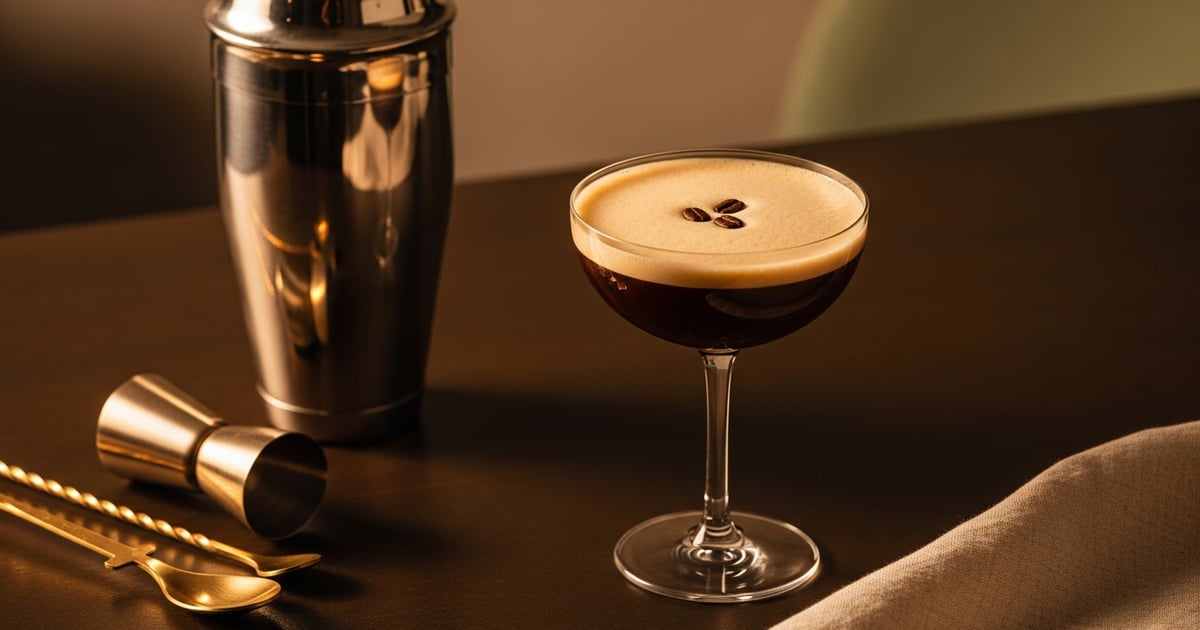
An espresso martini is a cold cocktail built from vodka, coffee liqueur, and a fresh shot of espresso, shaken hard enough to raise a pale foam crown, and served straight up with three coffee beans on top. It was invented in London in the 1980s, the story goes, for a customer who asked for something that would wake them up and then do the opposite. It has moved in and out of fashion since, and it is firmly back. The drink is simple to assemble and easy to make badly, and the single thing that decides it is the coffee.
The short version
- Vodka, coffee liqueur, a fresh shot of espresso, a little simple syrup, shaken hard over ice.
- Fresh espresso is the whole drink. Instant coffee and stale coffee both ruin it.
- The foam comes from the shake, not from an ingredient. Shake longer and harder than feels necessary.
- Double-strain into a chilled glass so no ice shards reach the drink.
- Finish with three coffee beans, the traditional garnish.
What you need
The bar side of an espresso martini is short: a cocktail shaker, a fine mesh strainer, and a chilled coupe or martini glass. A double-walled glass keeps the drink cold longer and shows the foam well.
The coffee side is the part that matters, and it is where most home versions go wrong. You need a genuine shot of espresso, freshly pulled. If you own an espresso machine, use it. If you do not, an AeroPress brews a strong, concentrated coffee that stands in for espresso well enough in a shaken drink.
Either way, use fresh espresso-roast beans, ground just before brewing. A darker roast suits the drink, since its bittersweet edge plays against the coffee liqueur.
The vodka and the coffee liqueur come from the liquor store. Neither has to be expensive. A clean, neutral vodka and a standard coffee liqueur are the baseline, and the recipe below treats them that way.
The pour
One drink, by volume: 1.5 ounces of vodka, 0.5 ounce of coffee liqueur, 1 ounce of fresh espresso, which is a single shot, and 0.25 ounce of simple syrup. Simple syrup is equal parts sugar and hot water, stirred until clear and then cooled.
Treat the syrup as an adjustment, not a fixed amount. Coffee liqueur is already sweet, and the right level depends on your liqueur and your espresso. Start at a quarter ounce, taste, and move from there. A good espresso martini is balanced between bitter and sweet, not a dessert.
Making the espresso martini, step by step
Step 1: Chill the glass
Put the coupe in the freezer, or fill it with ice and water, while you do everything else. A warm glass softens the drink and drops the foam faster. The glass should be cold when the drink goes in.
Step 2: Pull a fresh shot
Pull a single shot of espresso, or brew a concentrated AeroPress equivalent. Fresh is the rule, with no exception. Let the shot rest for a minute or two so it is warm rather than hot, which keeps it from melting all the ice the moment it lands. Some bartenders shake it hot and accept a little extra dilution. A short rest off the boil is the simple middle path.
Step 3: Combine in the shaker
Add the vodka, the coffee liqueur, the espresso, and the simple syrup to the shaker. Add the liquids before the ice, so nothing starts diluting before you are ready.
Step 4: Add ice and shake hard
Fill the shaker with ice, seal it, and shake hard for 15 to 20 seconds. This step makes the drink. The foam on an espresso martini is not poured in; it is whipped out of the espresso's natural oils by the force of the shake against the ice. A short, gentle shake gives a flat drink with no crown. Shake like you mean it.
Step 5: Double-strain
Pour the drink through the shaker's built-in strainer and through a separate fine mesh strainer into the chilled glass. The double strain catches ice shards and leaves the foam clean and even on top.
Step 6: Garnish and serve
Float three coffee beans on the foam. The garnish is traditional, and the three beans are said to stand for health, wealth, and happiness. Serve the drink right away, while the foam is still standing. An espresso martini does not wait well.
Common mistakes
Instant or stale coffee. This is the error that sinks most home espresso martinis. Instant coffee tastes flat and slightly burnt in the drink, and stale coffee tastes of almost nothing. Fresh espresso, or a fresh strong AeroPress brew, is not negotiable.
An undersized shake. The foam crown depends entirely on a hard, sustained shake. If the drink comes out flat, you shook too softly or stopped too soon.
Too much syrup. The coffee liqueur already brings sugar. Pile simple syrup on top and the drink turns into a cold coffee dessert. Add the syrup last, by taste.
A warm glass. A room-temperature glass warms the drink and collapses the foam. Chill it before you start.
Weak coffee. Drip coffee is too thin to carry the drink. It needs the concentration of espresso or an equivalent.
Variations
Tia Maria or Kahlua. The two common coffee liqueurs pull the drink in slightly different directions. Kahlua is rounder and sweeter; Tia Maria is lighter and a touch drier. Either works, and trying both is the easiest way to find your preference.
Salted. A single small pinch of salt in the shaker sharpens the coffee and tightens the sweetness. It is a small change with a clear effect.
Decaf. Built on a decaf espresso shot, the drink tastes the same and skips the late-night caffeine. This is the version to make when the cocktail is the point and the stimulant is not.
Zero-proof. The drink survives losing the alcohol better than most cocktails do. Build it from cold brew concentrate or a fresh shot, a coffee syrup, and a non-alcoholic coffee liqueur substitute, shaken exactly the same way. It still foams, because the foam was always the coffee's doing.
Batched. For a group, combine the vodka, liqueur, and syrup ahead and refrigerate. Add fresh espresso and shake one or two servings at a time, because the espresso and the foam do not hold.
Common questions
Should the espresso be hot or cold?
Warm is the easy answer. A shot pulled fresh and rested for a minute or two shakes and chills well without melting the ice on contact. Cold or cold-brew coffee works and gives slightly less foam. Shaking a fully hot shot is fine too; it just dilutes a little more.
Can you use instant coffee?
You can, and the drink will tell on you. Instant coffee tastes thin and flat in an espresso martini. Fresh espresso, or a strong fresh AeroPress brew, is what the drink is built around.
What vodka should I use?
A clean, neutral vodka. The coffee and the liqueur carry the flavor, so an expensive bottle is not the point. Anything harsh or strongly flavored will fight the coffee.
Where does the foam come from?
From the shake. Fresh espresso carries natural oils and fine solids, and shaking hard against ice whips them into a stable foam. Without fresh espresso, or without a real shake, there is no crown.
Can you make an espresso martini without alcohol?
Yes. The zero-proof version above keeps the coffee, the shake, and the foam, and swaps the spirits for non-alcoholic substitutes. It is a genuine version of the drink, not an afterthought.
It has both caffeine and alcohol. Anything to know?
One espresso martini pairs a stimulant and a depressant. The caffeine can make you feel more alert than the alcohol would suggest, which makes it easy to lose count. Track drinks by what you have actually had, not by how awake you feel.
Keep going
The shot is the part of this drink worth practicing on its own: how to make espresso at home covers it. If a cocktail is not what you are after, a cappuccino is the other classic way coffee and a little richness come together.
Our Picks
What we'd buy on Amazon for this
Normcore · WDT Distribution Tool
Breaks up clumps in the basket. Two minutes saved per shot, no channeling.
$19.99
View on Amazon →Breville · Bambino Plus Espresso Machine
A reasonable entry point at $300 less than the Barista Pro.
$488
View on Amazon →Baratza · Encore Conical Burr Grinder
The grinder most third wave roasters point new home brewers toward.
$149.95
View on Amazon →


Pulled may earn a commission on purchases. Cookie applies to all Amazon items in your next 24 hours, not just this product.
See all Pulled Picks →Keep going with Pulled