May 10, 2026
How to Make a Latte at Home: Ratio, Milk, and Steps
Make the coffee, then pull the cafe. Download Pulled.


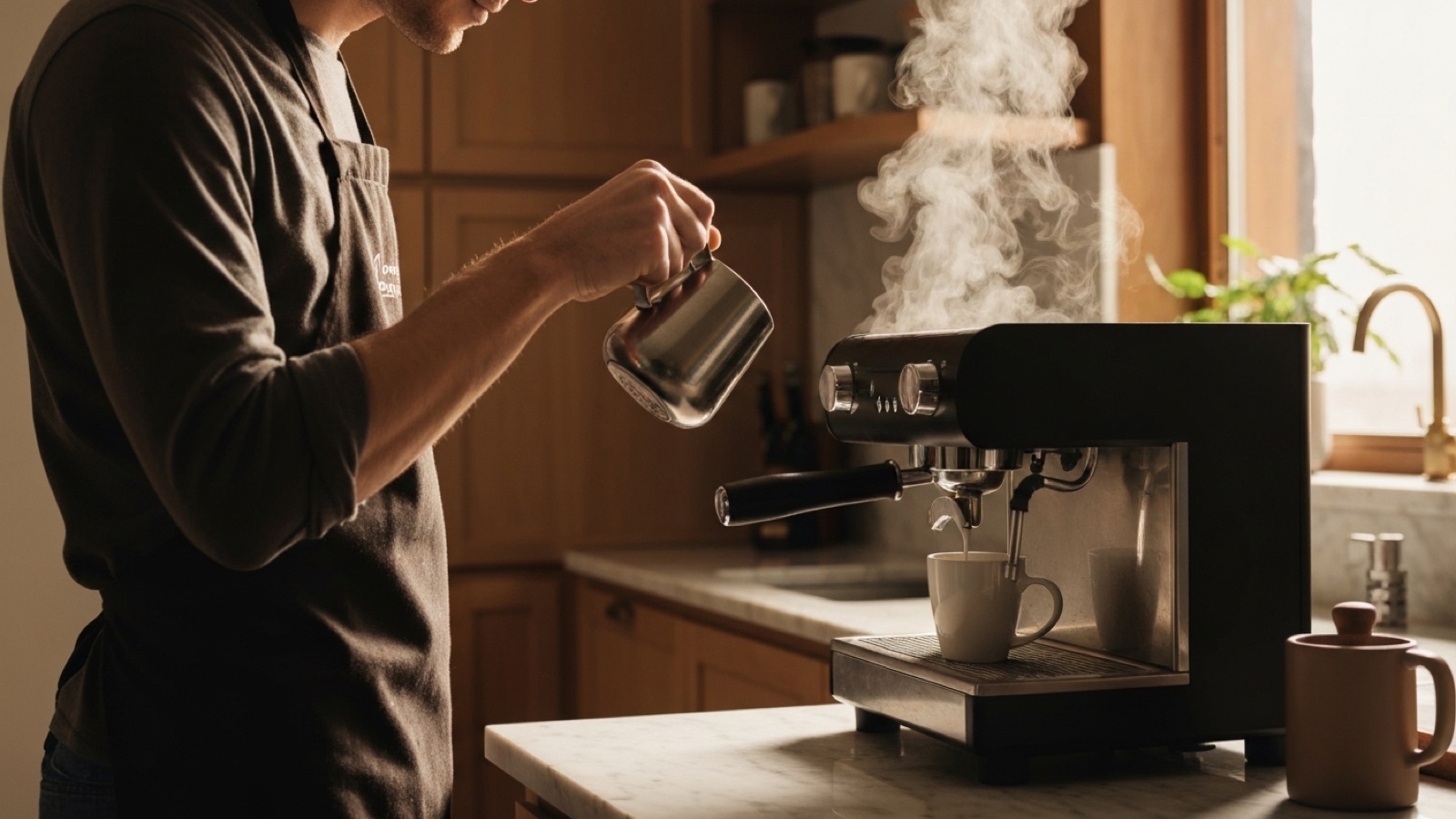
A latte is two ingredients and one technique. A shot of espresso. Steamed and frothed milk. Combined in a glass at the right ratio so the drink tastes like coffee with cream rather than warm milk with a hint of coffee.
The hard part is that every variable has to be right. The espresso has to be a real shot. The milk has to be steamed to bring out its sweetness without burning the proteins. The ratio has to land in a narrow window. And the pour has to combine them without one drowning the other.
This guide walks through all of it. The ratio. The equipment. How to pull a clean shot. How to steam milk to silk. How to pour. Latte art basics. The iced version. And the mistakes that ruin most first attempts.
What is a latte
A latte is an espresso drink built around milk. The standard recipe is one shot of espresso (a double in most modern cafes) topped with steamed milk and a thin layer of microfoam. The Italian name (caffe latte) means coffee with milk.
The espresso to milk ratio is what separates a latte from every other espresso drink. A latte is roughly 1 part espresso to 3 to 5 parts milk by volume. A double shot is 2 oz (60 ml). The serving glass is commonly 8 to 12 oz (240 to 355 ml). The milk fills the rest, with a quarter inch of microfoam on top.
Compare that to the rest of the espresso menu. A cappuccino is the same espresso with roughly equal parts milk and a thick foam cap, in a 5 to 6 oz (150 to 180 ml) cup. A flat white is closer to a latte but smaller, typically 6 oz (180 ml) at a 1:3 ratio. A cortado is half espresso, half steamed milk, no foam, in a 4 oz (120 ml) glass. A macchiato is espresso with a teaspoon of foam.
The latte is the gentlest of the espresso family. The high ratio of milk softens the espresso into a sweet, creamy drink that goes down easily even for people who do not normally like the bitterness of coffee.
What you need
You need three things. A way to make espresso. A way to steam or froth milk. A glass to drink from.
- An espresso machine. A real machine pulls a shot under 9 bars of pressure. Entry-level options run $300 to $500 (Breville Bambino, Gaggia Classic, De'Longhi Dedica). Mid-range with a built in grinder is $700 to $1,200.
- A burr grinder. Espresso lives or dies on the grind. A burr grinder calibrated for espresso is non-optional. Budget $200 minimum. The Baratza Encore ESP and the DF54 are popular starter options.
- Fresh whole beans. Roasted within the past three weeks. Espresso roasts tend toward medium-dark for sweetness, but light roast espresso (Nordic style) is increasingly common in third wave cafes.
- A stainless milk pitcher. 12 to 20 oz capacity with a tapered spout. Around $15 to $25.
- A scale. Reads to 0.1 g. About $20. Necessary for dialing in shot weight.
- A glass. 8 to 12 oz (240 to 355 ml).
If you do not own an espresso machine, three alternatives produce coffee strong enough to substitute. None make true espresso (which requires 9 bars of pressure). But all make a concentrated shot that works in a latte.
The moka pot. A stovetop aluminum pot invented in Italy in 1933. Water boils in the lower chamber, steam pushes hot water up through grounds in a middle basket, and coffee collects in the top. Output is roughly 1.5 to 4 bars of pressure. Millions of European households use moka coffee as the base for their morning latte. A six-cup moka costs $25 to $40 and lasts decades.
The Aeropress. A plastic plunger that presses hot water through a fine bed of coffee against a paper filter. With a fine grind and the inverted method, it produces a 2 oz (60 ml) shot of strong coffee with enough body to stand up to milk. About $40. The most portable option.
Espresso pods or capsules. Nespresso and similar machines pull pressurized shots technically closer to true espresso than moka or Aeropress output. The downside is cost ($0.80 to $1.20 each) and limited control over freshness.
Make the coffee, then pull the cafe. Download Pulled.
Pulling the espresso
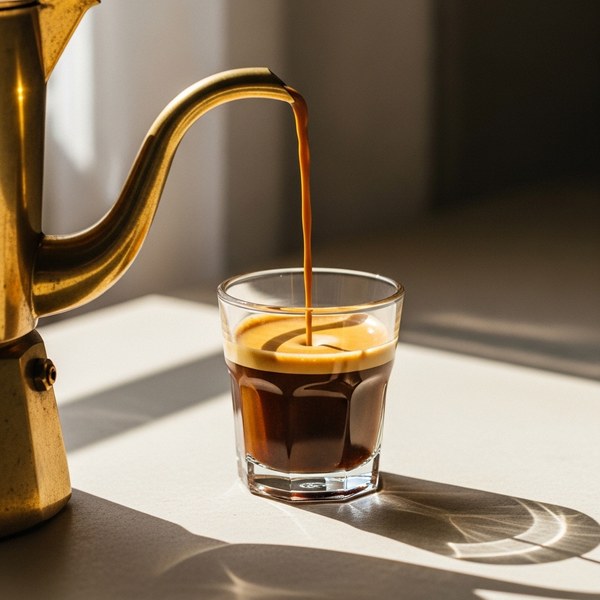
A clean shot has three numbers: dose, yield, and time. The modern double-shot recipe is a 1:2 ratio in 25 to 30 seconds. 18 grams of ground coffee in, 36 grams of espresso out. Output is roughly 2 oz (60 ml).
Step 1. Heat the machine. Turn it on at least 15 minutes before you pull. The group head needs to be fully heat-soaked. A cold group means a cold shot, which tastes thin and sour.
Step 2. Weigh the dose. Grind 18 grams of fresh beans into the portafilter basket. Weigh to verify.
Step 3. Distribute. Tap the portafilter to settle grounds. Run a fingertip in a small circle across the surface to break up clumps and level the bed. Uneven beds cause channeling, where water shoots through a weak spot and under-extracts the rest.
Step 4. Tamp. Press the tamper down with firm, even pressure. About 30 lbs of force, applied flat. Consistency matters more than the exact number.
Step 5. Lock and pull. Wipe grounds off the rim. Lock the portafilter in. Place a small cup on a scale under the spouts, tare to zero, and hit the pump.
Step 6. Watch the shot. The first few seconds nothing comes out (preinfusion). Then a thin honey-colored stream starts from each spout. The streams should braid into a single ropy pour. Color starts dark and slowly lightens.
Step 7. Stop at 36 g. If you are between 25 and 30 seconds, you have a clean shot. Faster means your grind is too coarse; tighten one or two clicks finer. Slower means too fine; loosen one or two clicks.
This is called dialing in. Most people need three to five attempts on a new bag before the shot lands.
Moka pot: Fill the bottom chamber with filtered water to the safety valve. Fill the basket with finely ground coffee, level, do not tamp. Assemble, medium heat. Coffee flows into the top chamber in 2 to 4 minutes. Pull off the heat the moment you hear a steady gurgle.
Aeropress: Inverted method. 18 g fine grind. 60 g water at 200F. Steep 60 seconds. Flip and press for 30 seconds. Output around 50 to 60 ml.
Capsules: Pull whichever shot size your machine calls espresso. Use a double if supported.
Steaming and frothing milk
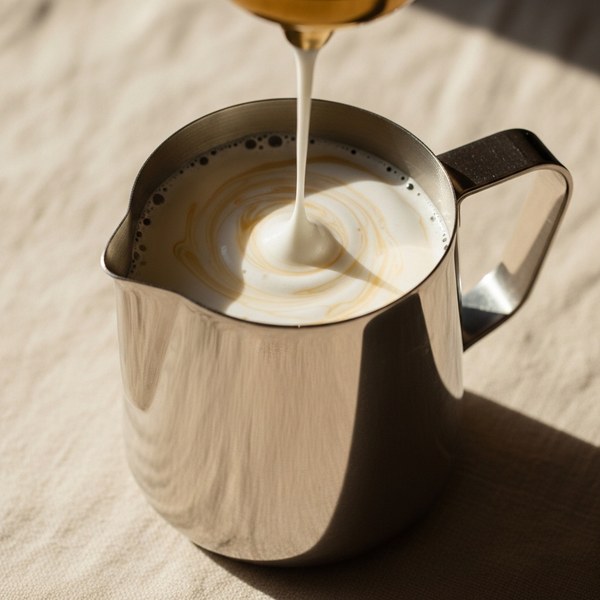
Steamed milk is the part most home baristas under-estimate. The texture decides whether the drink tastes like a cafe latte or a glass of warm milk with coffee in it.
A proper latte uses microfoam. Microfoam is steamed milk with a thick, glossy, paint-like texture and almost no visible bubbles. It pours like wet paint, drops onto the surface of espresso without breaking through, and integrates smoothly into the drink. The thin layer on top is the canvas for latte art.
The steam wand does two things in sequence: stretch the milk (introduce air to create foam) and texture the milk (spin the foam into the body so it becomes a single uniform mass).
Step 1. Pour cold milk. Fill a stainless pitcher up to the bottom of the spout. About 6 to 8 oz (180 to 240 ml) for an 8 oz latte. Cold milk straight from the fridge has more time to texture before overheating.
Step 2. Purge the wand. Point it into the drip tray and turn on for two seconds to clear condensed water. Wipe with a damp cloth.
Step 3. Position the wand. Tilt the pitcher slightly. Position the tip just below the surface of the milk, off-center, so the steam creates a vortex.
Step 4. Stretch. Turn the steam on full. For 3 to 5 seconds, keep the tip right at the surface. You should hear a soft paper-tearing sound. That is air being incorporated. Watch the milk level rise. Stop stretching when volume has grown by about a quarter.
Step 5. Texture. Lower the pitcher (or raise the wand) so the tip is about an inch under the surface. The sound changes from tearing to a quiet whirlpool hum. The milk should be spinning in a clear vortex. Hold this until the temperature hits 140F to 150F (60C to 65C). Without a thermometer, the pitcher becomes uncomfortably hot to hold.
Step 6. Cut the steam. Turn off the wand before removing the pitcher. Wipe and purge.
Step 7. Polish. Tap the pitcher firmly on the counter to pop large bubbles. Swirl in a tight circle to keep milk and foam integrated. The surface should be glossy and look like wet paint.
If you do not have a steam wand: A handheld milk frother produces foam but not microfoam. Heat the milk to 140F in a saucepan or microwave first, then froth for 20 to 30 seconds. An automatic frother (Breville Milk Cafe, Nespresso Aeroccino) heats and froths in one step.
Pouring the latte
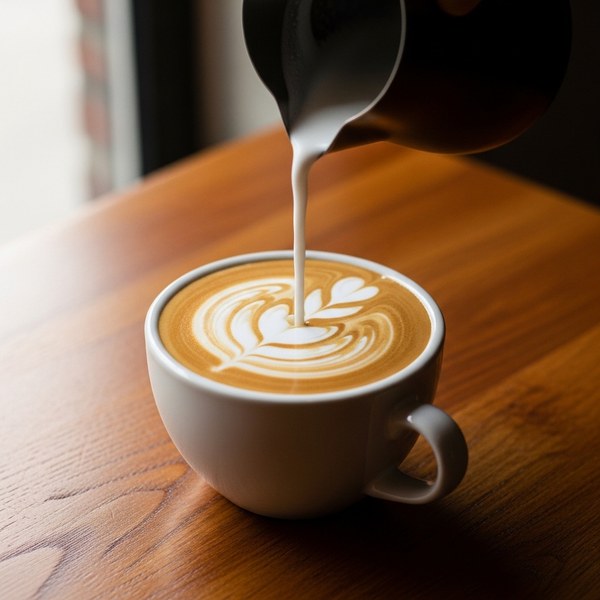
The pour is where the drink comes together. Done right, espresso and milk integrate into a single layered drink with a thin foam cap. Done wrong, the milk crashes through the crema and the drink looks like a glass of warm milk.
Step 1. Pull the shot directly into the glass. This keeps the espresso fresh and prevents you from losing crema in a transfer.
Step 2. Polish the milk. Tap the pitcher firmly to pop bubbles. Swirl tight for five seconds. The surface should be glossy and uniform.
Step 3. Start the pour high. Hold the pitcher 3 to 4 inches above the espresso. Tilt and pour a steady thin stream into the center. The thin stream sinks below the crema and starts to fill the body without breaking the surface.
Step 4. Drop the pitcher low. When the glass is two-thirds full, drop the spout to within half an inch of the milk surface. Speed up the pour. The faster, lower pour brings foam up to the surface so it floats on top. This is where, if pouring latte art, you start the pattern.
Pulled pays PayPal cash for every cafe visit you log.
Step 5. Finish in the center. As the cup fills, draw the spout back toward the far edge and cut the stream cleanly. Lift straight up. A finished latte should be glass-flush with a quarter inch of velvety white foam on top.
Serve immediately. A latte loses its texture within two or three minutes.
Latte art basics
Latte art is not just decoration. It is a visual signature that the milk was steamed right and poured right. Bad milk cannot produce a clean pattern, so when you can pour a clean rosetta, you know your technique is dialed.
The three foundational patterns are the heart, the tulip, and the rosetta. Master them in that order.
The heart. The simplest pattern. After dropping the pitcher low and floating the foam, keep the pitcher in one spot in the center. A white circle appears. Keep pouring until the circle fills most of the cup. Then, in one smooth motion, lift the pitcher and pour through the center of the circle out toward the far edge, cutting it into a heart with a point at the back.
The tulip. A heart with extra layers. Pour the first circle, stop briefly with a small lift, move the pitcher back half an inch, pour a second smaller circle that pushes into the first. Stop, move back, pour a third. Finish by cutting through all three with one drawn line from back to front.
The rosetta. A leaf-shaped pattern with symmetric branches. Start pouring low in the center. As white appears, begin wiggling the pitcher gently side to side at a steady rhythm while slowly walking it backward across the surface. Each wiggle drops a small wave. When the leaf reaches the far edge, stop wiggling and draw the pitcher forward in a straight line through the center.
Latte art takes weeks. Expect the first 50 attempts to look like blobs. The variables that matter are milk texture (most important), pour height, pour speed, and pitcher angle.
The iced latte version

An iced latte is the same drink, cold. The construction is different.
Step 1. Ice first. Fill a tall glass (12 to 16 oz, 355 to 475 ml) with ice cubes. Use proper cubes, not crushed ice. Crushed melts in seconds and waters the drink down.
Step 2. Cold milk over the ice. Pour cold milk in until the glass is roughly three-quarters full. About 6 oz (180 ml). Skim, whole, oat, almond, or soy all work.
Step 3. Pull the espresso. A double shot directly into a small cup. Use it immediately; espresso loses freshness within a minute.
Step 4. Pour the espresso over. Slowly pour the hot espresso over the cold milk and ice. It sinks through the milk, creating two visual layers.
Step 5. Stir to combine. Right before drinking, give the glass a quick stir. The layers are for show.
No foam is needed for an iced latte. The cold liquid does not hold microfoam the way warm milk does. If you want texture, blend the milk with a handheld frother before pouring it over the ice. A small cap of cold foam on top is increasingly common at modern cafes.
Mistakes that ruin most home lattes
1. Cold group head. Pulling before the machine is heat-soaked produces a sour, thin shot. 15 minutes minimum from power-on.
2. Stale beans. Past three weeks from the roast date, crema disappears and the shot tastes flat. Buy small bags often.
3. Wrong grind. The grind has to be tuned for the bean and the basket. Dial in every new bag.
4. Skipping the scale. Volume cannot tell you a 28 g shot from a 42 g shot. A $20 scale fixes this.
5. Over-stretching the milk. Too much air at the start gives you a head of foam with skim milk underneath. Stretch for 3 to 5 seconds, no more.
6. Boiling the milk. Past 160F (70C) the proteins burn. Sweetness disappears. Stop at 140F to 150F (60C to 65C).
7. Pouring too high. Once the cup is half full, the pitcher needs to come down close to the surface or foam will sink instead of float.
8. Skim or low-fat milk. Whole milk has the fat content for microfoam. For non-dairy, barista-blend oat steams the closest to whole.
9. Letting the milk sit. Steamed milk has a useful life of about 60 seconds. Pour the moment it is done.
10. Reusing milk. Milk that has already been steamed cannot be re-steamed. The proteins are spent.
14 day free trial. No credit card required.
Frequently asked questions
What is the ratio of espresso to milk in a latte? Roughly 1 part espresso to 3 to 5 parts milk. A double shot (2 oz, 60 ml) topped with 6 to 8 oz (180 to 240 ml) of steamed milk in an 8 to 12 oz glass.
Can you make a latte without an espresso machine? Yes. A moka pot, an Aeropress, or a capsule machine all produce coffee strong enough to substitute.
What milk is best? Whole dairy steams the smoothest. For non-dairy, barista-blend oat is closest. Almond and soy work but are less stable.
How hot should milk be? 140F to 150F (60C to 65C). Past 160F (70C) the proteins burn.
Why does my latte taste bitter? Almost always the shot. Over-extracted, stale beans, or pulled too long. Fix the shot before blaming the milk.
Latte vs cappuccino? A latte has more milk and less foam in a bigger cup. A cappuccino is smaller, stronger, with a thick foam cap.
What is microfoam? Steamed milk with a paint-like texture and tiny uniform bubbles. The canvas for latte art.
How many calories in a homemade latte? Roughly 180 to 200 with whole milk, 140 with 2 percent, 160 with oat, 80 with almond.
Why is my foam disappearing? Over-stretched or under-textured. Stretch shorter, texture longer, tap and swirl before pouring.
Is a homemade latte cheaper than cafe? Yes. About $1 a drink at home vs $5 to $7 at a cafe. Break-even on a $400 machine lands around 80 lattes.
The point of making one at home
A cafe latte costs $5 to $7 in most American cities and more in places like San Francisco, New York, or Honolulu. A homemade version costs about a dollar. If you drink one a day, the math gets persuasive fast.
The home version also lets you tune everything. Single origin Ethiopian beans you love. Oat milk in winter, whole milk in summer. A heart on Saturday morning when you have time. A quick iced latte before work when you do not.
If you still want to support the cafes where you live, Pulled Coffee pays you cash for every check-in at any coffee shop. Drink the home version most days and the cafe version on weekends. See how the challenges work or read how members are earning money drinking coffee in 2026.
Get Pulled.
Earn up to $10,000 exploring coffee shops. Real cash. Real shops. Real rewards.
Download PulledRelated reading: how to make cold brew at home, pour over vs espresso vs cold brew, specialty coffee vs chain coffee, what is third wave coffee, the best coffee apps in 2026, coffee shop loyalty programs that pay real money.
Make the coffee, then pull the cafe. Download Pulled.
Our Picks
What we'd buy on Amazon for this
Breville · Bambino Plus Espresso Machine
A reasonable entry point at $300 less than the Barista Pro.
$488
View on Amazon →Breville · Milk Cafe Electric Frother
Induction heated, temperature programmable. Worth it if you make milk drinks every day.
$199.95
View on Amazon →Breville · Barista Pro Espresso Machine
The machine the Pulled editorial team uses for everything.
$849.95
View on Amazon →


Pulled may earn a commission on purchases. Cookie applies to all Amazon items in your next 24 hours, not just this product.
See all Pulled Picks →Keep going with Pulled