January 8, 2026
Where to Get Great Coffee in Istanbul (20 Local Picks 2026)
Get paid for the gear you already use to brew.


The first commercial coffeehouses in the world opened in Istanbul in 1554, founded by two traders named Hakem from Aleppo and Şems from Damascus. The shops, called Kiva Han, opened in the Tahtakale district near the Egyptian Spice Bazaar and quickly spread across the city. By the late sixteenth century, Istanbul had over six hundred coffeehouses. The kahvehane became the central social institution of Ottoman urban life: a place for political discussion, news exchange, board games, and the slow afternoon. The format spread from Istanbul to Vienna, Venice, Paris, and London during the seventeenth century. Every European coffeehouse tradition descends, directly or indirectly, from the Istanbul Kiva Han of 1554.
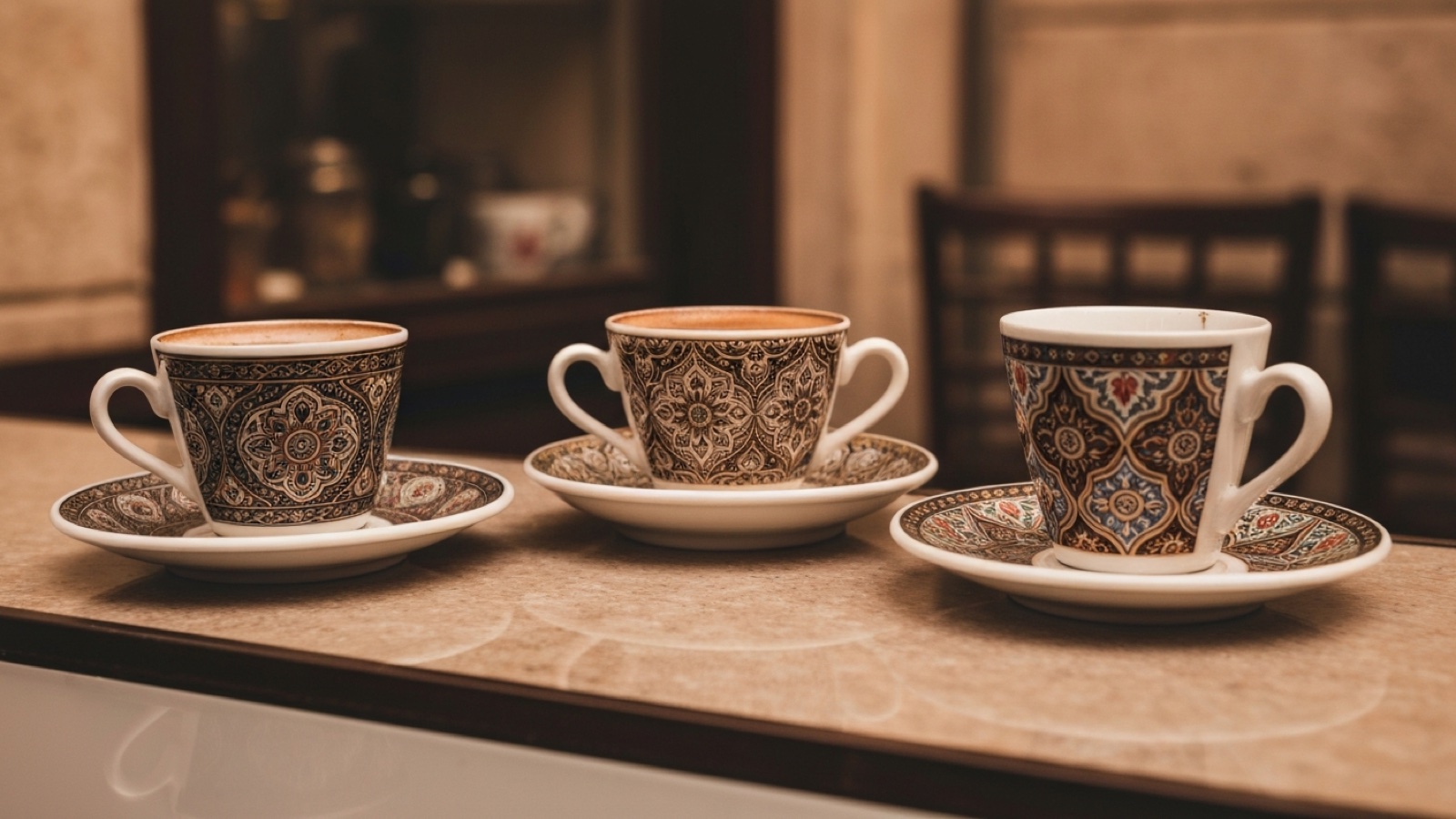
Turkish coffee, the unfiltered preparation in a copper cezve, was inscribed on the UNESCO Representative List of the Intangible Cultural Heritage of Humanity in 2013. The drink is the country’s defining cup and the most ritualized coffee preparation in the world. The contemporary specialty wave arrived in Istanbul around 2010 and operates alongside the traditional kahvehane register without displacing it. The two cultures coexist across the city, often within the same neighborhoods, and a thoughtful Istanbul coffee tour includes both.
Karaköy and Galata
Karaköy has emerged over the past decade as the densest contemporary specialty corridor in Istanbul. Kronotrop Karaköy, opened in 2013 by Burak Karpuzoğlu, is the city’s most-cited specialty roaster and runs both the Karaköy flagship and the Cihangir branch. The shop pours single origin pour overs and operates with serious sourcing programs at Turkish coffee origins. Federal Coffee Company, opened in 2014, runs multiple Karaköy locations and pours Australian-influenced flat whites alongside specialty pour over. Mums Cafe and a network of smaller specialty shops operate in the post-industrial Karaköy district. Galata, just north, holds the heritage cafés around the Galata Tower and the steep streets that descend toward the Golden Horn. The Karaköy-Galata corridor is the densest specialty walk in central Istanbul. Explore all coffee shops in Istanbul.
Beyoğlu and İstiklal Avenue
Beyoğlu’s position as the historic European-influenced quarter, anchored by the pedestrian İstiklal Avenue, holds the city’s densest concentration of heritage cafés and specialty operations. Mandabatmaz on a side street off İstiklal, opened in the 1960s, is the most-cited traditional Turkish coffee establishment in Istanbul. The shop is small, crowded, and serves Turkish coffee in cezve at counter pace. The cup is excellent. The Çiçek Pasajı (Flower Passage) and the broader İstiklal Avenue corridor hold dozens of heritage and contemporary cafés within a fifteen-minute walk. Coffee Department on Cumhuriyet Caddesi pours specialty espresso. Walter’s Coffee Roastery, the Breaking Bad-themed specialty operation that has appeared in international coverage, sits in the broader Beyoğlu corridor.
Pulled pays cash for cafe visits while you weigh the gear.
Cihangir
Cihangir, the residential creative-economy neighborhood that descends from Taksim toward the Bosphorus, has been a Istanbul specialty corridor for over a decade. Kronotrop’s Cihangir branch is the second flagship and operates within the broader Cihangir café register. The neighborhood’s narrow streets, steep slopes, and view of the Bosphorus produce a café-going rhythm that suits long sittings. Çiya Sofrası, the Anatolian regional cuisine restaurant, sits across the water in Kadıköy and produces Cihangir-bound culinary foot traffic. Cihangir’s combination of post-bohemian residential character, contemporary specialty cafés, and Bosphorus views makes it one of the most pleasant Istanbul coffee neighborhoods.
Beşiktaş and Ortaköy
Beşiktaş, the residential neighborhood along the European-side Bosphorus shore, holds a working-day Istanbul café register that operates outside the visitor-driven Beyoğlu corridor. The neighborhood’s broader Bosphorus-facing position and its proximity to the Beşiktaş football stadium produce café-going pulses tied to the local rhythms rather than to international visitor traffic. Ortaköy, just north, holds the Bosphorus-side mosque and the Sunday flea market that produces weekly café-going foot traffic. Several smaller specialty operations have opened in Beşiktaş over the past decade, and the broader corridor from Beşiktaş to Ortaköy holds quieter café walks than central Beyoğlu.
Kadıköy and the Asian side
Kadıköy, on the Asian side of the Bosphorus, has emerged as the city’s most working-day-driven specialty corridor over the past decade. The Moda district holds Petra Roasting Co., one of the most internationally cited Turkish specialty roasters, with the original Kadıköy roastery and multiple Istanbul branches. Federal Coffee Company has a Kadıköy location. The Saturday Kadıköy market and the Yeldeğirmeni neighborhood hold smaller specialty operations. The Kadıköy-Moda waterfront walk, the broader Kadıköy seaside ferry approach, and the Çiya Sofrası Anatolian-cuisine restaurant produce a café-going neighborhood that operates at lower visitor intensity than the European side. The ferry from Eminönü or Karaköy to Kadıköy is itself a worthwhile coffee-tourism transit.
The Grand Bazaar and Eminönü
The Grand Bazaar, with over four thousand stalls operating since the fifteenth century, holds the heritage Istanbul kahvehane culture at its most atmospheric. Şark Kahvesi, inside the Grand Bazaar, has operated for decades and serves traditional Turkish coffee in cezve. The Eminönü waterfront, anchored by the Egyptian Spice Bazaar and the Yeni Cami mosque, holds the historical Tahtakale district where the world’s first coffeehouses opened in 1554. Vefa Bozacısı, the heritage boza shop on Vefa Caddesi, operates a coffee program alongside its primary fermented millet beverage. The walking circuit through the Grand Bazaar, Eminönü, the Spice Bazaar, and Karaköy across the Galata Bridge produces one of the most layered coffee walks in any city in the world.
The history of Istanbul coffee
Coffee arrived in Istanbul in the 1540s through the Ottoman trade with Yemen, where the bean had been cultivated commercially since the fifteenth century. The first commercial Istanbul coffeehouses opened in 1554, founded by Hakem from Aleppo and Şems from Damascus, and spread quickly across the city. By 1600, Istanbul had over six hundred coffeehouses, the densest urban café network in the world at the time. The Ottoman state attempted to ban coffeehouses several times during the late sixteenth and seventeenth centuries on the grounds that they were spaces for political organization, but the bans never held. The kahvehane became the central social institution of Ottoman urban life and remained so through the nineteenth century.
The Turkish coffee preparation, the cezve method, crystallized in the early Ottoman period and has been served in roughly the same form for four hundred years. Fine ground coffee is brewed in a small copper or brass cezve with cold water and optional sugar (sade for unsweetened, az şekerli for slightly sweet, orta for medium, çok şekerli for very sweet) over heat until it foams. The drink is served in a small cup with the grounds at the bottom and traditionally accompanied by Turkish delight (lokum) and a glass of water. UNESCO inscribed Turkish coffee on the Representative List of the Intangible Cultural Heritage of Humanity in 2013, recognizing both the preparation method and the broader social tradition that surrounds it.
The contemporary specialty wave arrived in Istanbul around 2010. Kronotrop, founded in 2011 by Burak Karpuzoğlu, was the city’s specialty pioneer and remains the most-cited Turkish specialty roaster. Petra Roasting Co. in Kadıköy followed shortly after. By 2018, the city had built a credible specialty corridor across Karaköy, Cihangir, Beyoğlu, and Kadıköy. The traditional kahvehane network operates at much higher density than the specialty wave, but both registers now coexist across the city.
14 day free trial. Real PayPal cash on every coffee run.
How Istanbul coffee differs from other traditions
Turkish coffee is unique in the contemporary global coffee landscape as the dominant default at the everyday register in a major coffee-drinking country. No other city of Istanbul’s scale serves Turkish-style cezve coffee at the volumes that Istanbul does. The drink is unfiltered, served with the grounds at the bottom, and consumed slowly over fifteen to twenty minutes. The cup volume is small (sixty to eighty milliliters) and the caffeine concentration is high. Compared to Italian espresso, which serves at higher pressure and is consumed in under three minutes, Turkish coffee operates at a fundamentally different rhythm: long sittings, board games, conversation, the slow afternoon.
Compared to Vienna, Venice, and the broader European coffeehouse tradition, the Istanbul kahvehane is the original. The Vienna coffeehouse, opened in 1683 with coffee bags reportedly captured during the failed Ottoman siege, descends from the Istanbul format. Compared to contemporary specialty cities, Istanbul runs at lower specialty café count than Berlin or London but at higher heritage café density than any other major city in the world.
Best coffee shops in Istanbul
Mandabatmaz in Beyoğlu, opened in the 1960s, is the most-cited traditional Turkish coffee establishment in the city. Şark Kahvesi inside the Grand Bazaar serves heritage Turkish coffee in cezve. Kronotrop in Karaköy and Cihangir, opened 2011, is the contemporary specialty anchor and runs an in-house roastery. Federal Coffee Company runs multiple Karaköy and Kadıköy locations. Petra Roasting Co. in Kadıköy is the Asian-side specialty flagship. Coffee Department in Beyoğlu pours competition-grade specialty espresso. Walter’s Coffee Roastery in Beyoğlu pours specialty in a Breaking Bad-themed interior. Sade Kahve, with multiple Istanbul locations, runs a Turkish-coffee-focused specialty operation. Lavinya Coffee in Kadıköy runs single origin filter. Ministry of Coffee in Cihangir pours specialty espresso. The Grand Bazaar holds dozens of heritage cezve operations within the four-thousand-stall complex.
Istanbul coffee FAQ
How do I order Turkish coffee?
Order “Türk kahvesi” and specify the sweetness level: sade for unsweetened, az şekerli for slightly sweet, orta for medium, çok şekerli for very sweet. The drink is served in a small cup with the grounds at the bottom and is traditionally accompanied by a glass of water and a piece of Turkish delight (lokum). Drink slowly. The grounds will settle at the bottom of the cup. Do not stir. Do not drink the sludge at the bottom. The cup is consumed in fifteen to twenty minutes.
Why was Istanbul the first city with coffeehouses?
Istanbul’s position as the capital of the Ottoman Empire, the broader Ottoman trading network with Yemen and the Red Sea coffee origins, and the city’s established public-life infrastructure produced the conditions for the world’s first commercial coffeehouses in 1554. The bean had been cultivated commercially in Yemen since the fifteenth century, and Ottoman traders carried it across the Empire to Cairo, Damascus, Aleppo, and Istanbul. The kahvehane format spread from Istanbul to Mecca, Cairo, and Aleppo before reaching Vienna, Venice, Paris, and London during the seventeenth century.
Where is the best Turkish coffee in Istanbul?
Mandabatmaz in Beyoğlu is the most-cited heritage Turkish coffee establishment and serves the canonical cezve cup. Şark Kahvesi inside the Grand Bazaar serves Turkish coffee in a heritage Ottoman café environment. The Grand Bazaar more broadly holds dozens of cezve operations. Vefa Bozacısı operates a coffee program alongside its primary boza service. Most traditional Istanbul kahvehane will serve Turkish coffee at high quality; the cup is largely standardized across the city.
What is a kahvehane and how is it different from a contemporary café?
A kahvehane is the traditional Turkish coffeehouse, characterized by long sittings, the cezve preparation, board games (typically backgammon and okey), water pipes (nargile), and a cultural register that has been continuous for over four centuries. The kahvehane is primarily a male social space in traditional Turkish usage, though contemporary kahvehane in central Istanbul are mixed-gender. A contemporary specialty café operates in the international third wave register: light roast single origin coffee, espresso-machine drinks alongside pour over filter, and a barista-led service model. The two registers coexist in Istanbul.
Should I try Turkish coffee or contemporary specialty?
Both. The Istanbul coffee experience is most layered when it includes both registers: a Mandabatmaz Turkish coffee for the heritage UNESCO-recognized cup, a Kronotrop or Petra Roasting specialty pour over for the contemporary register, and the broader Grand Bazaar kahvehane culture for the four-hundred-year tradition. Skipping either register produces an incomplete picture of Istanbul coffee.
Earning with Pulled Coffee in Istanbul
Istanbul holds approximately ten thousand qualifying coffee shops in the Pulled Coffee directory, including specialty cafés, traditional kahvehane, and chain locations. The First 15 challenge ($10) is achievable in a single Istanbul day at normal café-going pace. The Daily 50 challenge ($150 to $350 at Devoted or Origin tiers) is achievable in two to three weeks of consistent café visits. The Pulled 50 challenge (fifty unique specialty shops) is achievable in an Istanbul stay of one month or longer.
A walking corridor through Karaköy, Galata, and Beyoğlu produces six to eight qualifying check-ins in a single morning. The Kadıköy walk on the Asian side produces five to seven. The Grand Bazaar circuit produces three to five within the covered market environment. The Cihangir-Beşiktaş walk produces three to five at lower commercial intensity. Istanbul ferries connect the European and Asian sides at fifteen to twenty-minute frequency, and the Marmaray rail tunnel under the Bosphorus completes the cross-strait coffee circuit.
The Istanbul price register is among the most favorable in major European-adjacent capitals. A Turkish coffee at a heritage kahvehane runs sixty to one hundred Turkish lira (roughly two to three US dollars at recent exchange). A specialty pour over at Kronotrop or Petra runs ninety to one hundred forty lira. A flat white at a Karaköy specialty café runs eighty to one hundred ten lira. The Pulled Coffee subscription cost is recovered within the first week of normal café visit cadence at Devoted or Origin tier. Istanbul offers one of the most economically favorable Pulled setups in the world for travelers, particularly given the city’s deep café count and low per-cup pricing. Track your Istanbul check-ins on the Pulled map. See all shops in the Istanbul city guide. Compare with the traditional scenes in Rome and Madrid.
Start earning from your coffee habit.
Pulled Coffee pays you real money via PayPal for checking in at cafes and coffee shops.
Download Pulled CoffeeRelated: Best coffee in Rome, Best coffee in Amsterdam, Every coffee drink explained.
Earn cash on every coffee run. Download Pulled.
Explore coffee in Istanbul