May 10, 2026
How to Use a Moka Pot: The Complete Guide to Stovetop Espresso
Some links in this guide are affiliate links. If you buy through them, Pulled may earn a commission at no extra cost to you. Our recommendations are based on editorial judgment and coffee culture knowledge, not commission rates.
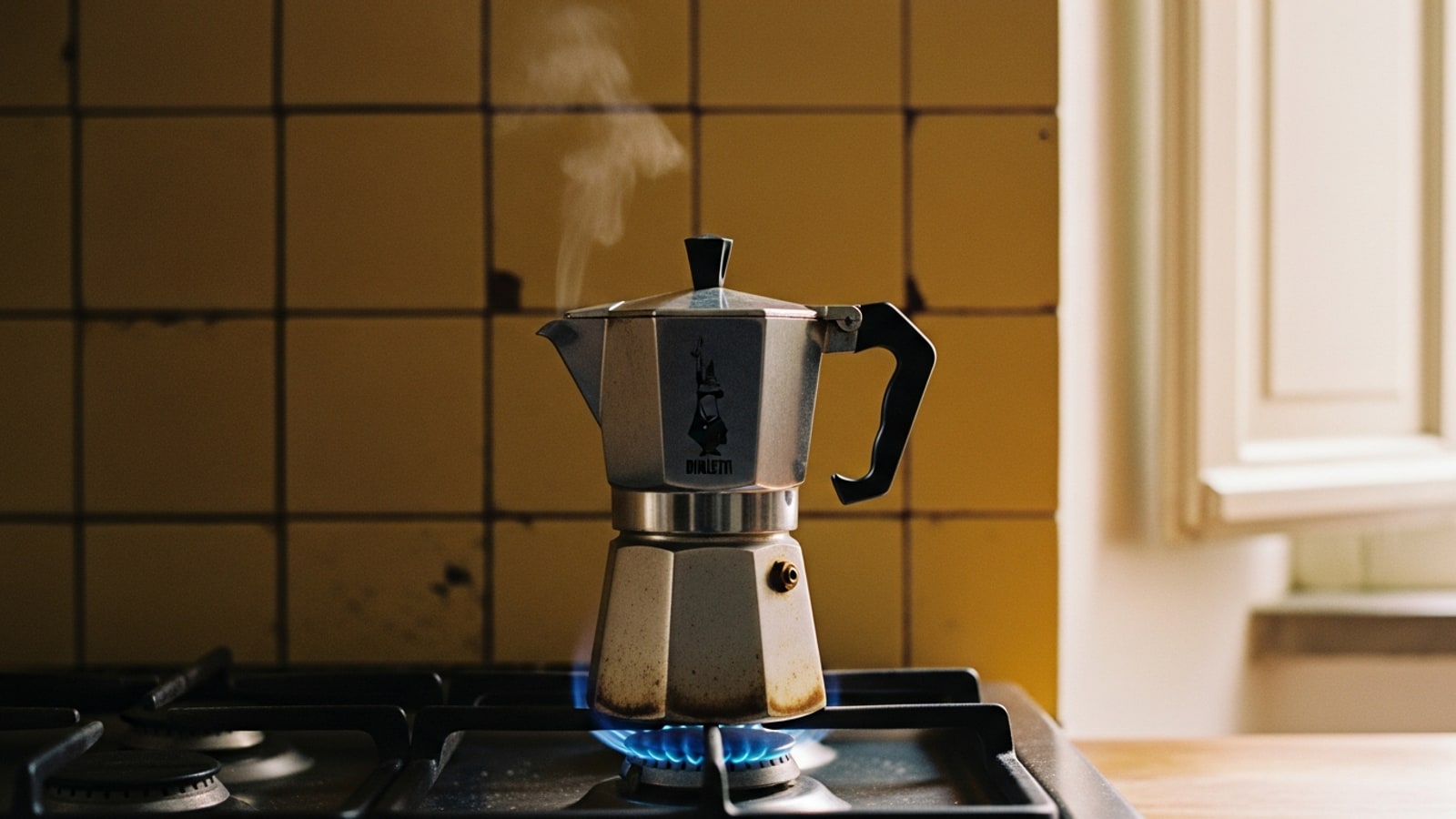
The moka pot is the most reliable way to make strong coffee at home without a real espresso machine. Small, cheap, one or two moving parts, sits on the stovetop you already own. The Bialetti Moka Express, the eight-sided aluminum one your grandmother probably used, has been in continuous production since 1933.
The coffee it produces is not espresso. A real espresso shot is pulled at nine bars of pressure through a finely tamped puck in 25 to 30 seconds. A moka pot operates at one to two bars, through coarser grounds, in four to six minutes. The result sits between espresso and a dense pour over. Excellent coffee. Not the drink that comes out of a cafe machine.
Once you accept that, the moka pot becomes one of the most useful brewers in a home kitchen. A base for milk drinks, an Italian-style after-dinner cup, an iced concentrate, or a fast hit of caffeine when a pour over feels like too much work. The downside is that almost every first batch tastes burned, metallic, or bitter, and most people quietly retire the pot. None of that has to happen. The mistakes are the same four or five, every time.
What a moka pot is, and what it is not
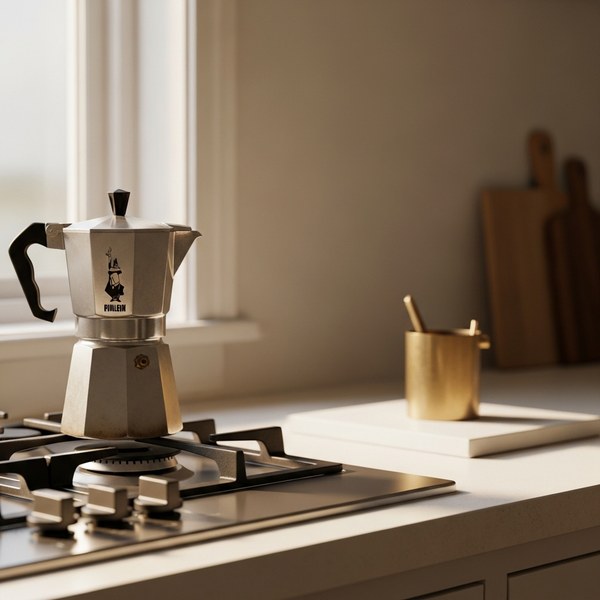
A moka pot is a three-chamber stovetop brewer. Water in the bottom chamber. Ground coffee in a metal funnel that drops into the base. The top chamber screws on. On heat, trapped steam pressure pushes water up through the grounds and into the top chamber. When you hear a gurgling, sputtering sound, the base has run out of water and is pushing only steam. That is the end of the brew.
The mechanism is closer to a percolator than to an espresso machine. The pressure is low. The grind is medium fine. No portafilter, no tamper, no nine bar pump, no crema in the cafe sense. (You will sometimes see a thin tan foam on top. That is foam, not true crema.)
Calling moka "stovetop espresso" is a marketing convention. The Italians who have been drinking it for ninety years call it moka. So will we.
Sizes: 1 cup to 12 cup
Moka pots are labeled by the number of "cups" they produce. A moka cup is the Italian espresso-sized serving, roughly 60 ml or two fluid ounces. Not an American mug.
- 1 cup serving (60 ml output). One small shot. Useful for a single base for a latte.
- 3 cup (180 ml). The size most one-person households should buy. One large mug or two small servings.
- 6 cup (360 ml). Right for two people, or one heavy drinker, or two milk drinks in sequence.
- 9 cup (540 ml). A household pot for three or four people.
- 12 cup (720 ml). Small-cafe sized. Good for entertaining or batching an iced concentrate.
The most common mistake at the store is buying a 6 or 9 cup because the numbers sound right for an American kitchen. Two people usually want a 3 cup. The pot is designed to be filled completely; you cannot half-fill a 9 cup to make two servings. A pot brewed below capacity runs hot, scorches the grounds, and tastes worse than a properly filled smaller pot.
Grind size: medium fine
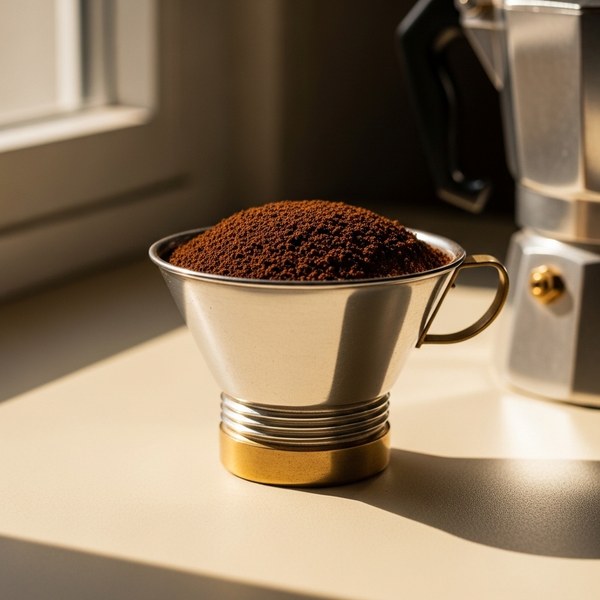
The grind is the second most common reason a first batch tastes off. An espresso grind is wrong (too fine). A drip grind is also wrong (too coarse). The right setting sits between the two.
The visual reference is fine table salt. Slightly grainier than powdered sugar. Finer than the sand-like grind for a Hario V60, coarser than the talc-like grind for a real espresso shot. On a burr grinder, moka usually sits one or two notches coarser than your espresso setting.
If you buy preground, ask for a moka or stovetop grind. Do not accept a generic grocery-store "espresso grind"; that will choke the pot. The filter clogs, pressure builds, and the brew either erupts or takes ten minutes and tastes burned.
Water temperature: the preheat hot water trick
This is the single change that fixes more first-batch problems than anything else, and almost no instruction sheet mentions it.
Start with already-hot water in the base. Not cold tap water. Hot water from a kettle, just off the boil, poured in before you screw the pot together.
The reason is a flaw in the basic moka design. With cold water in the base, the metal and the grounds in the funnel sit on direct heat for the full time it takes the water to warm to brewing temperature. That is several minutes of dry heat cooking the grounds before any water reaches them. The result is the burned, ashy, metallic flavor that makes most first batches taste worse than instant coffee.
Preheating eliminates the problem. With near-boiling water in the base, the brew starts within thirty seconds of the pot hitting the heat. The cup tastes clean and chocolaty instead of harsh.
Heat level: medium low, not high
A moka pot wants medium-low heat. The instinct to crank the burner is the third most common mistake. High heat forces water through too fast (thin, under-extracted cup) and scorches the dry walls of the base above the water line (metal smells burned ever after).
On gas, a flame that does not reach beyond the bottom edge. On electric, medium or slightly below. On induction, around 50 to 60 percent if the pot is induction compatible (most aluminum Bialettis are not; the Venus and Musa lines are stainless steel and work on induction).
The brew should take four to six minutes. Under three, the heat is too high. Over seven, the heat is too low or the grind is too fine. Stay near the pot. A quiet hiss, then a low hum, then a steady gurgle as the brew fills the top chamber.
When to pull it off the heat
This is the moment that separates a good moka cup from a bitter one.
The brew is finished when the top chamber is about two thirds full. That is sooner than your instinct suggests. The remaining liquid in the base is mostly steam pushing through grounds that have already given up their flavor. If you let the pot run to dry, the last third is over-extracted, bitter, burned, and it contaminates everything you already brewed.
The audible cue is the gurgle. The brew goes through three phases. First, the column starting to move. Second, a steady fountain sound. Third, a loud sputtering gurgle as the water turns to steam. Pull the pot off at the start of phase three, when the stream breaks up.
To stop extraction cleanly, move the pot off the burner and run cold water over the outside of the base for a few seconds. This drops the temperature instantly and the cup will be noticeably cleaner.
Mistakes that burn the coffee
Burned moka tastes acrid, metallic, ashy. Not what coffee tastes like; what stoves taste like. Five mistakes cause it, in order of frequency.
Starting with cold water. Several minutes of dry heat on the grounds before brewing begins. Always preheat.
Heat too high. Forces fast extraction and burns the dry walls of the base. Stay at medium low.
Letting it run to dry. The last phase is bitter steam pushing through spent grounds. Pull off before the sputter peaks.
Tamping the grounds. Espresso machines tamp. Moka pots do not. Tamping raises resistance past what the pot is built to overcome. The pressure either trips the safety valve or forces a half-channel. Fill the funnel level, no compression.
Using a fine espresso grind. Same effect as tamping. Water cannot get through, pressure builds, the cup tastes off. Stick to medium fine.
A related issue is a dirty pot. The Italian tradition is to rinse aluminum pots with hot water only; soap ruins the seasoned interior. Stainless steel can be washed normally. The rubber gasket wears out after a year or two of daily use; replacements cost two or three dollars. Replace when the seal looks flat or cracked.
Moka pot vs espresso: when each one is right
A real espresso machine produces a true shot with crema, finer extraction, and the ability to steam milk for textured cappuccinos and lattes. A moka pot produces a strong stovetop coffee that stands in for espresso in milk drinks at home.
You want a real machine if you are pulling shots professionally, want consistent crema, want milk steaming, or are running a small home cafe. Entry price is around six hundred dollars. Learning curve takes weeks.
You want a moka pot if you want a single intense cup, build milk drinks with a separate handheld frother, travel, have limited counter space, or are not willing to spend hundreds of dollars learning to dial in a machine. Entry price is twenty to forty dollars. Learning curve is one or two batches.
If you brew moka and want milk drinks, the setup is moka pot for the base and a handheld frother for the foam. See how to make a latte at home and how to froth milk at home. Credible home latte for under fifty dollars total.
The Bialetti recipe, step by step
Step 1. Boil filtered water in a kettle. Roughly 100 ml for a 3 cup pot, 200 ml for 6 cup, 300 ml for 9 cup. The safety valve line is your reference.
Step 2. Grind medium fine. About 18 grams for a 3 cup pot, 30 grams for 6 cup, 45 grams for 9 cup. If preground, fill the funnel level to its top edge.
Step 3. Pour hot water into the bottom chamber, stopping at the safety valve.
Step 4. Drop the funnel in. Pour the grounds into the funnel. Level with a finger. Do not press.
Step 5. Screw the top chamber onto the base, using a towel because the base is hot. Snug, not muscled.
Step 6. Place on the stovetop at medium low. Gas: flame within the bottom edge. Electric: just below medium. Induction: 50 to 60 percent.
Step 7. Wait four to six minutes. Column, stream, gurgle.
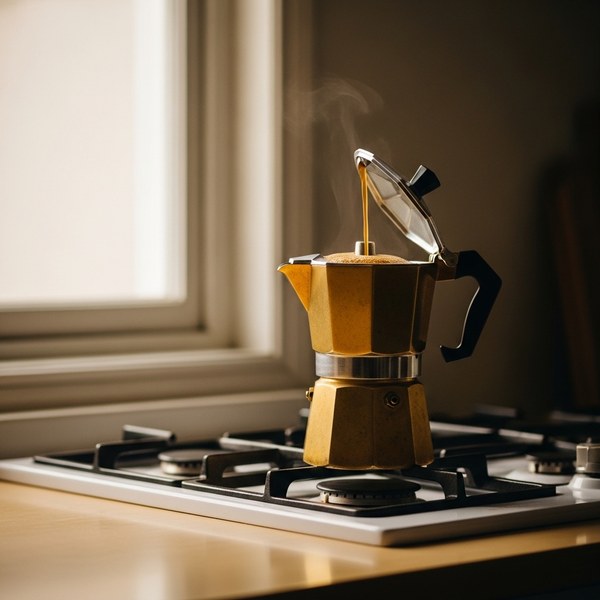
Step 8. When the top is two thirds full and the sound shifts to sputtering, pull off the burner. Run cold water over the outside of the base. Stir the top chamber with a small spoon.
Step 9. Pour and drink, or use as the espresso stand-in for a latte, cappuccino, americano, or iced drink.
Iced moka recipes
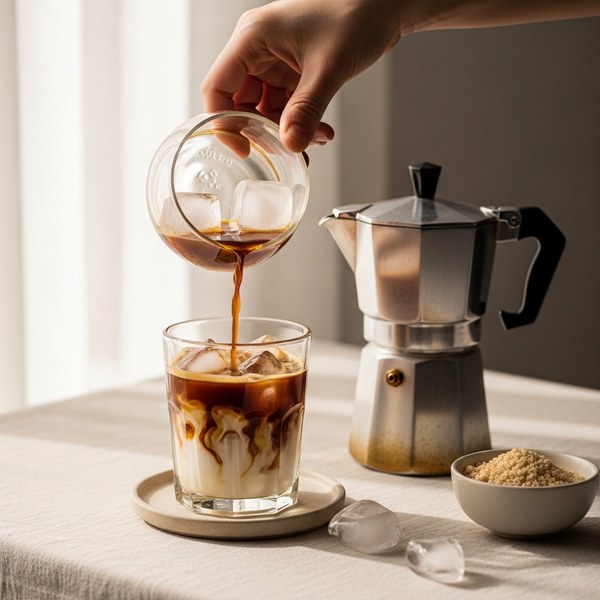
Moka output makes a very good iced coffee base. Strong and concentrated, so it survives ice dilution without going thin.
Iced moka, simple. Brew a full pot. While it brews, fill a tall glass with ice. The moment the brew finishes, pour directly over the ice. Stir. Drink. Variation: add a tablespoon of simple syrup or sweetened condensed milk and a splash of cold milk. That is essentially what an Italian cafe would call a caffe freddo with milk.
Iced moka concentrate. Brew the pot full. Let it cool a few minutes, pour into a small jar, refrigerate. To serve, fill a glass with ice, pour in 2 to 3 ounces of cold moka, top with cold water or milk. The concentrate keeps in the fridge about a day before the flavor flattens.
For an overnight cold drink, see cold brew at home, or how to make iced coffee at home for the full set. Iced moka is the fastest, cold brew is the smoothest, Japanese flash chilled is the brightest. Different tools.
Frequently asked questions
Is moka the same as espresso? No. Espresso is nine bars through fine grounds. Moka is one to two bars through medium fine. Strong, but not espresso.
Right grind? Medium fine. Fine table salt. Finer than drip, coarser than espresso.
Cold or hot water? Hot. Pre-boil a kettle. Cold water cooks the grounds before brewing.
Heat level? Medium low. Flame inside the bottom edge. Brew takes four to six minutes.
When to pull off? When the top is two thirds full and the stream gurgles. Cold water on the base to stop extraction.
Tamp? No. Fill the funnel level. No pressure.
Why burned? Cold water start, heat too high, run to dry, tamping, or grind too fine. Fix one at a time.
Induction? Only with an induction compatible pot. Stainless steel models work; aluminum Bialettis do not.
How much? A moka cup is 60 ml. A 3 cup makes 180 ml.
Latte? Yes, with a handheld frother. Under fifty dollars total.
The point of brewing moka at home
A moka pot is the highest leverage piece of coffee equipment most homes can buy. Twenty to forty dollars, ten minutes of skill, decades of life. Strong enough to anchor a milk drink, fast enough for a workday morning, good enough that Italian cafes brewing moka do not consider it a downgrade. It is its own category.
For the days you want the cafe experience instead, Pulled Coffee pays you back real cash for every check-in at any specialty coffee shop. Brew moka at home weekdays, walk to your favorite cafe on Saturday, and Pulled counts every visit toward weekly cash rewards. See how the challenges work for the full breakdown.
Get Pulled.
Earn up to $10,000 exploring coffee shops. Real cash. Real shops. Real rewards.
Download PulledRelated reading: pour over vs espresso vs cold brew, how to make a latte at home, how to froth milk at home, how to make cold brew at home, how to make iced coffee at home, what is third wave coffee, specialty coffee vs chain coffee, how to find specialty coffee shops near you, the best coffee apps in 2026.
Our Picks
What we'd buy on Amazon for this
Bialetti · Moka Express 3-Cup Stovetop Espresso Maker
The single-shot version of the classic. Right size for solo home brewing.
Normcore · WDT Distribution Tool
Breaks up clumps in the basket. Two minutes saved per shot, no channeling.
$19.99
View on Amazon →Bodum · Pavina Double-Wall Glasses (Set of 6, 12oz)
The cafe glass for serving iced lattes, iced Americanos, and cold brew at home.
$40.99
View on Amazon →


Pulled may earn a commission on purchases. Cookie applies to all Amazon items in your next 24 hours, not just this product.
See all Pulled Picks →Keep going with Pulled