May 23, 2026
How to Make Coffee at Home: The Complete Guide
Some links in this guide are affiliate links. If you buy through them, Pulled may earn a commission at no extra cost to you. Our recommendations are based on editorial judgment and coffee culture knowledge, not commission rates.
A daily $5.50 latte runs $2,007 a year. Add a croissant and you clear $3,000 without ever feeling it, because the money leaves your account in $7 and $9 pieces that never read as a real decision. Brewing at home is the cheapest raise most people can hand themselves, and the gear pays for itself inside a month.
Home coffee got serious between 2020 and 2024. People who used to grab a cup on the walk to the office bought a grinder, a scale, and firm opinions about water. Some of that was lockdown habit. Most of it stuck, because a good cup at the kitchen counter turns out to be simple once you know the four things that decide everything: grind, ratio, water, and time.
This guide is the map. It walks ten brewing methods, the grind each one wants, the water that matters more than you think, and how to store beans so they taste like beans. Every method links to a full tutorial when you want the step by step. Start anywhere. Most people start with what is already in the cupboard.
One more thing before the methods. There is no single right way to make coffee. There is the method that fits your mornings, your budget, and how much fuss you want before the first sip. A French press owner and a pour-over owner can both be correct. The trick is matching the tool to the life.
The cost of cafe coffee, compounded
Run the numbers once and they stop being abstract. A $5.50 drink five days a week is $1,430 a year. Seven days a week pushes it to $2,002. A two-coffee household doubles that to roughly $4,000. Over five years, with no change to your order, a couple spends close to $20,000 on drinks they could have made in four minutes.
Home cost runs the other direction. A 12 oz bag of good beans is $15 to $22 and makes 16 to 24 cups, so the bean cost per cup lands between $0.70 and $1.30. Add water and a splash of milk and a serious home cup costs about $1. The delta is $4.50 a cup. That is the whole argument, and it compounds every single morning.
How to choose a brewing method
Ten methods sounds like a lot. In practice you are answering five questions, and your answers point at two or three tools, not ten.
How much effort do you want before coffee? If the answer is none, you want automatic drip or cold brew you made the night before. Both run while you do something else. If you enjoy the ritual and have four minutes, pour over and AeroPress reward attention. French press sits in the middle: a little hands-on, hard to ruin.
How strong do you like it? espresso, moka pot, and the Vietnamese phin make small, concentrated drinks. Drip, pour over, and French press make a full mug at a gentler strength. Cold brew is strong but smooth, low in acid, and built to be diluted.
Milk or black? If most of your drinks are lattes and cappuccinos, you need an espresso-style base, which means espresso, moka pot, or AeroPress run strong. If you drink it black, the brewed methods shine.
How many people? One or two cups, almost any method works. A table of guests is better served by a large French press, a big batch of cold brew, or a 10-cup drip machine than by pulling shots one at a time.
What is the budget? Under $50 gets you a French press, an AeroPress, or a moka pot, plus a hand grinder. Pour over is cheap to enter and rewards a better grinder later. Espresso is the expensive lane and the steepest to learn.
A rough map, fastest to most involved:
- Set and forget: automatic drip, cold brew.
- Four-minute ritual: pour over, AeroPress, French press.
- Small and strong: espresso, moka pot, Vietnamese phin.
- Cultural classics: Turkish ibrik, Greek frappe.
Automatic drip: the workhorse
Drip is the machine on millions of kitchen counters, and the format most Americans grew up on. The modern automatic dripper traces to Gottlob Widmann's Wigomat, patented in Germany in 1954, with the Mr. Coffee home version landing in 1972 and putting electric drip in ordinary kitchens. It heats water, showers it over a bed of grounds in a paper or metal filter, and lets gravity finish the job.
Gear: a drip machine, paper or reusable filters, and freshly ground coffee. A model with a flat-bottom basket and a hot enough element (look for one that reaches 195 to 205 F) makes a real difference.
Ratio: 1:16 to 1:17, which is about 60 grams of coffee per liter of water, or two tablespoons per 6 oz cup if you are not weighing yet.
Grind: medium, the texture of table salt.
Time: the machine controls it, usually 5 to 6 minutes for a full carafe.
Temperature: 195 to 205 F. Cheap machines that brew cooler are the main reason cheap drip tastes flat.
Pitfalls: stale grounds, a dirty machine, and a weak ratio. Most people use too little coffee, then call the result watery and blame the beans. Scale the dose up before you give up. And clean the thing on a schedule, because old coffee oils turn rancid and taint every pot. Here is how to clean a coffee maker without guessing.
Pour over: control in a cone
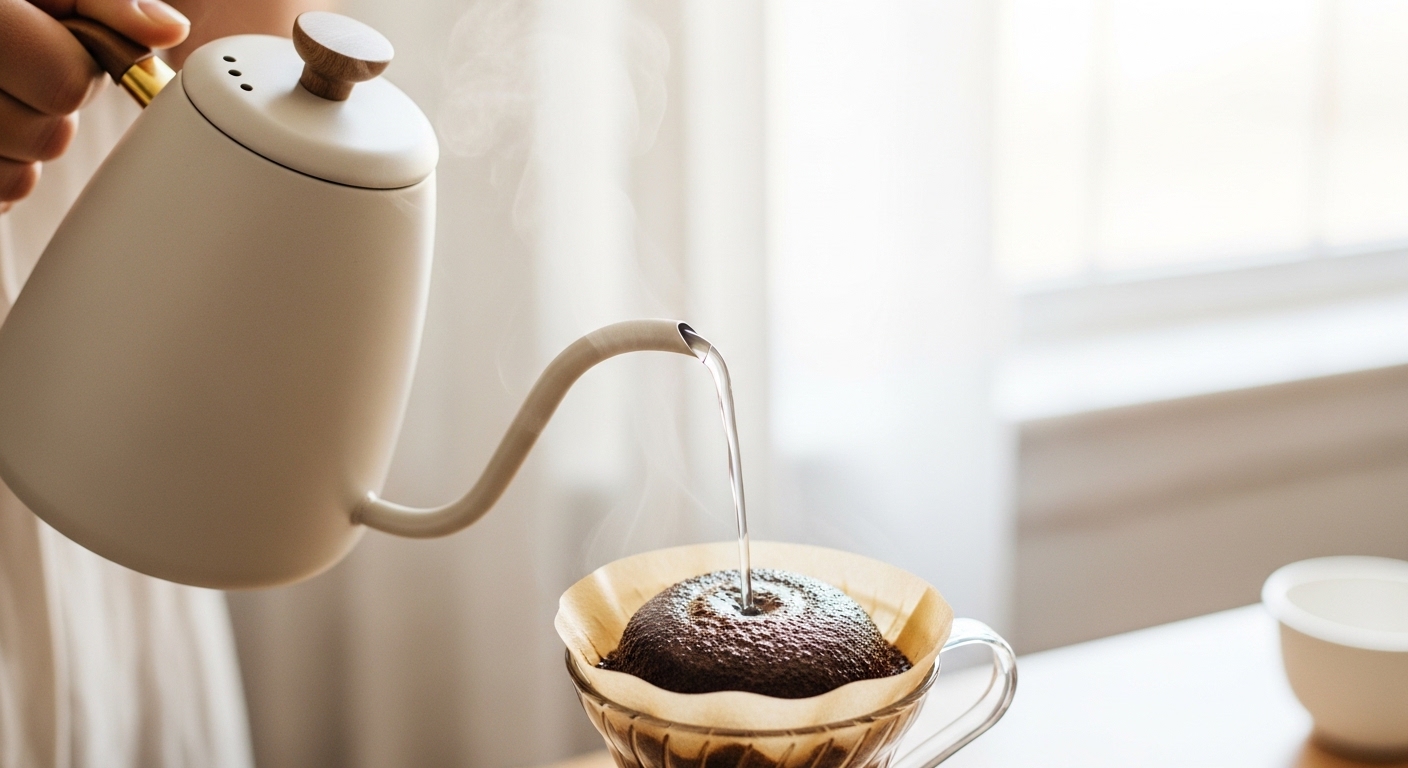
Pour over is drip done by hand, and the extra control is the entire point. Melitta Bentz, a Dresden housewife, patented the first paper filter and cone in 1908 after lining a brass pot with blotting paper from her son's notebook. The modern wave runs through the Hario V60 (2004), the Chemex (designed by chemist Peter Schlumbohm in 1941), and the flat-bottom Kalita Wave.
Gear: a dripper, matching filters, a gooseneck kettle for pour control, and a scale. The scale is the upgrade that changes everything.
Ratio: 1:16 is the standard starting point, so 25 grams of coffee to 400 grams of water.
Grind: medium-fine, a touch finer than drip, closer to sea salt.
Time: 2:30 to 3:30 total, including a 30 to 45 second bloom.
Temperature: 195 to 205 F, hotter for light roasts, slightly cooler for dark.
Pitfalls: pouring too fast, skipping the bloom, and uneven saturation that leaves dry grounds on the wall of the cone. Pour in slow circles, keep the bed flat, and stop chasing the last drips, which are mostly bitter. The full method, bloom timing and pour pattern included, is in the pour over guide.
French press: full body, no paper
The French press, or cafetiere, was patented in its recognizable form by Italians Attilio Calimani and Giulio Moneta in 1929, though rough versions date back further. It is full-immersion brewing: grounds steep in hot water, then a metal mesh plunger separates them. Because the screen lets oils through, the cup is heavier and rounder than paper-filtered coffee.
Gear: the press itself and a coarse grinder. That is it. No filters to buy, ever.
Ratio: 1:15 to 1:17. A common starting point is 30 grams of coffee to 500 grams of water.
Grind: coarse, like raw sugar or coarse sea salt. Too fine and the cup turns muddy and over-extracted, and the plunger fights back.
Time: 4 minutes, then plunge slow and steady.
Temperature: 195 to 205 F.
Pitfalls: grind too fine, steep too long, and pour the dregs. Decant the coffee off the grounds right after plunging, because anything left in the press keeps extracting and goes bitter. French press also forgives a coarse, inexpensive grinder better than pour over does, which makes it a smart first method for new home brewers. The exact dose and timing live in the French press ratio guide.
AeroPress: the travel champion
The AeroPress is the youngest tool here. Alan Adler, the engineer behind the Aerobie flying ring, invented it in 2005 to make a single, clean cup fast. Coffee steeps in a plastic chamber, then you press it through a paper filter using air pressure from a plunger. It is nearly unbreakable, which is why it lives in backpacks and hotel rooms around the planet.
Gear: the AeroPress, its paper filters (or a metal one), and a grinder. A scale helps but is optional.
Ratio: flexible. A clean standard is 15 grams of coffee to 220 grams of water for a strong cup you drink as is or dilute.
Grind: medium-fine for standard recipes, finer for short, espresso-style presses.
Time: 1 to 2 minutes, one of the fastest methods going.
Temperature: 175 to 205 F. Lower temperatures tame bitterness and are popular for the inverted method.
Pitfalls: there are few, which is the appeal. The main one is pressing too hard at the end; when you hit resistance, ease off. The hiss of air means you are done. Because it is so forgiving, the AeroPress is the tool to grab when you are learning what good extraction tastes like. Pair it with fresh beans and a decent grinder and it punches far above its $40 price.
Espresso: the high bar
Espresso is coffee forced through a compact puck of fine grounds at roughly 9 bars of pressure. Angelo Moriondo patented an early steam machine in Turin in 1884, Luigi Bezzera improved it in 1901, and Achille Gaggia's 1948 spring-lever machine created the pressurized shot and the crema we know now. It is the base for lattes, cappuccinos, and flat whites.
Gear: an espresso machine, a quality burr grinder, a tamper, and a scale. The grinder matters as much as the machine here, sometimes more.
Ratio: 1:2 for a standard shot, so 18 grams in, 36 grams out.
Grind: fine, like powdered sugar, and dialed in precisely. Small grind changes swing the shot hard.
Time: 25 to 30 seconds for that 1:2 shot.
Temperature: 195 to 205 F at the group head, 200 F as a default.
Pitfalls: espresso is the least forgiving method on this list. Channeling, uneven tamping, stale beans, and a grinder that cannot go fine enough all wreck the shot. Beans matter too; the wrong roast tastes sour or burnt no matter how clean your technique. See the rundown of the best coffee beans for espresso before you spend on a machine. Once you can pull a clean shot, turn it into milk drinks with the latte guide and learn to froth milk properly.
Moka pot: stovetop strength
The moka pot is the sound of an Italian morning. Alfonso Bialetti released the aluminum, eight-sided Moka Express in 1933, and the design has barely changed since. Steam pressure in the bottom chamber pushes hot water up through a basket of grounds and into the top. It makes a strong, concentrated coffee close to espresso, though not technically espresso, since it runs at about 1.5 bars rather than 9.
Gear: the moka pot, sized to how much you drink, and a grinder. No filters or electricity needed.
Ratio: fill the basket level, do not tamp, and fill the base to the safety valve. That works out near 1:7 to 1:10, much stronger than drip.
Grind: fine-medium, finer than drip but coarser than espresso.
Time: 4 to 5 minutes on medium heat.
Temperature: medium flame, never high. Pull it off the heat when you hear the gurgle.
Pitfalls: high heat scorches the coffee and makes it bitter, the classic moka mistake. Use medium heat, start with hot water in the base to avoid cooking the grounds, and take it off the burner the moment it sputters. Full steps, including the cold-towel trick, are in the moka pot guide.
Cold brew: patience over heat
Cold brew is the long game. Steep coarse grounds in cold or room-temperature water for 12 to 24 hours, then filter. No heat ever touches it, so the acids and bitter compounds that need heat to dissolve stay behind. The result is smooth, sweet, and low in acid. The method is old, with roots in 17th-century Japanese Kyoto-style drip and Dutch trade routes, but it became a cafe staple in the 2010s.
Gear: a jar or a dedicated cold brew maker, a coarse grinder, and a filter (cloth, paper, or fine mesh).
Ratio: strong concentrate runs 1:5 to 1:8, then you dilute one to one with water or milk. Ready-to-drink runs 1:15.
Grind: coarse, the coarsest on this list, to keep the long steep from going bitter.
Time: 12 to 24 hours. 16 hours at room temperature is a reliable target.
Temperature: cold or room temperature, never hot.
Pitfalls: grinding too fine, under-steeping, and forgetting it for two days until it turns harsh. Strain it well, store the concentrate up to two weeks, and dilute to taste. The full ratio and timing are in the cold brew guide, and if you want a quick cold cup instead of an overnight wait, the iced coffee guide covers the faster route.
Vietnamese phin: slow drip, big flavor
The phin is a small metal drip filter that sits on top of your cup. French colonists brought coffee to Vietnam in the 1850s, and with fresh milk scarce, locals reached for sweetened condensed milk instead. That pairing became ca phe sua da, one of the great coffee drinks anywhere. The phin drips dark, strong coffee straight onto a layer of condensed milk.
Gear: a phin filter, a cup, and ideally robusta-heavy Vietnamese coffee, which is bolder and higher in caffeine than arabica.
Ratio: about 1:7 for the strong drip, plus 2 to 3 tablespoons of condensed milk per serving.
Grind: medium-coarse, like coarse sand. Too fine clogs the filter, too coarse drips too fast.
Time: 4 to 5 minutes for a slow, even drip.
Temperature: just off the boil, around 200 F.
Pitfalls: packing the grounds wrong is the whole game. Too loose and it floods, too tight and it stalls. The gravity insert should rest on the bed without being screwed down. Species choice matters here, so it is worth reading arabica vs robusta before you buy beans. The full sequence is in the Vietnamese coffee guide.
Greek frappe: shaken, iced, foamy
The frappe was invented by accident at the 1957 Thessaloniki International Fair, when a Nescafe rep named Dimitris Vakondios could not find hot water and shook instant coffee with cold water instead. It became Greece's unofficial summer drink. Frappe is one of the few cases where instant coffee is the correct ingredient, not a compromise, because it foams the way fresh grounds will not.
Gear: a shaker or a handheld frother, a tall glass, and instant coffee.
Ratio: 2 teaspoons instant coffee, a little cold water to dissolve and foam, then sugar to taste and cold water to fill.
Grind: none. This is the one method where you skip grinding entirely.
Time: under 2 minutes.
Temperature: cold, served over ice.
Pitfalls: not enough froth, too much sugar, and adding milk too early so the foam collapses. Whip the coffee, water, and sugar first until it builds a thick tan foam, then add ice, water, and milk last. The step by step is in the Greek frappe guide.
Turkish ibrik: the oldest method
Turkish coffee is the oldest brewing style still in daily use, and it is protected by UNESCO as cultural heritage. The first commercial coffeehouses in the world opened in Istanbul in 1554. The method uses an ibrik, also called a cezve, a small long-handled pot. Very fine coffee, water, and sugar heat together slowly, and the coffee is served unfiltered with the grounds settling at the bottom.
Gear: a cezve, very fine coffee, and small cups. A burner you can run low is enough.
Ratio: about 1 heaping teaspoon of coffee per small cup of water, around 1:10.
Grind: the finest of all, finer than espresso, almost a powder like flour.
Time: 3 to 4 minutes over low heat. Never let it reach a rolling boil.
Temperature: low and slow. The goal is foam, not a boil.
Pitfalls: rushing the heat and losing the foam, which is the mark of a cup made well. Stir at the start, then leave it alone as the foam rises, and pull it off before it boils over. Pour gently so the grounds stay in the pot. Full technique is in the Turkish coffee guide.
Water: the ingredient nobody weighs
Coffee is roughly 98% water, so the water is most of the cup. Get it wrong and even great beans taste dull, sour, or chalky. This is the most overlooked variable in home brewing, and fixing it is cheap.
The target, set by the Specialty Coffee Association, is a total dissolved solids (TDS) reading around 150 mg/L, in a range of 75 to 250. Pure distilled water is actually bad: with nothing dissolved in it, water cannot pull flavor from the grounds, and the cup tastes hollow. You want some mineral content, just not a lot, and not the wrong kind.
Hard water, heavy in calcium and magnesium, is the usual home problem. It over-extracts harsh notes and, worse, scales up your machine over months. Very soft or heavily chlorinated tap water swings the other way and mutes flavor. If your tap water tastes bad from the glass, it will taste bad in coffee.
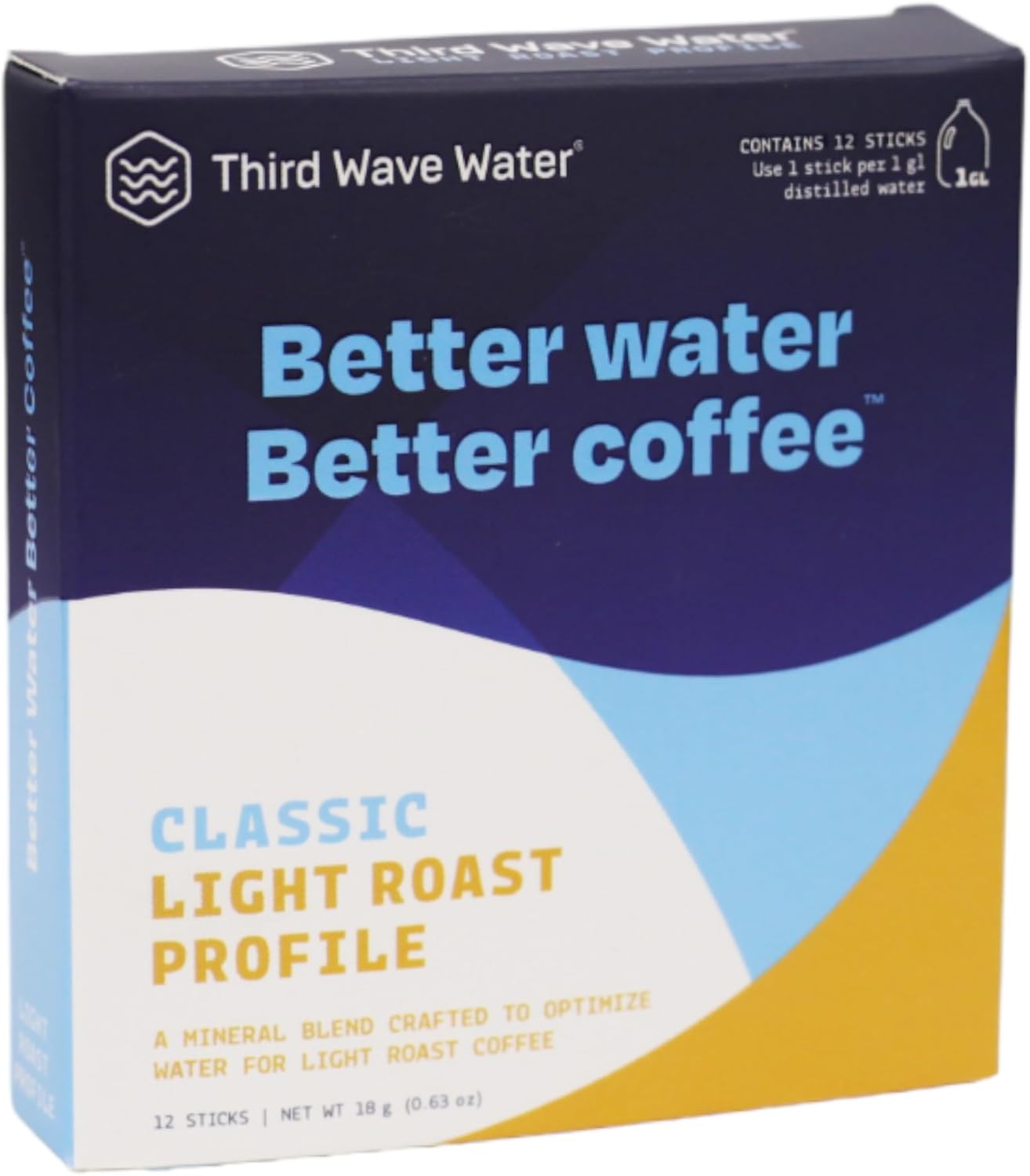
The fix is a $30 filter pitcher for most people, which strips chlorine and softens hardness enough to matter. People chasing the last few percent mix their own brewing water from distilled plus a mineral concentrate. That is optional. A filter pitcher and clean, fresh water cover 90% of the gap. The full breakdown of minerals, TDS, and recipes is in the brewing water guide.
Grind size: the dial that matters most
If you change one thing this week, buy a burr grinder and grind fresh. Pre-ground coffee starts losing aroma within minutes, and a blade grinder chops beans into uneven chunks that extract unevenly, giving you bitter and sour in the same cup. Burr grinders crush beans to a consistent size, which is the whole game.
Grind size controls extraction. Finer grounds expose more surface area and extract faster; coarser grounds extract slower. Match the grind to how long the water and coffee stay in contact. Fast methods want fine, slow methods want coarse.
A working brewer-to-grind matrix, fine to coarse:
- Turkish ibrik: powder, like flour.
- Espresso: fine, like powdered sugar.
- Moka pot: fine-medium.
- AeroPress: medium-fine to fine.
- Pour over: medium-fine, like sea salt.
- Drip: medium, like table salt.
- Vietnamese phin: medium-coarse, like coarse sand.
- French press and cold brew: coarse, like raw sugar.
When a cup tastes bitter and harsh, it is usually over-extracted, so go coarser. When it tastes sour, thin, and salty, it is under-extracted, so go finer. Adjust one step at a time. The pour over guide and the French press ratio guide both show what the right grind looks like for those brewers.
Storing beans so they taste like beans
Fresh roasted coffee has a window. It needs a few days to degas after roasting, hits its stride from day 4 to day 21, and slides downhill after about a month as oxygen does its work. Buy what you will drink in three to four weeks and no more.
Four things age coffee: oxygen, light, heat, and moisture. Store beans in an airtight, opaque container, on a cool shelf, away from the stove and the window. A one-way valve canister that lets gas out without letting air in is the practical pick. Whole beans last far longer than ground, which is another reason to grind per brew.
The freezer myth deserves a clear answer. Repeatedly opening a bag in the freezer is bad, because condensation forms on the cold beans every time and moisture is the enemy. But freezing in airtight, single-use portions and pulling one out at a time actually preserves beans well for months. The rule is simple: freeze once, thaw once, never refreeze. For everyday beans you finish in a few weeks, the counter in a sealed canister is plenty. Robusta and arabica age at different rates too, covered in arabica vs robusta.
Home coffee questions, answered
What is the strongest home coffee setup under $100?
Spend the money on a grinder, not gadgets. A solid hand grinder is $30 to $40, an AeroPress or a French press is $30 to $40, and a $20 scale or kettle finishes the kit. That leaves room for a $20 bag of good beans. This setup beats most $300 super-automatic machines on flavor, because fresh grinding and fresh beans matter more than the brewer.
What about a setup under $500?
Now you can add an electric burr grinder ($120 to $200) and either a quality pour-over kit with a good kettle or a capable entry espresso machine. If you drink mostly black coffee, put the budget into the grinder and a nice kettle. If you drink milk drinks, you will want espresso, but know that $500 is the floor for espresso that satisfies, and the grinder still comes first.
How do I scale coffee for a house full of guests?
Do not pull eight shots one at a time. Batch it. A large French press, a 10-cup drip machine, or a pitcher of cold brew made the night before all serve a crowd without you missing the conversation. Keep the same ratio you use for one cup, around 1:16 for brewed coffee, and just multiply the grams.
Does decaf brew differently?
Brew it the same way, with one tweak. Decaffeinated beans are often a touch more brittle and porous from processing, so they can extract a little faster. If your decaf tastes thin, grind slightly finer or add a gram or two of coffee. Buy decaf fresh, since it goes stale just as fast as regular.
How do I froth milk without an espresso machine?
You have options at every price. A handheld electric frother is about $15, a French press can froth by pumping hot milk with the plunger, and a jar with a tight lid works in a pinch: fill a third, shake hard, then microwave 30 seconds. For real microfoam, a steam wand is the upgrade. The full method is in the milk frothing guide, and turning that into a drink is covered in the latte guide.
When should I upgrade my grinder?
Upgrade when your cup is inconsistent for no clear reason, or when you move into pour over or espresso, both of which expose a weak grinder fast. A blade grinder is the first thing to replace, always. The jump from blade to a basic burr grinder is the biggest single improvement most home brewers ever taste, bigger than a fancier brewer.
Single origin or blend?
Single origin shows off one farm or region and tends to have a distinct, sometimes wild flavor: berries, citrus, florals. Blends are built for balance and consistency, which is why most espresso is a blend. Drink single origin black to taste what a place gives. Reach for a blend when you want milk drinks or a dependable everyday cup. Neither is better; they answer different questions.
Light roast or dark roast?
Light roasts keep more of the bean's origin character and more acidity, and they often carry slightly more caffeine by weight. Dark roasts taste of the roast itself: bittersweet, smoky, heavy, with less origin flavor. Light roasts work in pour over and drip; dark roasts suit espresso, moka pot, and milk drinks. Roast date matters more than roast level, so buy recent either way.
Which method makes the strongest coffee?
By concentration, espresso, the Vietnamese phin, and the moka pot top the list, since they pack a lot of coffee into a little water. By caffeine per serving, a big mug of drip or French press can actually deliver more total caffeine than a single espresso, because the serving is much larger. Strong taste and high caffeine are not the same thing.
Do I really need a scale?
You do not need one to start, but it is the cheapest path to consistency. Volume scoops vary with grind and bean density, so two tablespoons can mean very different doses day to day. A $15 scale that reads to 0.1 gram lets you repeat a good cup and adjust on purpose instead of by luck.
Start with one method this week
The mistake is trying to learn everything at once. Pick the one method that fits your mornings, buy fresh beans and a burr grinder, and brew the same recipe for a week. Change one variable at a time: grind, then ratio, then water. By the end of the week you will have a cup you can repeat, and a sense of what you are tasting and why.
The gear is secondary. A $40 AeroPress and fresh beans beat a $1,000 machine running stale grounds, every time. Spend first on a grinder, then on beans you actually like, then on water, and only then on a fancier brewer. That order is the difference between a kitchen full of expensive disappointment and a daily cup you look forward to.
Every method here has a full tutorial waiting when you want to go deeper, from pour over to cold brew to Turkish coffee. Bookmark this page as your home base and work outward. More guides, plus shop and city picks, live on the Pulled Coffee home page.
Our Picks
What we'd buy on Amazon for this
Third Wave Water · Classic Light Roast Profile (12-pack)
Third Wave Water solves the brewing water problem with a pre-formulated mineral mix.
Bodum · Pavina Double-Wall Glasses (Set of 6, 12oz)
The cafe glass for serving iced lattes, iced Americanos, and cold brew at home.
$40.99
View on Amazon →Hario · Cupping Spoon (Kasuya Model)
The right shape matters.


Pulled may earn a commission on purchases. Cookie applies to all Amazon items in your next 24 hours, not just this product.
See all Pulled Picks →Keep going with Pulled